War – What is it Good For?
Filed under: By Jonathan Stepp, Christian Living, Perichoresis, Trinity | Tags: Jesus, Just War Theory, Pacifism
 Comments (7)
  Veteran’s Day is coming up here in the States this Friday. I must admit that I have some mixed feelings about it. On the one hand I have a great respect for all those who have served our country and, especially, for those who have paid a high price in suffering to do so.
On the other hand there is an underlying idea behind Veteran’s Day, and war in general, that troubles me. We often say something like this:
We owe our freedom, and even the good life we have (economic and otherwise), to those who have served in our armed forces.
We usually focus this sentiment on the sacrifice they made to protect our way of life. But there is another side to it as well – not only what they sacrificed to protect our society but also what we asked them to do on our behalf. Not only have brave men and women laid down their lives for us but we have also called upon them to take the lives of others.
This is my question: is killing hundreds of thousands of our fellow human beings the only way for us as a society to preserve our freedom and protect our prosperity? Or, is there another way, a way rooted in the Christ who has included all humanity – even our enemies – in his life with the Father?
I honestly don’t know, but I do think that we owe it to our Veterans during this time of remembrance to acknowledge that we not only asked them to lay down their lives (as Jesus did) but also to take the lives of others (as Jesus did not). That tension between who Jesus is and what we have asked of our Veterans creates a profound moral question that our society – and especially Christianity – needs to seriously wrestle with in the years to come. It is especially urgent that we wrestle with this question if we do not want to repeat our mistakes in places like Vietnam and Iraq.
~ Jonathan Stepp
Nascar Prayer
Filed under: By Tim Brassell, Christian Living, Gospel, Prayer | Tags: Jesus, Perichoresis, Prayer, Trinity
Comments (4)  As I read Nan’s post on prayer last week I was reminded of three of my favorite prayers. These prayers speak clearly to me of how included our humanity is in the life of God the Father, Son and Spirit RIGHT NOW, in the humanity of Jesus the Son. They provoke me to remember that it is not so much that we have received Jesus into our lives but, in His Incarnation, was receiving us into Him and His Father’s Life in the Fellowship of the Holy Spirit. (2 Cor 13:14)
I hope they are of Gospel encouragement to you! I also hope that you will be able to see with greater clarity how included all people and every part of our humanity is involved in the rich and overflowing conversation of the triune God in our adoption.
O God, our Father, we remember at this time…
how the eternal Word became flesh and dwelt
among us. We thank you that Jesus took our
human body upon him, so that we can never again
dare to despise or neglect or misuse the body,
since you made it your dwelling-place.We thank you that Jesus did a day’s work like
any working-man, that he knew the problem of
living together as a family, that he knew the
frustration and irritation of (being in the public eye),
that he had to earn a living, and to face all the
wearing routine of everyday work and life and living,
and so clothed each common task with glory.We thank you that he shared in all happy social
occasions, that he was at home at weddings and
at dinners and at festivals in the homes of ordinary
people like ourselves. Grant that we may ever remember
that in his unseen presence he is a guest in every home.We thank you that he knew what friendship means,
that he had his own circle of men whom he wanted to
be with him, that he knew too what it means to be
let down, to suffer from disloyalty and from
the failure of love.We thank you that he too had to bear
unfair criticism, prejudiced
opposition, malicious and deliberate
misunderstanding.We thank you that whatever happens to us,
he has been there before,
and that, because he himself has
gone through things, he is able
to help those who are going
through them.Help us never to forget that he knows life,
because he lived life, and that he is with
us at all times to enable us
to live victoriously.This we ask for your love’s sake, Amen.
—From Prayers for the Christian Year, by William Barclay
“We are always praying, when we are doing our duty and turning it into a work for God.” He added that among the things which we should regard as spiritual in this sense are our household or professional work, the social duties of our station, friendly visits, kind actions and small courtesies, and also necessary recreation of body and of mind; so long as we link these by intention with God and the great movement of his Will.
—From The Spiritual Life by Evelyn Underhill
And this is one of my favorite modern prayers that you just have to see and experience in living video action:
Feel free to share other creative prayers like these with others of our brothers and sisters in this world as you have opportunity in the bubbling over love of the Trinity!
In the name of the Name of the Father, Son and Spirit,
~ Timothy J. Brassell
Do Our Prayers Really Matter?
Filed under: By Nan Kuhlman, Relationships, Uncategorized | Tags: 90 Minutes in Heaven, Bob Woodruff, Don Piper, healing, Prayer, Primetime
Comments (10) On the ABC news program “Primetime: Beyond Belief,” reporter Bob Woodruff discussed what happens after death by sharing his own near-death experience and interviewing others who had died and come back to life  . One of those interviewed was Don Piper, a Baptist minister who died during a car/truck crash in Texas in 1989. After being declared dead for 90 minutes by paramedics, Piper came back to life and later wrote about what he saw in the bestselling book, “90 Minutes in Heaven” (http://abcnews.go.com/Nightline/beyondbelief/describing-heaven-pastor-don-piper-pronounced-dead/story?id=14214140).
While what Piper reported he saw in heaven is inspiring, I’m more interested in the way he came back to life. Dick Onarecker and his wife were driving by the wreckage when he felt the urgent need to pray for whoever was in the car. He and his wife stopped, began praying, then started singing the hymn, “What a Friend We Have in Jesus.” Soon a voice from the wreckage, that of Don Piper, began singing along with them.
Did the prayers of the Onareckers change God’s mind? Or had God decided that Don Piper would live, and simply allowed a passerby and his wife to participate with him in raising the dead? Why didn’t God do the same for Dick Onarecker, rather than letting him die in 1996 at a relatively young age of 52?
To understand better our part in prayer, let’s consider the Canaanite woman who had a demon-possessed daughter in Matthew 15:
Leaving that place, Jesus withdrew to the region of Tyre and Sidon. 22 A Canaanite woman from that vicinity came to him, crying out, “Lord, Son of David, have mercy on me! My daughter is demon-possessed and suffering terribly.”
23 Jesus did not answer a word. So his disciples came to him and urged him, “Send her away, for she keeps crying out after us.”
24 He answered, “I was sent only to the lost sheep of Israel.”
25 The woman came and knelt before him. “Lord, help me!” she said.
26 He replied, “It is not right to take the children’s bread and toss it to the dogs.”
27 “Yes it is, Lord,” she said. “Even the dogs eat the crumbs that fall from their master’s table.”
28 Then Jesus said to her, “Woman, you have great faith! Your request is granted.” And her daughter was healed at that moment (Matt 15:21-28 NIV).
What can we learn from these two examples where people prayed in what seemed to be hopeless situations? First, we have to be willing to try. It would have been easy for Dick Onarecker to look at the terrible wreckage and decide that no one could survive. It would have been understandable for the Canaanite woman to give up since it was unlikely that she had ever seen anyone healed of a demon-possession. Yet these people were willing to pray and ask for help despite the overwhelming circumstances they saw.
Next, healing power does not come from us and is not dependent on our personal righteousness or faith. The power to heal comes from the Father, Son, and Holy Spirit who move as they lovingly see fit for each situation. The Triune God chooses to work incarnationally through the requests of regular human beings just like us.
Lastly, we have to accept that the situation we pray about may or may not be resolved in the way we think is best. As parents, we understand that even though our children ask us for many things, sometimes what they want would not be in their best interests. The perspective the Triune God has over our lives is infinitely bigger and better than ours is, so we need to understand that sometimes our prayers will not be answered with a “yes.” Yet the possibility of a “no” should not hinder our willingness to ask.
The examples of Dick Onarecker and the Canaanite mother can inspire us to step out boldly in prayer, knowing that our loving God is always listening.
~by Nan Kuhlman
~photos courtesy of ABC News.com;
Baker Publishing Group; Don Piper
Fathers And Their Kids
Filed under: By Jonathan Stepp, Evangelism, Gospel, Perichoresis | Tags: Evangelism, Gospel, Jesus, Perichoresis, Trinity
Comments (5)  Every evening I kiss my kids goodnight and tell them that I love them. They know they’re mine.
Can you imagine if they didn’t believe me? What if my seven-year-old laid there in bed after I left the room thinking “Daddy doesn’t love me, he hates me – in fact, I’m not even sure there is a Daddy, maybe I just came into existence by spontaneous generation and Daddy is a figment of my imagination.”
What hell that would be for him! To doubt my love would leave him adrift in a dark world of loneliness. So, I am very passionate and determined about convincing my kids to believe in my love – but they are my kids whether they believe in my love for them or not. They don’t become my kids when they believe in my love for them. They are my kids, first and forever, and then they become believers in my love for them.
What’s my best strategy for convincing them of my love? Will they be more convinced of my love if I am constantly, on a daily basis warning them about the dangers and suffering that will come from doubting my love? Will my seven-year-old be reassured if I go into his room tonight and say “I love you, and I hope you believe that because if you don’t then I’m going to throw you out of the house and let you die in the street.”
Or, will he be more reassured by hearing day after day a consistent message about his true identity? A message that says “you are mine, I love you, and nothing – not even your own doubt – will change the reality of who you are: my beloved child.” My seven-year-old will be far more reassured if I go into his room tonight and say “I love you.” Period, end of discussion, no qualifiers and no “ifs”, “ands”, or “buts”. That’s my best strategy: to focus on the unequivocal declaration of their inclusion and status as my beloved children.
I believe it is the same with the good news of our adoption into the Triune Life. The Son of God has gathered up humanity into his relationship with the Father and the Spirit (Eph. 1:5, Col. 1:19-20, Rom. 5:18). We don’t become the Father’s children when we believe in his love, instead, Jesus has made us the Father’s children and now the Spirit is calling us to believe that we are loved and included in the Triune Life. To doubt this gospel is hell and to believe it is heaven, so we are passionate about convincing people to believe that Jesus has made them children of his Father.
What’s our best strategy for that?
I think our best strategy for telling the world about the Father of Jesus is the same as the strategy I use with my kids every night when they go to bed: to tell them “you belong to the Father, he loves you , and nothing – not even your own doubt – will change the reality of who you are: a beloved child of the Father, through the Son, in the Holy Spirit.”
No “ifs”, “ands,” or “buts” about it.
~ Jonathan Stepp
Why I am Sure Jesus Loves to Dance
Filed under: By Tim Brassell, Christian Living, Church, Gospel, Perichoresis, The Dance and Dream of the Trinity | Tags: Celebration, Dance, New Life Fellowship Baltimore MD, Worship
Comments (6)
For by Him all things were created, both in the heavens and on earth, visible and invisible, whether thrones or dominions or rulers or authorities -all things have been created through Him and for Him. He is before all things, and in Him all things hold together. ~ Colossians 1:16-17

Because, based on this verse, there is no sacred/secular divide! Inside, I’ve always known this, and primarily through music and dancing. Whether it was watching my God-loving, fiery-evangelist dad boxing and jumping rope to KC and the Sunshine Band’s song “Shake Your Booty”, or listening to Chicago’s “If You Leave me Now” at my 92 year old grandfather’s funeral, I’ve always known the presence of God in it all! In fact, when it comes to songs around major relational memories in my life, the songs that come to my mind are an even mix of both “secular” and “spiritual”.
In fact, and to be honest, I had to be told by the deacons at Church not to “do that dance, or sing that song here” in order to begin believing there was some kind of sacred/secular divide! Interestingly enough, the deaconesses never seemed to have a problem with it and were often encouraging of it!
Fortunately, and because of Jesus, His Father and the Holy Spirit encountering me and my Church with Himself and with more clarity about Who He is as the Creator and Sustainer of all things, I no longer divide life up like that anymore. In fact, thinking back on it, I can see how hypocritical and ridiculous it is to do that kind of thing. Never was I encouraged to only admire Christian trees or wear Christian shoes. No one urged me to avoid the secular sun and only swim in Christian water under a Christian sky. I am also pretty sure that no one I’ve ever known, Christian or otherwise, has questioned whether or not their home was made of secular vs. sacred wood! I’m sure you are getting the point.
And, lately, because of experiencing the godly freedom that comes from holding the sacred and secular together as they are in the Person of Jesus (God as a fully creaturely, human being!), I am helping my local congregation to experience this freedom, and boy is it fun! We always begin our services with a 5 minute dance that includes music from yesterday and today, including everything from Chubby Checker’s “The Twist” to Frank Sinatra’s “I’ve Got You Under My Skin”, to Kirk Franklin’s “I Smile”! You can be sure that the future of our dancing music will include Country, Island, the Blues and other wonderful varieties!
End result? What a multi-cultural/generational and congregational bonding experience it is to sing and dance to all of those varieties of songs; especially in a culture where we constantly proclaim the Inclusion and Adoption of all humanity into the relationship of the Father, Son and Spirit! How fantastic to PARTICIPATE IN AND OBSERVE IN LIVING, DANCING ACTION that everyone REALLY loves to dance to those songs anyway – we’ve just been pressured to hide it but are now pleasantly and joyfully EXPOSED! Ha-Ha!
Drop in and visit us anytime you are near New Life Fellowship, and bring your “dancing shoes” (which is “code” for any pair of shoes you feel free to dance in that won’t put you in jeopardy of twisting your ankle and breaking your neck!) As an aside, even though we play all kinds and styles of music, the ONLY music we try to avoid is that music which has lyrics that don’t line up with who humanity is in Jesus (and that means we have to exclude even MANY types of “Christian” songs from our dancing!)
See to it that no one takes you captive through philosophy and empty deception, according to the tradition of men, according to the elementary principles of the world, rather than according to Christ. For in Him all the fullness of Deity dwells in bodily form, and in Him you have been made complete. ~ Colossians 2:8-10
~ Timothy J. Brassell
ILYUF
Filed under: By Nan Kuhlman, Christian Living, Love, Relationships, Uncategorized | Tags: ILYUF, Rod Winkle, the prodigal son, unconditional acceptance, Unconditional Love
Comments (10)  A few weeks ago, I attended the funeral of my 54-year-old cousin, Rodney Winkle, who was tragically killed in a motorcycle accident. He was an outstanding person who lived a full life, participating in many good and charitable activities and organizations. His oldest daughter gave a moving eulogy, and one of the memories she recounted was that he would always say to her and her sister, “I love you unconditionally forever.” These words soon became so familiar to them that he created an acronym (ILYUF) to use in text messages and on greeting cards. Both of his daughters conveyed the security they felt growing up, knowing that whatever they did (right or wrong), their dad’s love for them would never change.
That feeling of unconditional acceptance and love is one that isn’t often a part of most families. Many go through life believing that they have to perform to earn the love and approval of their peers, their families, and even God.
This idea that we have to do something or behave a certain way to be loved by God makes us almost superstitious, thinking that whenever we happen to suffer, we must have displeased God in some way, and we’re being punished for it. Ancient Greek and Roman religions had a similar view, where sacrifices were made to keep their capricious gods appeased or run the risk of enduring their wrath. These views, unfortunately, have tainted our Christian belief about the Triune God and have needlessly heaped a heavy burden of guilt on us all.
What if God were really like a loving father, one who said and wrote, “ILYUF,” on hearts and cards and text messages? Jesus shares a story in Luke 15:11-24 that illustrates the unconditional love of our Heavenly Father for each one of us. A father had two sons, and the younger son wanted his inheritance right away. He took his inheritance and wasted it in a foreign land. When he was desperately hungry, he decided to go back to his father, ask his forgiveness, and go to work for him as a hired hand. But the father had been watching and waiting for him:
“When he was still a long way off, his father saw him. His heart pounding, he ran out, embraced him, and kissed him. The son started his speech…but the father wasn’t listening. He was calling to the servants, ‘Quick. Bring a clean set of clothes and dress him. Put the family ring on his finger and sandals on his feet. Then get a grain-fed heifer and roast it. We’re going to feast! …My son is here- given up for dead and now alive! Given up for lost and now found!'” (Luke 15:20-24, The Message).
The story shows that the son didn’t have to confess, repent, or offer to do anything to be welcomed with open arms by his father. All he had to do was accept the lavish, unconditional love (ILYUF) given to him by his father. That’s true for us, too.
I like this new acronym ILYUF (thank you, Rod Winkle). I plan to use it to remind my family and friends that no matter what, I will always love them. That’s a tall order, given that I’m fallible and so is everyone else. But it’s also a reminder to me that I am accepted and loved by the Father, Son, and Holy Spirit, and that every day the Triune God is whispering in a myriad of ways, “ILYUF.”
~by Nan Kuhlman
Martyrdom
Filed under: By Jonathan Stepp, Christian Living, Church, Gospel | Tags: Jesus, Martyrdom, Perichoresis
Comments (4) 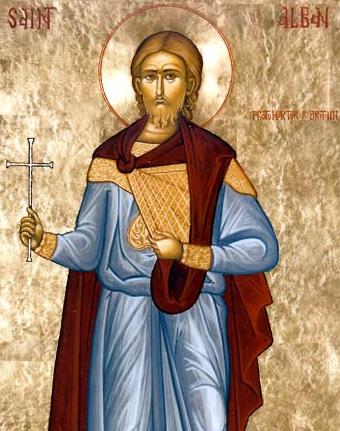 I believe that the stories of the early martyrs of the Church show us something profound about Christian theology: the fact that the early Christians did not fight back when faced with violent persecution is an acknowledgement of humanity’s inclusion in Christ.
In order to respond to violence with violence you have to regard the other person as somehow something different than yourself, somehow less than human or excluded from the humanity in which you are a participant. No officer ever tells his soldiers “go murder your brothers in the other army.” He says something like “wipe those @#!% off the face of the earth!!” Responding to violence with violence requires thinking like a roach exterminator, not thinking like a child of the Father in relationship with humanity in Jesus.
When Jesus said “Father, forgive them” and when the martyrs of the church have echoed his words, they were acknowledging that we are all in this together. The persecuted and the persecutor, the perpetrator and the victim, both share together in the life the Son shares with the Father and with humanity.
Thus the prayer for forgiveness. What the perpetrators of violence and persecution need is not a repayment of their violence in kind or even a transformation from being animals to being human in Christ. They are already human in Christ, they just aren’t acting like it. What they need is a change of mind – a repentance. To stop believing lies about themselves and start believing the truth: that they, like the ones they are persecuting, are already forgiven and included in Christ. In some of the stories of the martyrs the ones assigned to carry out their persecutions failed to do so. Sometimes in the martyrologies the persecutors stop, repent, and end up going to the death with the very ones they were told to kill (e.g. St. Alban’s executioner.)
In the end the Christian response to persecution in the ancient Roman world brought about the repentance and conversion of the Empire itself. With one voice the early church for three long centuries said of their Roman persecutors “They are human; they, like us, are part of the new humanity created in the Son’s incarnation; Father, forgive them, they don’t know what they’re doing.”
And the truth of this good news won the day. Perhaps it’s time for the church to return to the truth of humanity’s adoption in the Son and find again the power that comes from praying for those who persecute us and loving those that hate us.
~ Jonathan Stepp
Debating, Yes! Quarrelling, No!
Filed under: By Tim Brassell, Christian Living, Church, Evangelism, Gospel, Perichoresis, The Plan of Adoption, Trinity |
Comments (8)  The race to be President of the United States is on and so is the political debating! I must admit that I like the professional and orderly way most debates are handles in the United States and the opportunity to hear different thoughts and approaches about how our country might be led best. Of course, I get as frustrated as anyone with what I consider to be purely political responses, rather than speaking from the heart, but I think you get my point.
Unfortunately, it’s not always that professional and orderly in debating the Gospel. I wish we would, both in my denomination and beyond it, take more opportunity to do so! As I go around sharing the Good News as the Father, Son and Spirit Himself, and the Adoption of all into His Life and Love through the Son and in the Spirit, someone will inevitably say during a discussion time something like, “Can’t we stop debating theology and simply love one another!” Many times I want to say, “Can’t we debate AND love one another?!” because I am learning by experience that it doesn’t always have to be an either/or approach.
Understandably, I must admit that because of the way sin messes with our motives and attitudes, debates aren’t always the respectful interactions they ought to be between human sisters and brothers. Before you know it we can find ourselves responding defensively and antagonistically, experiencing a debate that quickly descends into nothing but sophisticated name-calling. That’s certainly NOT who we really are in Christ and I don’t think that is right either! Quarreling, no! Especially as outlined in Titus 3:9-11.
Nonetheless, I want to suggest that debating the Gospel isn’t all that bad, all the time, and especially if it can lead (comfortably or not), to rethinking and embracing the Truly Good News of the God revealed in Jesus Christ! Plus, and because we are sinners, there is often nothing less than a debate that will get the job done of provoking sinners to think differently and better about who we are in Jesus.
C.S. Lewis addresses the issue a little better, I think, when he says that:
If all the world were Christian, it might not matter if all the world were uneducated. But, as it is, a cultural life will exist outside the Church whether it exists inside or not. To be ignorant and simple now – not to be able to meet the enemies on their own ground – would be to throw down our weapons, and to betray our uneducated brethren who have, under God, no defence but us against the intellectual attacks of the heathen. Good philosophy must exist, if for no other reason, because bad philosophy needs to be answered. The cool intellect must work not only against cool intellect on the other side, but against the muddy heathen mysticisms which deny intellect altogether. ~ The Weight of Glory: Learning in War-Time, pp.58-59
Interestingly, C.S. Lewis became a Christian because of his much debating with J.R.R. Tolkien. You can see a portrayal of some of this interaction here. It gets really Gospel interesting at 3:32.
Taking off on what C.S. Lewis has to say, if everyone in the Church were thinking more properly about God, it might not matter to try and clarify the Gospel. But, as it is, a cultural life exists inside and outside the Church that primarily sees God as a single, solitary being, even though it professes in scripture and creed that it believes God is in fact the Relational God of Father, Son and Spirit. To be ignorant and simple now, after the Holy Spirit in the Church has gone through such painstaking efforts and time within the Church to make the Gospel of the Triune God and our Inclusion in His Life and Love so plain, would be to let the adversary have his way, and to throw down our Good News weapons, betraying our uneducated brethren who, under God the Trinity, have no defense but us for the truth and against the lies twisting that truth to their harm!
Good theology must exist, if for no other reason than that bad theology needs to be answered. The transformed and right mind must work not only against the transformed and alienated mind on the other side, but against the muddy illusions and lies (prevalent even in many Christian circles!), which almost deny the mind altogether!
Though I can appreciate a desire for the peace and simplicity we were all designed for, it is obvious in the God revealed in Jesus “a man of sorrows” (Isaiah 53:3) that, because of our sin, it doesn’t happen without debate and a kind of war. I think I have discovered by personal experience and in my many discussions on the Gospel with others, that it is not always so much the negative atmosphere of quarreling that others desire to flee as it is the pain of repentance or rethinking. Exposure to the Light of Christ in our darkness is, admittedly, not a pleasant experience, and especially after such a huge investment of our time, talents and treasure given to such darkness. Ouch!!! I’ve been embarrassed and done my share of hair-pulling!
So, leave quarrels about the law alone! But also leave some room in your love and Christian fellowship for a dose of healthy Gospel debating! If you are familiar with Church history, the Church has remained grounded on, or come back to, interacting with and discussing God the Trinity and mankind’s inclusion in His relationship because of much debating.
And remember:
A man named Apollos came to Ephesus. He was a Jew, born in Alexandria, Egypt, and a terrific speaker, eloquent and powerful in his preaching of the Scriptures. He was well-educated in the way of the Master and fiery in his enthusiasm. Apollos was accurate in everything he taught about Jesus up to a point, but he only went as far as the baptism of John. He preached with power in the meeting place. When Priscilla and Aquila heard him, they took him aside and told him the rest of the story. When Apollos decided to go on to Achaia province, his Ephesian friends gave their blessing and wrote a letter of recommendation for him, urging the disciples there to welcome him with open arms. The welcome paid off: Apollos turned out to be a great help to those who had become believers through God’s immense generosity. He was particularly effective in public debate with the Jews as he brought out proof after convincing proof from the Scriptures that Jesus was in fact God’s Messiah. ~ Acts 18:24-28, The Message
~ Timothy J. Brassell
Being Truly Seen
Filed under: By Nan Kuhlman, Christian Living, Love, Relationships, Uncategorized | Tags: Alzheimer's disease, George Kuhlman, God sees our hearts, Joan Kuhlman, long-term relationships, married for 50 years, seeing another's heart
Comments (6) 
This is a picture of my father-in-law and mother-in-law, George and Joan Kuhlman, taken around 1958 when they were in their 20s. George passed away in December 2009, and Joan is now in the latter stages of Alzheimer’s disease.
Shortly after George’s funeral, I had to take Joan to the Social Security office to register her for widow’s benefits. After we were finished and I was taking her back to the assisted living facility, she said, “And he was such a young guy,” shaking her head sadly.
“Are you talking about George?” I asked. She nodded her head yes. “Well, he was 77,” I reminded her. She shrugged her shoulders and looked out the car window. Although at first I thought her comment was due to her affliction with Alzheimer’s, I realized later that what she said was true.
Her comment struck me because after 50 years of marriage, her memory of George was as a young man. She didn’t see how he had aged, and how age made it almost impossible for him to walk. She saw him as he truly was at his most vibrant and happy self, unencumbered by the effects of aging.
I can now understand how my mother-in-law would think of her 77-year-old husband as “just a young guy.” I know that after only 25 years of marriage, I still remember my husband as he looked on our wedding day. Fortunately, he still sees me as I was 25 years ago, too.
This is a gift, I believe, that the Triune God shares with us in any long-term relationship we have on earth, whether it is marriage, family, or friendship. The Father, Son, and Spirit see us at our best, most vibrant selves, and the aging process of our bodies does nothing to diminish our value in their sight.
This makes me think of the story of Samuel and his search for the man God had chosen to replace Saul as king of Israel. Samuel took one look at Jesse’s oldest son, Eliab, and thought he was the one. But God had a different idea:
“Looks aren’t everything. Don’t be impressed with his looks and stature. I’ve already eliminated him. God judges persons differently than humans do. Men and women look at the face; God looks into the heart” (The Message, I Samuel 16:7).
The Triune God sees us at our deepest and most authentic and shares this ability with those people who choose to be a part of our life’s journey for the long haul. The Father, Son, and Spirit know us on the inside, and any change that occurs on the outside is inconsequential to who we are at our core. That is why my mother-in-law referred to her late 77-year-old husband as a “young guy.” When we are committed to a relationship, we are blessed with the Triune God’s ability to look into another’s heart and truly see them for who they are.
~by Nan Kuhlman
Deification in Christ
Filed under: By Jonathan Stepp, Church, Gospel, The Plan of Adoption | Tags: Deification, Jesus, Perichoresis, Trinity
Comments (2)  Why did the Son of God become the man Jesus? Most of us have been trained in a form of Christianity that says that our sin created the necessity for the incarnation. This answer to the question was first described in detail by St. Augustine, then expounded in Medieval Theology and handed on to us by the Reformers. I believe that this perspective minimizes the Bible’s teaching on the Father’s plan of Adoption (Eph. 1:5).
One of my favorite quotes on this subject comes from the Greek Orthodox theologian Panayiotis Nellas in his book Deification in Christ. Here Nellas describes the negative results of this truncated, sin-centered view of Jesus’ Mission:
. . [negative] consequences followed also from Augustine’s axiom that “if many had not perished, the Son of Man would not have come.” [Enchiridion viii, 27-ix, 29.] This trapped Christ, and by extension the Christian life and the realities of the Church, the sacraments, faith and the rest, within the bounds defined by sin. Christ in this perspective is not so much the creator and recapitulator of all things, the Alpha and Omega as Scripture says, but simply the redeemer from sin. The Christian life is regarded not so much as the realization of Adam’s original destiny, as a dynamic transformation of man and the world and as union with God, but as a simple escape from sin. . . The Church forgets her ontological bond with the world. And the world, seeing that its positive aspects are not appreciated within the Church, feels a sense of alienation and breaks off relations with it. ~ Deification in Christ: The Nature of the Human Person, by Panayiotis Nellas, p. 95. Crestwood, NY: St. Vladimir’s Seminary Press, 1997.
As Nellas suggests, we must recover the early Christian perspective on Christ that sees his work as not only the cure of sin but as the deification of humanity – that is to say, the adoption of humanity into the Triune Life of the Deity and our maturing into full sons and daughters of the Father, in the Son, through the Spirit. We must recover the full, comprehensive view of Christ which sees him as the beginning and purpose of all things, all people, and the whole creation.
~ Jonathan Stepp