Archive for the ‘By Tim Brassell’ Category
“The Ultimate Goal of God’s Healing and Wholeness!”
Filed under: Bible, By Pastor Timothy, By Tim Brassell, By Timothy Brassell, Christian Living, Christianity, Church, Discipleship, Evangelism, Faith, GCI Windsor Mill, Maryland, God, God Father Son and Spirit, God the Trinity, God's love, good news, Good News Celebration, Gospel, Grace Communion Baltimore, Grace Communion International, identity in Christ, Inclusion, Jesus Christ, Love, Ministry, New Life Fellowship Of Baltimore Maryland, New Life Fellowship Of Windsor Mill, MD., On Mission with Christ, Participation with Christ, Participation with Jesus, Pentecost, Perichoresis, Prayer, relationship with God, Relationships, Resurrection, Sermons, The Church, The Dance and Dream of the Trinity, The Father, Son and Holy Spirit, The Gospel Project, The Holy Spirit, Timothy Brassell, Trinity, Uncategorized, union, Union In Christ, Union with Christ, Witness, Witnessing to God, Witnessing to Jesus, Worship, Worshiping God, Worshipping Jesus | Tags: Acts 3, Acts 4, Adoption, Basic Christian Doctrine, Being In God's Family, Christian Faith, Christian Living, Christianity, Church, Faith, GCI Baltimore, God's Faith, God's Grace, God's love, Gospel, Grace Communion International, Having The Peace Of God, healing, Healing And Wholeness, How God Reveals Himself, Humanity Revealed, Humanity Revealed In Jesus, Jesus, Knowing The Father's Love, Life's meaning and Significance, Love, New Life Fellowship Baltimore MD, New Life Fellowship Of Baltimore Maryland, Relationships, Revealing Your Life's Purpose, Sharing God More Accurately, Sharing In God's JOy, Sharing In God's Laughter, Sharing In The Divine Nature, The Basic Christian Belief, The God Who Is Love, the reason for your existence, Timothy Brassell of New Life Fellowship, Trinitarian Theology, Trinity, Understanding God, Understanding Human Beings, Understanding Life's Calling, Who Is God?, Who Is Jesus?
 Leave a comment
Audio Part A:
Audio Part B:
Full Audio Message:
Watch on Youtube:
Scripture: Acts 3. Acts 4:1-4 (CSB)
Summary:
What is the ultimate goal of God’s healing and wholeness? Is it simply that our bodies are healed, our circumstances improve, or our problems disappear? In this Gospel-centered message, Pastor Tim takes us deeper into Acts 3 and into Acts 4 to show us that, as wonderful as healing is, healing itself is not the ultimate goal. The ultimate goal of God’s healing and wholeness is restored relationship with God the Father through Jesus Christ in the Holy Spirit.
The man at the Beautiful Gate expected silver or gold, but God had something far greater in mind. Through Peter and John, the Father spoke a gracious “counter word” to the brokenness of this man’s life: “In the name of Jesus Christ of Nazareth, get up and walk!” His healing was real, physical, and astonishing but it was also pointing beyond itself to Jesus Christ, the One in Whom God is healing and restoring His creation.
Pastor Tim reminds us that this is the pattern of the apostolic Gospel. The Gospel is always “a word of God’s gracious healing in the name of Jesus Christ.” Every word spoken by sin and its consequences is confronted by the Father’s gracious word of healing and restoration in His Son. This is why Jesus must remain at the center of our witness. We do not ultimately point people to ourselves, our power, our goodness, or even merely to better circumstances. We point them to Jesus.
This matters because Pastor Tim reminds believers that we are successors of the apostles, not apostles in the unique sense of those original eyewitnesses who walked with Jesus, but successors in receiving and passing on their testimony. What they testified about Jesus Christ is now the testimony entrusted to us. The times may change. Cultures may change. The language we use may change, but the Gospel does not change. So what does that Gospel sound like?
It begins with grace. With what the Father has already accomplished for us in Jesus Christ, and in the light of Jesus, sin is exposed for what it truly is: not merely immoral behavior, but our rejection of God Himself, the very Source of our life. Yet sin never gets the final word. As Pastor Tim emphasizes, God’s grace is greater than our sin. Jesus has entered our broken humanity, borne our sin and its consequences, taken them into His death, and raised our humanity with Him in His resurrection toward the restoration of all things.
The early Church Father Athanasius beautifully captures this movement of God toward us in Jesus Christ: “the most holy Son of the Father, being the Image of the Father, came to our region to renew man once made in His likeness, and find him, as one lost, by the remission of sins”— St. Athanasius, On the Incarnation, §14
This is the gracious movement we see proclaimed in Acts. The Son comes from the Father not merely to repair something in us, but to renew and restore humanity in Himself. God’s healing is ultimately directed toward communion. Our participation, through the Holy Spirit, in the Son’s own relationship with His Father.
That grace calls for a response: “Repent and turn back.” Repentance is not an attempt to persuade a reluctant God to come near to us. The Lord is already present and acting graciously toward us. Rather, we are called to turn, receive, trust, and begin participating in the life that has already been given to us in Jesus Christ. Repentance means responding with our whole selves, body and soul, to Christ.
And here we arrive at the heart of the message: “The goal is not healing. Healing is not an end in itself.” Physical healing matters. Spiritual healing matters. The restoration of broken circumstances matters. But all of it ultimately serves the Father’s greater purpose of drawing us into communion with Himself through His Son and in His Spirit.
That is why Luke does not end this story with a healed man walking and leaping. The healing opens the way for the Gospel to be proclaimed and Acts 4 tells us that many who heard the message believed. The number of men alone grew to about 5,000. The miracle pointed beyond itself to Jesus, and through Jesus people were drawn into relationship and union with God.
The apostolic message also points forward. Jesus, Who is truly present with us now by the Holy Spirit, will return bodily in glory, and God is moving His creation toward “the restoration of all things.” The Gospel therefore carries both gracious invitation and urgency: turn to Christ, trust Him, receive what is already yours in Him, and participate now in the life of the Father, Son, and Holy Spirit.
Reflective Moment:
What if the healing you are asking God for is pointing toward something even deeper?
Bring the Father your need, your pain, and everything that longs to be made whole, but remember that His ultimate goal is more than changed circumstances. In Jesus Christ, through the Holy Spirit, He is drawing us into deeper communion with Himself.
As Pastor Tim concludes, “the ultimate goal of God’s healing and wholeness is a relationship restored to God the Father through Jesus Christ and in the Holy Spirit.”
We encourage you to watch the full message as Pastor Tim walks through the apostolic Gospel in Acts 3–4 and challenges us to consider not only what we believe about God’s healing, but what message we are passing on to others as witnesses of Jesus Christ.
“Our Father’s Gracious Way of Healing and Wholeness!”
Filed under: Bible, By Pastor Timothy, By Tim Brassell, By Timothy Brassell, Christian Living, Christianity, Church, Discipleship, Evangelism, Faith, GCI Windsor Mill, Maryland, God, God Father Son and Spirit, God the Trinity, God's love, good news, Gospel, Grace Communion Baltimore, Grace Communion International, identity in Christ, Inclusion, Jesus Christ, Love, Ministry, New Life Fellowship Of Baltimore Maryland, New Life Fellowship Of Windsor Mill, MD., On Mission with Christ, Participation with Christ, Participation with Jesus, Perichoresis, Prayer, relationship with God, Relationships, Scripture Paraphrases, Sermons, The Church, The Dance and Dream of the Trinity, The Father, Son and Holy Spirit, The Gospel Project, The Holy Spirit, The Plan of Adoption, Timothy Brassell, Trinity, Uncategorized, union, Union In Christ, Union with Christ, Witness, Witnessing to God, Witnessing to Jesus, Worship, Worshiping God | Tags: Acts 3, Acts 3:1-16, Adoption, Basic Christian Doctrine, Being In God's Family, Christian Faith, Christian Living, Christianity, Church, Faith, GCI Baltimore, God's Faith, God's Grace, God's love, Gospel, Grace Communion International, Having The Peace Of God, healing, Healing And Wholeness, How God Reveals Himself, Humanity Revealed, Humanity Revealed In Jesus, Jesus, Knowing The Father's Love, Life's meaning and Significance, Love, New Life Fellowship Baltimore MD, New Life Fellowship Of Baltimore Maryland, Relationships, Revealing Your Life's Purpose, Sharing God More Accurately, Sharing In God's JOy, Sharing In God's Laughter, Sharing In The Divine Nature, The Basic Christian Belief, The God Who Is Love, the reason for your existence, Timothy Brassell of New Life Fellowship, Trinitarian Theology, Trinity, Understanding God, Understanding Human Beings, Understanding Life's Calling, Who Is God?, Who Is Jesus?, Wholeness
Leave a comment 
Audio Part A:
Audio Part B:
Full Audio Message:
Watch on YouTube
Scripture: Acts 3:1-16
Summary:
What if our healing and wholeness do not finally depend on the strength of our faith, but on the gracious faithfulness of Jesus Christ for us?
Acts 3 brings us face-to-face with a man who had been lame from birth. Each day he was carried to the temple gate to beg. When Peter and John approached, he looked to them expecting what he had learned to expect. Perhaps a little silver or gold to help him make it through another day. But the Father had something far greater in mind. “In the name of Jesus Christ of Nazareth, get up and walk,” Peter tells him. The man is raised to his feet, and suddenly the one who had to be carried is walking, leaping, and praising God.
In this deeply Gospel Centered Message, Pastor Timothy Brassell invites us to see this healing for what it truly is: not a display of Peter and John’s spiritual power, not the result of a technique or formula, and not even a testimony to the strength of this man’s faith. It is first and foremost a revelation of the grace of the Father, through the Son, and in the Holy Spirit.
Peter makes that clear when the astonished crowd turns its attention toward him and John: Why are you looking at us as though we made this man walk by our own power or godliness?
The apostles are not the healers. God is. And that matters because, as Pastor Tim emphasizes, healing is always an act of the Father, Son, and Holy Spirit. The Father is not reluctant to heal while Jesus is compassionate. Jesus is not trying to persuade an unwilling Father to show mercy. And the Holy Spirit is not some impersonal power that can be summoned, manipulated, or controlled. The Father, Son, and Holy Spirit are one God, united in being, love, purpose, and action. The compassion we encounter in Jesus is the compassion of His Father made known to us in the Son.
Perhaps, then, one of the deepest healings we need is a healed understanding of God Himself. Healing from the picture of a Father more stern than Jesus, from the idea that the Holy Spirit is merely a spiritual power source, and from the belief that God must somehow be persuaded by the right amount of faith before He will be gracious toward us. Jesus reveals something altogether different. Grace is not first something God gives us. Grace comes to us personally in Jesus Christ. The Father’s gracious Way is His Son. In Jesus, God has come into our broken humanity, taken our condition upon Himself, borne our suffering and sin, and brought our humanity through death into resurrection life and wholeness.
This is why the healing in Acts 3 cannot finally be separated from who Jesus Christ is and what He has accomplished for humanity. The physical healing of this man is a sign, a real participation now in the complete healing and wholeness toward which God is bringing His creation in Christ.
But Acts 3 also confronts another deeply rooted assumption about healing: What happens when our faith isn’t strong enough? The remarkable thing is that the man at the temple gate does not come demonstrating extraordinary faith. He does not even ask to be healed. He asks for money. As Pastor Tim emphasizes, he is simply trying to get through another day, and then he is surprised by grace. That takes us to the heart of the Gospel. Our ultimate hope does not rest in the strength with which we hold onto Jesus, but in the strength with which Jesus Christ holds onto us.
Thomas F. Torrance captured this beautifully when reflecting on holding his young daughter’s hand as she learned to walk: “She did not rely upon her feeble grasp of my hand but upon my strong grasp of her hand which enfolded her grasp of mine within it. That is surely how God’s faithfulness actualized in Jesus Christ has hold of our weak and faltering faith and holds it securely in his hand.” — Thomas F. Torrance, The Mediation of Christ, p. 83
That image is especially striking alongside Acts 3. Here is a man who cannot walk, being raised to his feet by a grace that precedes his understanding and exceeds his expectations. And this is where Pastor Tim’s emphasis on the faith of Jesus Christ becomes so important. When our faith is weak, faltering, confused, or seemingly absent, the Good News is not that we must somehow manufacture enough faith to make God act. Jesus Christ has already lived the faithful human response to the Father on our behalf and in our humanity.
As Torrance puts it elsewhere: “We rely wholly upon the vicarious faith of Christ and not upon ourselves even in the act of faith.” — Thomas F. Torrance, The School of Faith, p. cix
That does not make our faith meaningless. It puts our faith in its proper place. Our faith participates in His. We trust because we have first been grasped by the faithful One. That is why there is no room here for magical remedies, spiritual manipulation, or so-called faith healers who suggest that healing can be obtained if we perform the right action, possess the right object, or generate sufficient faith.
God cannot be manipulated. But that is wonderfully liberating Good News, because the God who cannot be manipulated does not need to be manipulated. He is already gracious. He already has compassion upon our suffering. He knows our weakness and our need. The Father has acted decisively for our healing and wholeness in His Son, and the Holy Spirit is at work making real in us what Jesus has accomplished for us.
This does not mean every physical healing happens immediately. Some healing is progressive. Some we continue to await. Physical things may become channels through which God graciously blesses us, but the channel must never be confused with the Source. Healing remains grace from beginning to end. And so we wait, pray, receive medical care, walk with one another, and continue trusting, not because we have discovered a formula that guarantees the outcome we desire, but because we are coming to know Who our God is. The Father is for our healing and wholeness. The Son has taken our broken humanity into Himself. And the Holy Spirit is at work bringing us into participation in the life and wholeness accomplished in Jesus.
Reflective Moment
Where are you most aware of your need for healing and wholeness today? And beneath that question may be an even deeper one: What do you believe about the God from whom you are seeking healing?
Are you trying to convince Him to be gracious? Are you measuring His willingness by the strength of your faith? Are you afraid that your weakness or inability to believe strongly enough has placed you beyond His compassionate reach? Look again at Jesus.
In Him we see the Father’s heart toward us. In Him our humanity has been taken up, healed, reconciled, and brought home to the Father. And by the Holy Spirit, we are being brought more and more into participation in that healing and wholeness. Your weak grasp of Him is held within His strong grasp of you. Perhaps that is the invitation of Acts 3: receive the Good News, take the hand extended to you in grace, and, even while some healing remains unfinished, rise up and walk in the faithfulness of Jesus Christ.
Watch Pastor Timothy Brassell’s full message, and hear more about the Father’s gracious and compassionate heart, the faith of Jesus Christ for us, and the work of the Holy Spirit in bringing us into the healing and wholeness accomplished for us in Jesus Christ.
“The Father Loves and Likes You: More Than an Event, It’s GOOD NEWS!”
Filed under: Bible, By Pastor Timothy, By Tim Brassell, By Timothy Brassell, Christian Living, Christianity, Church, Discipleship, Faith, GCI Windsor Mill, Maryland, God, God Father Son and Spirit, God the Trinity, God's love, good news, Good News Celebration, Gospel, Grace Communion Baltimore, Grace Communion International, identity in Christ, Inclusion, Jesus Christ, Love, Ministry, New Life Fellowship Of Baltimore Maryland, New Life Fellowship Of Windsor Mill, MD., On Mission with Christ, Participation with Christ, Participation with Jesus, Perichoresis, Prayer, relationship with God, Relationships, Sermons, The Church, The Dance and Dream of the Trinity, The Father Loves and Like You Celebration, The Father, Son and Holy Spirit, The Gospel Project, The Holy Spirit, The Plan of Adoption, Timothy Brassell, Trinity, Uncategorized, union, Union In Christ, Union with Christ, Witness, Witnessing to God, Witnessing to Jesus, Worship, Worshiping God, Worshipping Jesus | Tags: 1 John 4:9-10, Adoption, Basic Christian Doctrine, Being In God's Family, Christian Faith, Christian Living, Christianity, Church, Faith, GCI Baltimore, God's Faith, God's Grace, God's love, good news, Gospel, Grace Communion International, Having The Peace Of God, How God Reveals Himself, Humanity Revealed, Humanity Revealed In Jesus, Jesus, John 14: 9, Knowing The Father's Love, Life's meaning and Significance, Love, Matthew 3:17, New Life Fellowship Baltimore MD, New Life Fellowship Of Baltimore Maryland, Ocean City, Relationships, Revealing Your Life's Purpose, Sharing God More Accurately, Sharing In God's JOy, Sharing In God's Laughter, Sharing In The Divine Nature, The Basic Christian Belief, The father Loves and Likes You Celebration, The God Who Is Love, The Life Of The Trinity, the reason for your existence, Ther Father Loves and Likes You, Timothy Brassell of New Life Fellowship, torrance, Trinitarian Theology, Trinity, Understanding God, Understanding Human Beings, Understanding Life's Calling, Who Is God?, Who Is Jesus?
Comments (1) 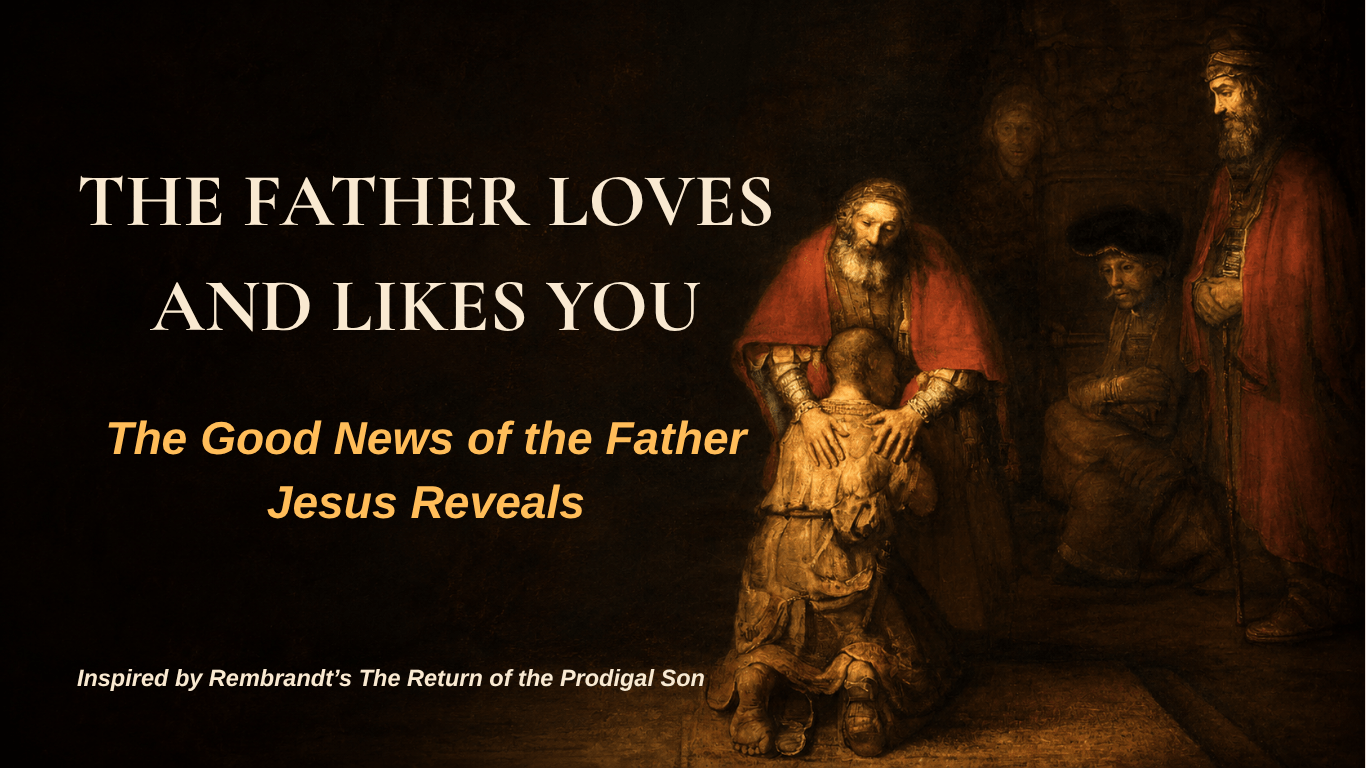
What do you believe God thinks about you?
Many of us have heard the words “God loves you” for most of our Christian lives. We know the verses. We sing the songs. We say the words. But somewhere beneath all of that, we may still wonder: Does God really like me? We can sometimes imagine God as distant or disappointed, or even think of Jesus as the One who came to convince an otherwise reluctant Father to love and accept us. But that is not the Father Jesus reveals.
Jesus tells us: “The one who has seen me has seen the Father.”— John 14:9 CSB
Jesus does not come to change the Father’s mind about us; He comes from the Father and reveals Him to us. The compassion, welcome, grace, and love we see in Jesus reveal what God is truly like.
Theologian Thomas F. Torrance expressed this beautifully: “There is thus no God behind the back of Jesus Christ, but only this God whose face we see in the face of the Lord Jesus.” — Thomas F. Torrance, The Christian Doctrine of God
That is profoundly Good News. The Father we meet in Jesus is the Father who has always loved us. The Son did not come to make the Father gracious; He came because the Father is gracious.
The Gospel Begins With God
The Gospel does not begin with humanity trying to find its way back to God. It begins with God coming to us. The Father sends the Son in the power of the Holy Spirit. The Son assumes our humanity and enters fully into our broken condition. Through His life, death, resurrection, and ascension, Jesus reconciles humanity to God, and by the Holy Spirit, we are invited to participate in the Son’s communion with His Father. Our relationship with God, then, does not begin with making ourselves lovable enough, faithful enough, religious enough, or good enough. It begins with who God is, and what He has done for us in Jesus Christ.
As Scripture tells us: “God’s love was revealed among us in this way: God sent his one and only Son into the world so that we might live through him. Love consists in this: not that we loved God, but that he loved us and sent his Son to be the atoning sacrifice for our sins.”— 1 John 4:9–10 CSB. God’s grace comes first. Our response comes afterward.
The Father Loves—and Likes—YOU!
That is why “The Father Loves and Likes You” is more than the title of an event. It points us toward the Good News revealed in Jesus Christ. The Father doesn’t love you reluctantly or merely tolerate you. In Jesus Christ, we discover that the Father truly loves and likes humanity and graciously desires our participation in His life. There is something wonderfully personal about the word ‘likes’. It is not meant as a sentimental claim about God, but to express the personal and relational character of His love which is, His gracious desire for us to share in His life and communion.
At Jesus’ baptism, the Father declares: “This is my beloved Son, with whom I am well-pleased.” — Matthew 3:17 CSB
Jesus is eternally the beloved Son of the Father. And through Jesus Christ and by the Holy Spirit, we are graciously adopted as God’s children and invited to participate in the Son’s communion with His Father. The Christian life, then, is not an anxious attempt to persuade God to accept us. It is learning to live in the reality of the grace that has already come to us in Jesus Christ. We worship and love because He first loved us. We serve because He first served us. We give because He first gave Himself to us. And we share the Gospel because this Good News is simply too good to keep to ourselves.
A Celebration of the Gospel
It is this Good News that is at the heart of The Father Loves and Likes You Celebration – A Gospel Celebration Weekend, hosted by New Life Fellowship, October 15–18, 2026, in Ocean City, Maryland.
This weekend is about more than attending another Christian event. It is an opportunity to gather around Jesus Christ and the Gospel. To worship, learn, ask questions, fellowship, celebrate, and grow together in our understanding of the Father, Son, and Holy Spirit. Throughout the weekend, guest teachers and pastors will help us explore the Gospel and what it means to live in the reality of who God has revealed Himself to be in Jesus Christ. There will be teaching sessions, opportunities for questions and responses, worship and prayer, fellowship, Sunday worship, and even an evening to simply enjoy being together at The Great Dinner Dance.
The Gospel doesn’t merely give us something to study. It gives us Someone to know, a life to participate in, and something worth celebrating.
Reflective Moment
When you imagine God looking at you, what do you see on His face? Disappointment? Distance? Reluctant acceptance? Or are you learning to see the Father through Jesus?
Jesus tells us, “The one who has seen me has seen the Father.” Look at Jesus, welcoming sinners, touching the untouchable, giving Himself for the world, and rising victorious over sin and death. This is the Father, Jesus reveals. What might change if you truly believed that the Father does not merely tolerate you, but in Jesus Christ has graciously drawn you near? This is Good News to receive, a life to participate in, and a Gospel worth celebrating.
You’re Invited!
The Father Loves and Likes You Celebration – A Gospel Celebration Weekend, October 15–18, 2026 | Ocean City, Maryland
We would love for you to join us for this special weekend centered on Jesus Christ and the Good News of the Father, Son, and Holy Spirit, with Gospel teaching, worship, prayer, fellowship, questions and responses, and celebration.
Registration Is Currently FREE!
Early Registration is complimentary through September 15, 2026. Beginning September 16, registration will be $150, so we encourage you to register early and reserve your place for the Celebration.
REGISTER FOR THE CELEBRATION
https://www.newlifebaltimore.org/events
Explore the Celebration Booklet
Want to know more about the weekend? Our Celebration Booklet has everything you need to know in one place, including our speakers, teaching and worship, weekend highlights, The Great Dinner Dance, hotel information, things to do while you’re in Ocean City, and more.
VIEW THE CELEBRATION BOOKLET
https://tinyurl.com/FLLUC-Booklet
Reserve Your Hotel Room
The Celebration will be held at the Holiday Inn Oceanfront, 6600 Coastal Highway, Ocean City, Maryland 21842.
Please remember that hotel accommodations are not included with Celebration registration and must be reserved separately. A special group reservation link is available for Celebration attendees. Rooms are limited, so we encourage you to make your hotel reservation early.
RESERVE YOUR HOTEL ROOM
https://tinyurl.com/NLFHolidayInn
We hope you’ll join us in Ocean City as we gather around the Gospel, grow together in our understanding of who God has revealed Himself to be in Jesus Christ, and celebrate the Good News that the Father loves—and likes—you!
Hosted by New Life Fellowship
Centered on Jesus Christ • Participating in the Life of the Trinity
“Jesus Has An Agenda Of Healing and Wholeness!”
Filed under: Bible, By Pastor Timothy, By Tim Brassell, By Timothy Brassell, Christian Living, Christianity, Church, Discipleship, Evangelism, Faith, GCI Windsor Mill, Maryland, God, God Father Son and Spirit, God the Trinity, God's love, good news, Gospel, Grace Communion Baltimore, Grace Communion International, identity in Christ, Inclusion, Jesus Christ, Love, Ministry, New Life Fellowship Of Baltimore Maryland, New Life Fellowship Of Windsor Mill, MD., On Mission with Christ, Participation with Christ, Participation with Jesus, Perichoresis, Prayer, relationship with God, Relationships, Sermons, The Church, The Dance and Dream of the Trinity, The Father, Son and Holy Spirit, The Gospel Project, The Holy Spirit, The Plan of Adoption, Timothy Brassell, Trinity, Uncategorized, union, Union In Christ, Union with Christ, Witness, Witnessing to God, Witnessing to Jesus, Worship, Worshiping God, Worshipping Jesus | Tags: Acts3, Adoption, Basic Christian Doctrine, Being In God's Family, Christian Faith, Christian Living, Christianity, Church, Faith, GCI Baltimore, God's Faith, God's Grace, God's love, Gospel, Grace Communion International, Having The Peace Of God, Healing And Wholeness, How God Reveals Himself, Humanity Revealed, Humanity Revealed In Jesus, Jesus, Knowing The Father's Love, Life's meaning and Significance, Love, New Life Fellowship Baltimore MD, New Life Fellowship Of Baltimore Maryland, Relationships, Revealing Your Life's Purpose, Sharing God More Accurately, Sharing In God's JOy, Sharing In God's Laughter, Sharing In The Divine Nature, The Basic Christian Belief, The God Who Is Love, the reason for your existence, Timothy Brassell of New Life Fellowship, Trinitarian Theology, Trinity, Understanding God, Understanding Human Beings, Understanding Life's Calling, Who Is God?, Who Is Jesus?
Leave a comment 
Audio Part A:
Audio Part B:
Full Audio Message:
Watch On YouTube
Summary
In Acts 3, a man who had been lame from birth sat at the temple gate expecting to receive silver or gold. Instead, through Peter and John, he encountered something far greater. The healing and wholeness of Jesus Christ.
As St. Athanasius wrote: “The Lord did not come to make a display. He came to heal and to teach suffering men.” — St. Athanasius, On the Incarnation, §43
That gets right to the heart of this passage and Pastor Timothy Brassell’s message: Jesus has an agenda of healing and wholeness.
But Pastor Tim reminds us to keep first things first. Peter and John did not heal this man by their own power or godliness. Jesus did. Peter and John were participating in the continuing ministry of the risen Christ. In the same way, we do not have an independent ministry of our own. United to Christ and empowered by the Holy Spirit, we are invited to participate in His ministry.
And Jesus’ agenda is the Father’s agenda and the Holy Spirit’s agenda. The Father, Son, and Holy Spirit God is at work bringing His broken humanity and creation toward the healing and wholeness revealed in Jesus Christ. In the great Gospel sense, our humanity has already been taken up, healed, sanctified, and made whole in Jesus; and through the Holy Spirit, what is true of us in Him is being worked out in us.
This gives us hope even when healing does not come when or how we expect. We do not determine God’s ultimate intention for us by looking only at our present circumstances. We look to Jesus. In His resurrection we see the future of our humanity. Present healing, whether extraordinary or through the ordinary gifts of medicine, care, food, community, and service, points toward the day when God will make all things whole.
The healing at the Beautiful Gate also teaches us something important about grace. The man was asking for money; he wasn’t even expecting to be healed. God gave him far more than he imagined. His healing was not something he earned, it came unexpectedly and by grace. Our healing and wholeness likewise do not rest upon our worthiness, but upon God’s gracious intention for us in Jesus Christ.
And that grace changes how we see other people. Rather than first defining people by their failures, sins, circumstances, or labels, Pastor Tim challenges us to see them as Jesus does. Jesus sees suffering and moves toward people with grace. As members of His Body, we are called to ask not merely what someone wants from us, but how Jesus might be inviting us to participate in His healing and wholeness in their life.
Reflective Moment
Where do you need to trust Jesus’ agenda of healing and wholeness today? And who has He placed before you?
Perhaps, like Peter and John, you do not have the “silver or gold” someone expects. But united to Jesus and filled with the Holy Spirit, you have something to give. What might change if you looked at that person through the eyes of Christ and asked, “Jesus, how are You inviting me to participate in what You are doing here?” The Father has not changed His mind about humanity. Jesus Christ is alive, His ministry continues, and the Holy Spirit is at work.
Watch Pastor Timothy Brassell’s full message as he explores Acts 3:1–16 and what it means for us to participate in the healing and wholeness of Jesus Christ.
“Jesus’ Membership Has Its Privileges, Rewards, and Costs!”
Filed under: Bible, By Pastor Timothy, By Tim Brassell, By Timothy Brassell, Children's Ministry, Christian Living, Christianity, Church, Discipleship, Faith, Fiction, GCI Windsor Mill, Maryland, God, God Father Son and Spirit, God the Trinity, God's love, good news, Gospel, Grace Communion Baltimore, Grace Communion International, identity in Christ, Inclusion, Jesus Christ, Love, Ministry, New Life Fellowship Of Baltimore Maryland, New Life Fellowship Of Windsor Mill, MD., On Mission with Christ, Participation with Christ, Participation with Jesus, Prayer, relationship with God, Relationships, Sermons, Song, The Church, The Dance and Dream of the Trinity, The Father, Son and Holy Spirit, The Gospel Project, The Holy Spirit, The Plan of Adoption, Timothy Brassell, Trinity, Uncategorized, union, Union In Christ, Union with Christ, Witness, Witnessing to God, Witnessing to Jesus, Worship, Worshiping God, Worshipping Jesus | Tags: Acts 3, Adoption, Basic Christian Doctrine, Being In God's Family, Christian Faith, Christian Life, Christian Living, Christianity, Church, Faith, GCI Baltimore, God's Faith, God's Grace, God's love, Gospel, Grace Communion International, Having The Peace Of God, How God Reveals Himself, Humanity Revealed, Humanity Revealed In Jesus, Jesus, Knowing The Father's Love, Life's meaning and Significance, Love, New Life Fellowship Baltimore MD, New Life Fellowship Of Baltimore Maryland, Relationships, Revealing Your Life's Purpose, Sharing God More Accurately, Sharing In God's JOy, Sharing In God's Laughter, Sharing In The Divine Nature, The Basic Christian Belief, The God Who Is Love, the reason for your existence, Timothy Brassell of New Life Fellowship, Trinitarian Theology, Trinity, Understanding God, Understanding Human Beings, Understanding Life's Calling, Who Is God?, Who Is Jesus?
Leave a comment 
Audio Part A:
Audio Part B:
Full Audio Message:
Watch on YouTube:
Scripture: Acts 3: 1-11
Summary:
“The Church is the Church only when it exists for others.”— Dietrich Bonhoeffer, Letters and Papers from Prison
What does it really mean to be a member of Jesus Christ’s Church?
In Acts 3:1–11, Peter and John encounter a man who had been unable to walk from birth. He is carried daily to the temple gate to beg, expecting Peter and John to give him money. Instead, Peter tells him, “I don’t have silver or gold, but what I do have, I give you. In the name of Jesus Christ of Nazareth, get up and walk!” The man rises, enters the temple with them, and begins walking, leaping, and praising God.
But Pastor Timothy Brassell invites us to look beyond the miracle and ask an important question: Who are Peter and John, and what does their relationship with Jesus reveal about who we are as His Church?
Peter and John are not acting independently of Jesus. Acts is the continuing ministry of the risen and ascended Jesus Christ, working in and through His people by the Holy Spirit. Jesus remains the Head of His Body, and His followers are invited to participate with Him in what He is doing. This is not simply Peter and John’s story, it is also our story as members of Christ’s Body. Their lives show us something of what it means to be chosen by Christ, to belong to Christ, and to be sent by Christ for His purposes in the world. That changes the way we understand church membership.
Membership is more than having our name on a church roll, attending worship, or simply identifying ourselves as Christians. As Pastor Tim emphasizes, “Membership is union with Christ and participating with Christ.” We are members of His Body, joined to Christ and to one another for participation in His continuing ministry. To be a member of Christ’s Body means recognizing that we belong to Someone else. Our lives are His, and He has joined and gifted us together for the common good.
The Father has made His purpose for humanity known in His Son. Jesus Christ has taken our humanity upon Himself, represented and substituted for us, and included us in His relationship with the Father. The Holy Spirit invites and enables us to believe, receive, enjoy, and participate in that life, and to freely share this Good News with others.
Peter and John give us a picture of what that participation looks like. They worship together, pray together, witness together, and participate together in what Jesus is doing. The Christian life was never intended to be an isolated, individualistic existence. We are called to be in the world but not of it, learning to think, live, love, and serve according to Jesus Christ. Our life together reflects the relational, self-giving life of the Father, Son, and Holy Spirit.
Bonhoeffer’s words speak powerfully into this reality:“The Church is the Church only when it exists for others.“ Membership in Christ’s Body turns us outward because Jesus invites us to participate with Him in His continuing ministry to others.
Membership Has Its Privileges
One of the extraordinary privileges of belonging to Jesus is that we are real partners with Jesus Christ in His continuing ministry. The risen and ascended Jesus has not stopped working in the world. By the Holy Spirit, He continues His ministry through His Body, the Church. Each believer is gifted for the common good so that Christ may build up His Body and make Himself known to others.
Peter and John were not spectators watching Jesus work, and neither are we. Jesus invites us to participate with Him as He encourages, strengthens, heals, serves, reconciles, and draws people into the knowledge of Himself and His Father in the Holy Spirit. And this participation does not mean that we are doing Jesus’ work for Him. Christ Himself is at work in us and through us as we participate with Him. That is the extraordinary privilege of membership: the One who calls us is also the One who empowers us. Jesus chooses to share His ministry with us.
Membership Has Its Rewards
The greatest reward of belonging to Jesus is not material prosperity or an easy life. We receive Jesus Himself. In Him, we share His relationship with His Father in the Holy Spirit. Eternal life is not merely endless existence; it is participation in the life and love of the Father, Son, and Holy Spirit.
Jesus gives us His presence, peace, joy, the gift of the Holy Spirit, and a hope and inheritance that cannot be measured by the temporary circumstances of this world. This does not mean we escape difficulty. Jesus tells us that in this world we will have trouble, but He also tells us to take heart because He has overcome the world.
There is no uncertainty about the final outcome. The victory has already been won in Christ. The question Pastor Tim presses upon us is: Will we participate in His victory? Will we take our relationship with Jesus seriously enough to trust Him, follow Him, and participate with Him even when doing so requires us to press through discomfort, discouragement, opposition, or fear? Our greatest reward is Christ Himself and the astonishing gift of sharing His life with the Father in the Holy Spirit.
Membership Has Its Costs
Participation with Jesus also has a cost. After the healing in Acts 3, Peter and John proclaim Jesus Christ and soon face opposition, arrest, and imprisonment. Following Jesus was never promised to be comfortable. There will be times when participation in Christ means denying ourselves, pressing through discouragement, facing opposition, and continuing to proclaim the Gospel even when others do not want to hear it. One of the real costs of proclaiming the Gospel is accepting that not everyone is going to like it or receive it. Yet the possibility of rejection cannot silence the Church.
We live in the world, but we are not called to become of the world. Our thinking, living, loving, serving, and witnessing remain centered in Jesus Christ. Even when following Him carries a cost, we continue participating because we know who Jesus is and what He has accomplished for humanity. Pastor Tim reminds us that this does not mean forcing Jesus upon people, irritating them, or treating His name as some kind of formula. Instead, we look at others with the Holy Spirit, asking Him for wisdom and creativity in how we participate in what Jesus is already doing in their lives.
If someone already believes, we seek to help them believe more and allow them to strengthen us as well. If someone does not yet believe, we desire to help them come to believe. And if someone is rejecting Jesus, we continue lovingly pointing them toward the One who has already represented and substituted for them and desires that they know and receive the life that is theirs in Him. Why? Because we know the privileges and rewards of knowing Jesus Christ. We know the Father revealed in Him. We know the fellowship and power of the Holy Spirit. Having received such Good News, how can we keep it only to ourselves? Acts 3, then, is more than the story of Peter, John, and a man who was healed. It is a picture of the Church participating in the continuing ministry of Jesus Christ.
We are His Body. He is our Head. We belong to one another because together we belong to Him. Each of us has been called and gifted for the common good, and Christ joins us together so that, by the Holy Spirit, His life may be made visible and His Gospel may go out into the world.
Membership in Jesus has privileges. It has rewards. And yes, it has costs. But through it all, we are participating in something far greater than ourselves. The continuing ministry of Jesus Christ and the life and purpose of the Father, Son, and Holy Spirit God revealed in Him.
Reflective Moment
What does membership in Jesus Christ mean to you?
Is it primarily a name on a list or a place you attend? Or do you see yourself as a living member of Christ’s Body, someone He has called, gifted, and joined to others to participate with Him in His ministry?
Where might Jesus be inviting you to participate with Him right now? Perhaps there is a believer He is calling you to encourage and strengthen. Perhaps there is someone who does not yet believe whom the Holy Spirit is inviting you to love, serve, and gently point toward Christ. Perhaps there is someone who has rejected Jesus whom you have stopped believing can ever change. Or perhaps Jesus is calling you out of isolation and into deeper fellowship with another believer. With someone you can pray, worship, serve, encourage, and walk with. Remember, you do not participate alone. The Father has called you into His purpose. The Son has joined Himself to you and shares His ministry with you. The Holy Spirit lives and works in you, empowering you to participate.
So the question is not simply, “Am I a member of the Church?” The deeper question is:
“Am I actively participating with Jesus Christ, by the Holy Spirit, in what the Father is doing in the world?”
Watch Pastor Timothy Brassell’s full Gospel Message, to hear more about what Acts 3:1–11 reveals about belonging to Christ, participating in His continuing ministry, and living together as His Body in the world.
“The Weight Only God Can Bear!”
Filed under: Bible, By Karan Barthelmy-Harris, By Pastor Timothy, By Tim Brassell, By Timothy Brassell, Christian Living, Christianity, Church, Discipleship, Evangelism, Faith, GCI Windsor Mill, Maryland, God, God Father Son and Spirit, God the Trinity, God's love, good news, Good News Celebration, Gospel, Grace Communion Baltimore, Grace Communion International, identity in Christ, Inclusion, Jesus Christ, Love, Ministry, New Life Fellowship Of Baltimore Maryland, New Life Fellowship Of Windsor Mill, MD., On Mission with Christ, Participation with Christ, Participation with Jesus, Perichoresis, Prayer, relationship with God, Relationships, Sermons, The Church, The Dance and Dream of the Trinity, The Father, Son and Holy Spirit, The Gospel Project, The Holy Spirit, The Plan of Adoption, Timothy Brassell, Trinity, Uncategorized, union, Union In Christ, Union with Christ, Witness, Witnessing to God, Witnessing to Jesus, Worship, Worshiping God, Worshipping Jesus | Tags: Adoption, Basic Christian Doctrine, Being In God's Family, Christian Faith, Christian Living, Christianity, Church, Entrust Your Heart, Faith, GCI Baltimore, God's Faith, God's Grace, God's love, Gospel, Grace Communion International, Having The Peace Of God, How God Reveals Himself, Humanity Revealed, Humanity Revealed In Jesus, Jeremiah 17, Jesus, John 17, Knowing The Father's Love, Life's meaning and Significance, Love, New Life Fellowship Baltimore MD, New Life Fellowship Of Baltimore Maryland, Psalm 62, Relationships, Rest In Christ, Revealing Your Life's Purpose, Romans 38-39, Sharing God More Accurately, Sharing In God's JOy, Sharing In God's Laughter, Sharing In The Divine Nature, The Basic Christian Belief, The God Who Is Love, the reason for your existence, Timothy Brassell of New Life Fellowship, Trinitarian Theology, Trinity, Understanding God, Understanding Human Beings, Understanding Life's Calling, Who Is God?, Who Is Jesus?
Leave a comment 
“You have made us for Yourself, and our hearts are restless until they rest in You.”— St. Augustine, Confessions, Book I, Chapter 1
Every heart is carrying a weight. Who or what is carrying yours?
There are moments in life that quietly reveal where we have placed our deepest trust. Sometimes they come through disappointment. Sometimes through loss. Sometimes through watching someone we dearly love slowly change before our eyes. In those moments, we often discover that the very things we were leaning upon cannot ultimately hold us. This is not because all of those things are bad. They can be gifts from God, given to be received with gratitude. But some gifts were never meant to become the foundation of our lives.
The truth is, we were created for something (or rather, Someone!) infinitely greater. Before there was ever a longing in the human heart, there was the eternal fellowship of the Father, the Son, and the Holy Spirit. Before we ever searched for love, security, significance, or belonging, these realities already existed perfectly within the life of the Triune God. Jesus reveals that humanity was created to participate in the life and love of the Father, through the Son, and in the Holy Spirit. This is why every human heart longs for something more and ultimately Someone to eternally trust. We long to be fully known without fear of rejection, to be loved without condition, and to find a peace that remains even when life changes. These desires are not weaknesses to overcome; they are gifts that point us toward the One in whose image we were created.
Yet in a world fractured by sin, we often look for that life in places it was never meant to be found. We quietly place the weight of our hearts upon relationships, careers, achievements, financial security, ministries, possessions, or even our own abilities. None of these are necessarily evil. They can be gifts from God to be received with gratitude. The problem begins when we ask those gifts to become the foundation of our identity, our security, or our hope. Every disappointment we face becomes an invitation to ask a deeper question: Have I been asking creation to carry what only the Creator can bear? The prophet Jeremiah speaks directly into this struggle:
“This is what the LORD says: The person who trusts in mankind, who makes human flesh his strength and turns his heart from the LORD is cursed… Blessed is the person who trusts in the LORD, whose confidence indeed is the LORD.”— Jeremiah 17:5, 7 (CSB)
Jeremiah is not warning us against loving people. He is reminding us that ultimate confidence belongs to the Lord alone. Every created gift has its limits. Only the Creator can bear the full weight of the human heart.
Over the past several years, I have watched my father grow older. It has been one of the most painful experiences of my life. The man I admire so deeply, the one whose brilliant mind, loving heart, wisdom, humor, and conversations have shaped so much of who I am, is changing. We still talk every day, and I treasure those conversations more than ever. Yet some days are harder than others as I watch his memory slowly fade. There are moments when I realize that I am slowly saying goodbye to the father I have always known, even while he is still here.
I love him no less today than I ever have. If anything, I love him so much more. Yet through this journey, the Father has been gently teaching me something I never expected. As much as I cherish my earthly father, he was never meant to carry the weight of my ultimate security. He was, and always will be, a precious gift, but never the Giver Himself. The ache I feel is real, but it has become a reminder that every good gift in this life points beyond itself to the One who never changes.
Perhaps this is one of the Father’s greatest gifts hidden within our disappointments. Not because He delights in our pain, but because He lovingly exposes every place where we have sought life apart from Him. He does not shame us for leaning on fragile foundations; He gently invites us to stand upon the one foundation that can never be shaken. This is the astonishing beauty of the Gospel.
Jesus Christ did not simply come to improve our lives or offer better advice. The eternal Son became one with our humanity, entered our brokenness, bore our sin, conquered death, and reconciled us to the Father. In His incarnation, life, death, resurrection, and ascension, He has done far more than make forgiveness possible. He has brought humanity into His own communion with the Father through the Holy Spirit. On the night before His crucifixion, Jesus prayed words that reveal the very heart of the Gospel:
“May they all be one, as You, Father, are in Me and I am in You. May they also be in Us… I am in them and You are in Me… You have loved them as You have loved Me.”— John 17:21, 23 (CSB)
Pause and let those words sink in. Jesus does not merely pray that we would believe certain truths about God. He prays that we would participate in the very communion He has eternally shared with His Father. Even more astonishingly, He declares that the Father loves us as He loves His own Son. And yet there is something even more astonishing. Jesus prays, “I am in them…” While He is praying this prayer for us, He is at the same time praying it, as one of us! This means that solely by Grace our human nature is already, in and through Jesus, participating in His communion with His Father! He is both asking and answering His prayer for us, at one and the same time!
Jesus has not left us to discover the Father by searching through creation or by placing our hope in created things. He has revealed the Father in Himself and, through the Holy Spirit, brought us into His own relationship with the Father. This is not merely a truth to be understood, but a life entered into already by Jesus and therefore a life to be participated in by us with Jesus. As theologian John D. Zizioulas beautifully observes:
“Faith in the Holy Trinity is not simply a matter of accepting a theoretical proposition about God, but of relating one’s existence to this faith.”— John D. Zizioulas
The Christian life, therefore, is not primarily about trying harder to trust God. It is about participating in the life of Jesus Christ Himself. Because we are united to the Son, our identity is no longer something we must earn. Because we share in His relationship with the Father, our security no longer depends upon people or circumstances. Because the Holy Spirit unites us to Christ, our hope no longer rises and falls with the successes or failures of this world. This does not mean we are spared grief. We still experience loss, illness, disappointment, and the sorrow that accompanies life in a world awaiting its full renewal. But these things no longer possess the final word. Jesus Christ has entered every depth of our humanity, and there is no place we suffer where He is absent.
The Apostle Paul writes with unshakable confidence: “For I am persuaded that neither death nor life… nor any other created thing will be able to separate us from the love of God that is in Christ Jesus our Lord.”— Romans 8:38–39 (CSB)
Everything in creation changes. The love of God revealed in Jesus Christ does not. When we entrust the weight of our hearts to the Father, through the Son, and in the Holy Spirit, something beautiful happens. We no longer expect people to be what only God can be. We are free to love them deeply without asking them to be our savior. We no longer expect success to define us or possessions to secure us. We are free to enjoy the gifts of this life without expecting them to give us the life that only God can give. The gifts of creation become gifts once again because they are no longer carrying a burden they were never created to bear. Only the Father, Son and Holy Spirit God can bear the full weight of the human heart. The wonderful news of the Gospel is that He alone has, and always will bear the full weight of the human heart.
Reflective Moment:
As I watch my father grow older, I find myself grieving the changes that time so gently, yet relentlessly, brings. Yet beneath that grief is a deeper peace. The earthly father who first taught me so much has always been held by our heavenly Father, whose love never grows old, whose strength never fades, and whose embrace never weakens. My dad’s hands may one day no longer hold mine, but the hands that have always held both of us never will let us go.
Perhaps today the Father is asking each of us the same gentle question: Who or what is carrying the weight of your heart? David invites us to respond with simple trust: “Trust in Him at all times, you people; pour out your hearts before Him. God is our refuge” (Psalm 62:8, CSB). Even when we have entrusted our hearts to anything or anyone other than the Father, revealed in the Son and present with us through the Holy Spirit, His invitation remains one not of shame, but of rest.
Entrust your heart once again to the One who alone can bear its weight. There, in the eternal communion of the Father, the Son, and the Holy Spirit, we discover the peace we have been seeking all along.
“There Is Only One Way To Do Everything!”
Filed under: Bible, By Tim Brassell, By Timothy Brassell, Christian Living, Christianity, Church, Discipleship, Evangelism, Faith, GCI Windsor Mill, Maryland, God, God Father Son and Spirit, God the Trinity, God's love, good news, Gospel, Grace Communion Baltimore, Grace Communion International, identity in Christ, Inclusion, Jesus Christ, Love, Ministry, New Life Fellowship Of Baltimore Maryland, New Life Fellowship Of Windsor Mill, MD., On Mission with Christ, Participation with Jesus, Pentecost, Perichoresis, Prayer, relationship with God, Relationships, Sermons, The Church, The Dance and Dream of the Trinity, The Father, Son and Holy Spirit, The Gospel Project, The Holy Spirit, The Plan of Adoption, Timothy Brassell, Trinity, Uncategorized, union, Union In Christ, Union with Christ, Witness, Witnessing to God, Witnessing to Jesus, Worship, Worshiping God, Worshipping Jesus | Tags: Acts 3, Adoption, Basic Christian Doctrine, Being In God's Family, Christian Faith, Christian Living, Christianity, Church, Faith, GCI Baltimore, God's Faith, God's Grace, God's love, Gospel, Grace Communion International, Having The Peace Of God, How God Reveals Himself, Humanity Revealed, Humanity Revealed In Jesus, Jesus, Knowing The Father's Love, Life In Christ, Life's meaning and Significance, Love, New Life Fellowship Baltimore MD, New Life Fellowship Of Baltimore Maryland, Participation with Christ, Relationships, Revealing Your Life's Purpose, Sharing God More Accurately, Sharing In God's JOy, Sharing In God's Laughter, Sharing In The Divine Nature, The Basic Christian Belief, The God Who Is Love, the reason for your existence, Timothy Brassell of New Life Fellowship, Trinitarian Theology, Trinity, Understanding God, Understanding Human Beings, Understanding Life's Calling, Who Is God?, Who Is Jesus?
Comments (1) Participating in the Continuing Ministry of Jesus Christ

Full Audio Message:
Watch on YouTube:
Scripture: Acts 3:1-11
Summary:
The healing of the lame man at the Beautiful Gate is one of the most familiar miracles in the Book of Acts. Yet this Gospel message reminds us that if our attention remains fixed on Peter, John, or even the miracle itself, we have missed Luke’s primary purpose. The Book of Acts is not ultimately about extraordinary people performing extraordinary works, it is about the extraordinary ministry of the risen and ascended Jesus Christ, who continues His words and deeds through the Holy Spirit.
Pastor Timothy Brassell begins by placing Acts 3 within its larger biblical context. Luke’s Gospel records all that Jesus “began to do and teach,” while Acts reveals what Jesus continues to do and teach through His Body, the Church. The apostles are not the central actors; Christ Himself is. Every passage of Scripture therefore calls us first to behold the Father, Son, and Holy Spirit revealed in Jesus Christ, for He remains the beginning, the center, and the end of every biblical story.
This perspective transforms the way we read Acts 3. Peter and John possessed no power of their own to heal the lame man. They simply participated in the living ministry of Jesus Christ. When Peter declared, “In the name of Jesus Christ of Nazareth, get up and walk,” he was bearing witness that the ascended Lord continues to act through His people. The miracle points beyond itself to the One who remains alive, reigning, and actively working in the world by the Holy Spirit.
James B. Torrance beautifully expresses this Trinitarian reality: “The worship and mission of the church are the gift of participating through the Holy Spirit in the incarnate Son’s communion with the Father and the Son’s mission from the Father to the world.” — James B. Torrance, Worship, Community and the Triune God of Grace, p. 9.
This is precisely what we witness in Acts 3. Peter and John are not carrying out an independent ministry for Jesus; they are participating in Jesus’ own continuing ministry. The Father continues His mission through the Son, and the Son continues His mission through the Holy Spirit as the Church shares in His life.
From this comes the sermon’s central truth: there is only one way to do everything, and that way is in Jesus Christ.
This is far more than a statement about miracles. It is the pattern of the entire Christian life. Whether we worship, serve, suffer, forgive, raise our families, make decisions, or carry out the ordinary responsibilities of each day, we are never called to live independently for Christ. Rather, we are invited to participate in Christ’s own faithful humanity, sharing by the Holy Spirit in the Son’s communion with the Father.
As Torrance writes: “The second view of worship is that it is the gift of participating through the Spirit in the incarnate Son’s communion with the Father. It means participating in union with Christ, in what He has done for us once and for all, in His self-offering to the Father, in His life and death on the cross. It also means participating in what He is continuing to do for us in the presence of the Father and in His mission from the Father to the world…” — James B. Torrance, Worship, Community and the Triune God of Grace, pp. 20–22.
Pastor Tim reminds us that Jesus’ ascension did not distance Him from His people. On the contrary, because the Son now reigns at the Father’s right hand, He is present with His Church more deeply than ever through the Holy Spirit. The ascended Christ continually represents humanity before the Father while simultaneously dwelling within His people, drawing them into His ongoing mission of reconciliation, hope, healing, and witness. Acts, therefore, is not merely history; it is the continuing testimony of Jesus Christ living and working through His Body.
This also reshapes how we understand our own weakness. We often assume faithfulness means trying harder, carrying heavier burdens, or relying on our own abilities. Yet Jesus Himself declared, “Apart from me you can do nothing.” The Christian life begins not with self-reliance but with surrender. True obedience is never independent effort; it is participation in the Son’s obedient life through the Holy Spirit.
The sermon concludes with a simple illustration that captures this profound truth. A father asks his son to move a large stone. After exhausting himself, the boy admits defeat. His father gently replies, “You haven’t given it everything you’ve got, you’ve got me, and you never asked me to help.” Likewise, our heavenly Father continually reminds us that the life of faith is never meant to be lived alone. The One who calls us also gives Himself to us, inviting us to share in His own life, strength, and faithfulness.
The good news of Acts is therefore not that God simply commands us to do more. The good news is that the Father has given us His Son, and through the Holy Spirit we are welcomed into Christ’s own life. Every act of love, every faithful response, every word of witness, and every step of obedience begins and ends with Him.
Reflective Moment
When you face the ordinary moments of your day, where do you instinctively begin? Do you first rely on your own strength, wisdom, and experience, or do you begin with the living Christ? The invitation of the Gospel is not merely to ask Jesus to bless what we are doing, but to participate in what He is already doing. What might change if every conversation, every decision, every challenge, and every opportunity began with the quiet confession: “Lord Jesus, apart from You I can do nothing. By Your Spirit, let me participate in Your Life today.”
“The Dangers Of Family Idolatry—Finding The Right Perspective!”
Filed under: Bible, By Pastor Timothy, By Tim Brassell, By Timothy Brassell, Christian Living, Christianity, Church, Discipleship, Faith, GCI Windsor Mill, Maryland, God, God Father Son and Spirit, God the Trinity, God's love, good news, Gospel, Grace Communion Baltimore, Grace Communion International, identity in Christ, Inclusion, Jesus Christ, Love, Ministry, New Life Fellowship Of Baltimore Maryland, New Life Fellowship Of Windsor Mill, MD., On Mission with Christ, Participation with Christ, Participation with Jesus, Pentecost, Perichoresis, Prayer, relationship with God, Relationships, Resurrection, Scripture Paraphrases, Sermons, Spiritual Warfare, The Church, The Dance and Dream of the Trinity, The Father, Son and Holy Spirit, The Gospel Project, The Holy Spirit, The Plan of Adoption, Timothy Brassell, Trinity, Uncategorized, union, Union In Christ, Union with Christ, Witness, Witnessing to God, Witnessing to Jesus, Worship, Worshiping God, Worshipping Jesus | Tags: Adoption, Basic Christian Doctrine, Being In God's Family, Christian Faith, Christian Living, Christianity, Church, Faith, GCI Baltimore, God's Faith, God's Grace, God's love, Gospel, Grace Communion International, Having The Peace Of God, How God Reveals Himself, Humanity Revealed, Humanity Revealed In Jesus, Jesus, Knowing The Father's Love, Life's meaning and Significance, Love, Luke, Luke 12: 49-53, New Life Fellowship Baltimore MD, New Life Fellowship Of Baltimore Maryland, Relationships, Revealing Your Life's Purpose, Sharing God More Accurately, Sharing In God's JOy, Sharing In God's Laughter, Sharing In The Divine Nature, The Basic Christian Belief, The God Who Is Love, the reason for your existence, Timothy Brassell of New Life Fellowship, Trinitarian Theology, Trinity, Understanding God, Understanding Human Beings, Understanding Life's Calling, Who Is God?
Leave a comment 
Audio Part A:
Audio Part B:
Full Audio Message:
Watch on YouTube
Scripture: Luke 12: 49-53
Summary:
Family is one of God’s good gifts. Yet Scripture reminds us that even good gifts can become idols when they take the place that belongs to Jesus Christ alone. In this Gospel-rich message from Luke 12:49–53, Pastor Timothy Brassell calls us to reconsider one of the most cherished assumptions of our culture, that family is life’s highest priority.
Jesus’ startling words about bringing division are not a rejection of the family but a revelation of His absolute lordship over every human relationship. The Father did not send His Son to destroy families, but to redeem, reorder, and renew them according to His Kingdom. When Christ becomes our ultimate loyalty, even the closest relationships are transformed by His grace.
Pastor Tim reminds us that the family is not the foundation of the Christian faith. Family is not our revelation of God, our reconciliation, our wisdom, our sanctification, or our salvation. Jesus Christ alone is the Father’s perfect revelation, the only true foundation, the only Cornerstone of God’s Kingdom, and the One through whom humanity is reconciled to the Father in the Holy Spirit.
As our culture increasingly searches for identity apart from God, Christians are called to be a counter-cultural people whose identity is found in Christ alone. The temptation is not merely to idolize success, reputation, traditions, or the “perfect family,” but to make family itself the source of our worth, security, hope, and ultimate allegiance. C.S. Lewis captures this challenge with remarkable clarity: “We must turn down or disqualify our nearest and dearest when they come between us and our obedience to God.” This is not a call to love our families less, but to love them rightly, under the loving lordship of Jesus Christ.
Following Christ does not always produce outward peace. Sometimes faithfulness to Jesus brings misunderstanding, tension, or even division within families. Yet these painful moments do not mean Christ has abandoned us. Rather, they often become opportunities for the Holy Spirit to deepen our trust in the Father and conform us more fully to the image of His Son. As Jesus Himself experienced misunderstanding and opposition from those closest to Him, He now walks with His people through every trial they face.
Yet this message is not one of despair. It is filled with hope. Pastor Tim concludes by reminding us of the glorious promises Christ gives to those who trust Him through every conflict. We are promised that we will be with Christ, become like Christ, share in His glory, rejoice at His eternal banquet, and participate forever in His Kingdom. These promises remind us that every earthly relationship ultimately finds its true meaning within the everlasting communion of the Father, Son, and Holy Spirit.
Reflective Moment:
Have I allowed even good things—my family, traditions, reputation, or relationships—to occupy the place that belongs to Jesus Christ alone? What might the Holy Spirit be inviting me to surrender so that my deepest identity, loyalty, and hope rest fully in the Father, through the Son, and in the Holy Spirit?
This challenging yet hope-filled message invites us to see family through the light of Jesus Christ and discover the freedom that comes when every relationship is brought under His loving lordship. Watch the full sermon and allow God’s Word to renew your perspective through the grace of the Father, the faithfulness of the Son, and the transforming power of the Holy Spirit.
“Important Warnings and Encouragement for Times Like These!”
Filed under: Bible, By Pastor Timothy, By Tim Brassell, By Timothy Brassell, Christian Living, Christianity, Church, Discipleship, Evangelism, Faith, GCI Windsor Mill, Maryland, God, God Father Son and Spirit, God the Trinity, God's love, good news, Gospel, Grace Communion Baltimore, Grace Communion International, identity in Christ, Inclusion, Jesus Christ, Love, Ministry, New Life Fellowship Of Baltimore Maryland, New Life Fellowship Of Windsor Mill, MD., On Mission with Christ, Participation with Christ, Participation with Jesus, Pentecost, Perichoresis, Prayer, relationship with God, Relationships, Sermons, The Church, The Dance and Dream of the Trinity, The Father, Son and Holy Spirit, The Holy Spirit, The Plan of Adoption, Timothy Brassell, Trinity, Uncategorized, union, Union In Christ, Union with Christ, Witness, Witnessing to God, Witnessing to Jesus, Worship, Worshiping God, Worshipping Jesus | Tags: Adoption, Basic Christian Doctrine, Being In God's Family, Christian Faith, Christian Living, Christianity, Church, Faith, GCI Baltimore, God's Faith, God's Grace, God's love, Gospel, Grace Communion International, Having The Peace Of God, How God Reveals Himself, Humanity Revealed, Humanity Revealed In Jesus, Jesus, Knowing The Father's Love, Life's meaning and Significance, Love, Luke 12, New Life Fellowship Baltimore MD, New Life Fellowship Of Baltimore Maryland, Relationships, Revealing Your Life's Purpose, Sharing God More Accurately, Sharing In God's JOy, Sharing In God's Laughter, Sharing In The Divine Nature, The Basic Christian Belief, The God Who Is Love, the reason for your existence, Timothy Brassell of New Life Fellowship, Trinitarian Theology, Trinity, Understanding God, Understanding Human Beings, Understanding Life's Calling, Who Is God?, Who Is Jesus?
Leave a comment 
Audio Part A:
Audio Part B:
Full Audio:
Watch On YouTube:
Scripture: Luke 12
Summary:
How do we remain faithful when life feels uncertain, overwhelming, or full of trouble?
In this Gospel-rich sermon, Pastor Timothy Brassell reminds us that before we hear Jesus’ warnings, we must first hear His encouragement. The Father, through the Son, and in the Holy Spirit, has not abandoned His people. Even in seasons of suffering, uncertainty, and testing, God is faithfully at work bringing His children into the fullness of the adoption He has already accomplished for humanity in Jesus Christ.
Jesus’ warnings are therefore not words of fear but expressions of His love. He calls His disciples to guard against hypocrisy, the fear of people, greed, anxiety, misplaced trust in possessions, and every competing allegiance that seeks to replace communion with God. Instead, He invites us to trust the Father’s faithful care, seek His Kingdom first, and remember that every circumstance, even those we would never choose, is being used by God to shape us into the likeness of His Son.
Pastor Tim reminds us that because we are united to Jesus Christ, we should not be surprised when our lives include trials. Jesus Himself learned obedience through suffering as the faithful human being, and by the Holy Spirit He now shares His own faithfulness with us. The Christian life is not the absence of trouble, but the continual presence of the Father, Son, and Holy Spirit with us in the midst of it.
This beautiful reality was confessed centuries ago by Irenaeus: “The Word of God, our Lord Jesus Christ, who did, through His transcendent love, become what we are, that He might bring us to be even what He is Himself.”
The One who calls us not to fear is the very One who has entered our humanity, redeemed it in Himself, and is faithfully bringing the Father’s purpose to completion through the Holy Spirit.
Throughout Luke 12, Jesus repeatedly tells His disciples, “Do not be afraid.” This is not because trouble will disappear, but because the Father has not abandoned His children. Our confidence is not found in easier circumstances, but in the One who knows every hair on our heads, delights to give us His Kingdom, and remains faithfully present through every trial by the Holy Spirit.
The sermon also explores the tension of living with dual citizenship. As citizens of God’s Kingdom and citizens of this present world, we are called to seek Christ’s wisdom in every decision. Faithfulness is rarely simplistic. Until Jesus returns, we often live within unresolved tensions, learning to trust His leadership moment by moment rather than relying on our own understanding.
Above all, Luke 12 points us back to the heart of the Gospel: our Father delights to give us His Kingdom. Because we belong to Him in Christ, we need not be ruled by fear, worry, or the changing circumstances of this world. Our security rests not in what we possess, but in the unchanging love of the Father revealed in Jesus Christ and made known to us by the Holy Spirit.
Reflective Moment:
Jesus repeatedly tells His disciples, “Do not be afraid.” Yet He also calls them to examine what they truly trust. As you walk through the joys and challenges of this season, where is Jesus inviting you to trust the Father’s faithful care more deeply? Is there a fear, worry, possession, or competing loyalty that has begun to occupy the place that belongs to Him alone? Take a moment to bring it before the Father, asking the Holy Spirit to strengthen your faith and lead you more deeply into the peace, freedom, and communion that Jesus Christ has already secured for you.
Rediscovering The Father and “Mother” Of Us All!
Filed under: Bible, By Pastor Timothy, By Tim Brassell, By Timothy Brassell, Christian Living, Christianity, Church, Discipleship, Epiphany, Faith, GCI Windsor Mill, Maryland, God, God Father Son and Spirit, God the Trinity, God's love, good news, Gospel, Grace Communion Baltimore, Grace Communion International, identity in Christ, Inclusion, Jesus Christ, Love, Ministry, New Life Fellowship Of Baltimore Maryland, New Life Fellowship Of Windsor Mill, MD., On Mission with Christ, Participation with Christ, Participation with Jesus, Pentecost, Perichoresis, Prayer, relationship with God, Relationships, Resurrection, Sermons, Song, The Church, The Dance and Dream of the Trinity, The Father, Son and Holy Spirit, The Gospel Project, The Holy Spirit, The Plan of Adoption, Timothy Brassell, Trinity, Uncategorized, union, Union In Christ, Union with Christ, Witness, Witnessing to God, Witnessing to Jesus, Worship, Worshiping God, Worshipping Jesus | Tags: Adoption, Adoption In Christ, Basic Christian Doctrine, Being In God's Family, Christian Faith, Christian Living, Christianity, Church, Ephesians, Faith, Father and Mother, GCI Baltimore, God's Faith, God's Grace, God's love, Gospel, Grace Communion International, Having The Peace Of God, How God Reveals Himself, Humanity Revealed, Humanity Revealed In Jesus, Jesus, Knowing The Father's Love, Life's meaning and Significance, Love, New Life Fellowship Baltimore MD, New Life Fellowship Of Baltimore Maryland, Relationships, Revealing Your Life's Purpose, Sharing God More Accurately, Sharing In God's JOy, Sharing In God's Laughter, Sharing In The Divine Nature, The Basic Christian Belief, The God Who Is Love, the reason for your existence, Timothy Brassell of New Life Fellowship, Trinitarian Theology, Trinity, Understanding God, Understanding Human Beings, Understanding Life's Calling, Who Is God?, Who Is Jesus?
Leave a comment 
Part A:
Part B:
Full Audio Message:
Watch on YouTube:
Scripture: Ephesians 5; 6:1-3
Summary:
What comes to mind when you hear the command, “Honor your father and mother”?
For many of us, our thoughts immediately turn to our earthly families, the blessings we have received, the wounds we carry, the relationships we cherish, or perhaps the relationships we wish had been different. But in this Gospel-rich message, Pastor Timothy Brassell invites us to rediscover that this command is about something far deeper than earthly family structures.
It is about the eternal relationship of the Father, Son, and Holy Spirit and our inclusion in that life through Jesus Christ.
Before Paul gives the command to honor father and mother in Ephesians 6:1-3, he first proclaims the Gospel in Ephesians 1. He reminds us that the Father chose us in Christ before the foundation of the world, adopted us as His children, and sealed us with the Holy Spirit. The command, therefore, is not built upon duty or obligation alone. It is built upon grace.
As Pastor Tim explains, the primary thing going on in the command to honor your father and your mother is our adoption into the life and love of the Father, Son, and Holy Spirit relationship.
This changes everything. Fatherhood, motherhood, and childhood are not merely human realities that God blesses from a distance. Rather, they are earthly reflections of the deeper reality revealed in Jesus Christ. The Father eternally loves the Son in the fellowship of the Holy Spirit, and through Jesus we are graciously included in that love.
This means the Gospel speaks powerfully to every person. Whether your earthly family is strong or broken, whether your parents are living or gone, whether your experiences are joyful or painful, the good news remains: you have a Father—the Father of our Lord Jesus Christ—and He has made you His own in Jesus.
But Pastor Tim presses even further. He challenges us to rediscover that the Church is the “mother” of us all. Not because God is female, nor because motherhood is projected onto God, but because Jesus Christ, the Head of the Church, continues to nurture, comfort, teach, and raise His people through His body, the Church.
The early Church understood this well. As Cyprian famously wrote: “He cannot have God for his Father who has not the Church for his mother.” — Cyprian, On the Unity of the Church, 6
This ancient insight beautifully echoes Pastor Tim’s message. The Christian life was never meant to be lived in isolation. We are called into participation. Participation with Christ, participation in His relationship with the Father, and participation with one another through the Holy Spirit. The Church is not an optional addition to the Christian life. She is the family Christ gathers, the place where He continues His ministry, and the community through which He mothers and nurtures His people in the love of the Father.
Pastor Tim reminds us that the Church has a unique and counter-cultural message. We are not called to simply mirror the world’s understanding of fathers, mothers, and families. Rather, we are called to proclaim the deeper truth: that all human relationships find their meaning in the eternal love shared by the Father, Son, and Holy Spirit.
As Irenaeus wrote many centuries ago: “The glory of God is a living man; and the life of man consists in beholding God.” — Irenaeus, Against Heresies 4.20.7
Humanity flourishes not by looking inward or by defining itself apart from God, but by beholding the Father revealed in Jesus Christ and participating in His life through the Holy Spirit. This message is both comforting and challenging. Comforting because no one is fatherless or motherless in Christ. Challenging because we are invited to lay aside our cultural assumptions and rediscover who God truly is and who we truly are because of Jesus Christ.
Reflective Moment
Take a moment to reflect. When you think about fatherhood, motherhood, and family, what shapes your understanding most. Your experiences or the Gospel?
What would change if you truly believed that the Father of Jesus Christ is your Father, that you have been adopted into His life through the Son, and that the Holy Spirit is continually drawing you deeper into that relationship?
And how might your view of the Church change if you saw her not as a place you attend, but as the family through which Jesus Christ continues to nurture, comfort, and raise His people?
This message invites us all to rediscover the Father and “Mother” of us all and to rejoice in the astonishing truth that through Jesus Christ, we have been welcomed into the life and love of the Father, Son, and Holy Spirit.