Rudolph and the Bullies
Filed under: By Nan Kuhlman, Christian Living, Love, Relationships | Tags: bullies, bullying, Dan Pearce, I'm Christian unless you're gay, Rudolph the Red-Nosed Reindeer, Single Dad Laughing
 Comments (8)
 “All of the other reindeer used to laugh and call him names. They wouldn’t let poor Rudolph join in any reindeer games.” (Rudolph the Red-Nosed Reindeer)
Even when it comes to a time of year that’s known for its holiday cheer and goodwill to all men, bullying rears its ugly head. Take a look at the holiday classic, Rudolph the Red-Nosed Reindeer. Because Rudolph was different from the other reindeer, he wasn’t included in their festivities and games. Santa Claus and even Rudolph’s own family declined to stick up for him, and as a result, he ended up running away. Although it’s never called bullying in the show, it’s clear to see what happens when others are excluded for being different from the norm.
It’s easy to commiserate with Rudolph. After all, everyone has felt unacceptable and excluded at some time in their lives. But how often do we find ourselves in the position of the other reindeer, bullying and excluding others, or in the position of Santa and Rudolph’s family, where we fail to stick up for those who are being bullied?
I recently read a blog post by Dan Pearce, whose Single Dad Laughing blog has reported 14 million page views and over 75,000 comments since its inception in July 2010. The post was titled “I’m Christian, unless you’re gay?” (http://www.danoah.com/2011/11/im-christian-unless-youre-gay.html) and its message was convicting. Although the title made it sound as if it was about the tendency of many Christians to judge and condemn homosexuals, the post was actually more about our need to feel right about ourselves, even if the way we do that is by labeling others as wrong. It was about how we look down on others who may look differently, act differently, or believe differently from us. The post pointed out how we feel threatened by anyone who isn’t like us, and how we retaliate by bullying, in a loving way, of course. Just like the other reindeer.
Those other reindeer were harassing Rudolph to get him to conform, even though he physically couldn’t. They thought they were being helpful in their correction, excluding him from their games until he shaped up and wore the uncomfortable black fake nose so he would look like everyone else. The result was that Rudolph felt so alone and unloved that he ran away. The saddest thing is that many people feel just like Rudolph felt, unacceptable and excluded. Unfortunately, some take even more drastic measures than Rudolph did.
This Christmas season, we have an opportunity to respond another way to those who are different from us. We can remember that we are all “misfit toys” in need of restoration and care. And since each person is precious and unique in the eyes of the Triune God, our Christmas wish should be for the ability to see others the way that the Father, Son, and Spirit see each person. Bullying would cease, and we would experience true peace and goodwill to all.
~by Nan Kuhlman
Sermon: Get Ready to be Loved
Filed under: By Jonathan Stepp, Gospel, Perichoresis, Sermons, Trinity |
Leave a Comment Get Ready to be Loved by Jonathan Stepp
Advent is all about getting ready for the coming of the Lord – both his first coming as the child in the manger and his second coming as the King of Kings. Through the prophets the Holy Spirit points us to the hope of being loved as we have never been loved before when Jesus comes.
Guest Sermon: I Can See Clearly Now
Filed under: By Richard Andrews, Gospel, Ministry, Perichoresis, Trinity |
Leave a Comment I Can See Clearly Now by Richard Andrews
This message includes a full version of the song ‘I Can See Clearly Now'” and was used to help proclaim the Good News of Who Jesus is and Who we are in Him, and particularly through the New Life Fellowship Mission Statement, which is To Know Jesus, and to Know who Everyone is in Him, as the Father’s Adopted Children who Understand, Embrace, Enjoy and Freely Share this Good News with the World, in the Spirit’s Multiplying Grace!
Kingdom Lessons from the Table
Filed under: By Jonathan Stepp, Evangelism, Gospel, Ministry, Perichoresis, Trinity |
Comments (2)  For over a year now my congregation in Nashville, TN, has been providing a meal to the community every Sunday after worship services. We call it Community Cafe and our denomination’s weekly update had a short article about it yesterday. There are several lessons about the Kingdom of the Father, Son, and Spirit that have been reinforced in my mind as we have participated with Jesus in this ministry.
1. Sermons can be preached without words. Every Sunday our Community Cafe offers a powerful message about the Kingdom because anyone who attends will see young and old, from different races, and from economic backgrounds ranging from homeless to upper middle class, all gathered around the table eating together.
2. Mission means incarnation. We have tried other approaches to ministering to our community – from having one day events to going door to door, but we have seen much better gospel experiences from allowing ourselves to be sent as the Father sent the Son (John 20:21). The Father didn’t send the Son for a one day event or to just hand out some care packages with salvation medicine in them. The Father sent the Son to become incarnate forever in humanity – living, eating, and sharing life with us. When we sit down at the table with people from our community and eat with them, week in and week out, we are building relationships and beginning to live out the mission of the Kingdom in an incarnational way.
3. The gospel has no strings attached. When the Holy Spirit first called us to create Community Cafe he called us to a very simple mission statement: “Feed hungry people.” They can be church members or outsiders, rich or poor, believers or atheists – the only thing they have to have in common is that they are hungry and want to eat with us. Sometimes gospel conversations happen around the table, and guests often ask for prayer. Some of those who come to the Cafe have also started coming to worship services on Sunday and bible study on Tuesday. Some have only come for the meal and nothing more – so far. The point for us is that the simple act of accepting others to our table of fellowship, eating with them, and talking with them, is – in and of itself – an expression of the gospel and needs no strings attached to it in order to be a participation in what Jesus is doing in the lives of our guests.
~ Jonathan Stepp
Sermon: What it Means that Christ is King, Part 2
Filed under: By Tim Brassell, Christian Living, Gospel, Perichoresis, Sermons, Trinity |
Leave a Comment What it Means that Christ is King, Part 2 by Tim Brassell. This sermon was simply a Celebration of the Shockingly Good and Gracious Good News proclaimed on “Christ the King Sunday” to the congregation and visitors at New Life Fellowship (GCI) in Baltimore, MD.
Guest Sermon: Thank God You Don’t Care About Mercury
Filed under: By Steve Solari, Christian Living, Perichoresis, Sermons, Trinity |
Leave a Comment Thank God You Don’t Care About Mercury by Steve Solari. In this sermon for the First Sunday of Advent, Steve talks about our true identity in Christ.
Eucharist
Filed under: By Jonathan Stepp, Christian Living, Church, Gospel, Perichoresis, Trinity |
Comments (3) 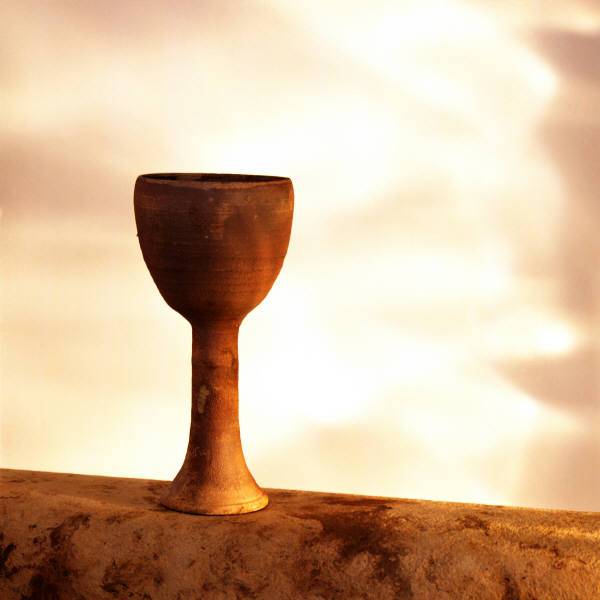 To all our readers in the United States: Happy Thanksgiving!
Do you ever feel that you are not as thankful as you should be? We have all been blessed with so much in life – with food, and salvation, and family – but we often don’t give thanks as much as we know that we should.
As members of the body of Christ we cannot think of giving thanks without thinking of the Thanksgiving Meal of the Church – the Eucharist. Taken from the Greek word meaning “to give thanks” (eucharistia), the Eucharist is our sharing in the thankful, joyful, gift of the Trinity’s life given to us through the Son of God’s humanity as the man Jesus Christ.
In the bread and wine of worship the Son lifts up the Thanksgiving of humanity before the Father, in the grace of the Holy Spirit, and he includes us in this offering of himself and his faith on our behalf. When we share in this Thanksgiving meal of the Eucharist by our eating, drinking, and saying “Amen!” we are participating in Jesus’ Thanksgiving on behalf of the whole human race. We share with him in thanking the Father for adopting humanity as his own children and for pouring out the Spirit on all people. Jesus is both the one for whom we are thankful and the one who offers up the sacrifice of thanksgiving on our behalf.
That ought to encourage us when we sense that we are not as grateful as we wish to be. Even when we do not know how to express our thanksgiving, and even when we fail to do so out of forgetfulness, laziness, or simple distraction, we know that Jesus our High Priest lives forever before the Father to offer up our thanksgiving for us. It is for this reason that the Eucharist – the breaking of the bread – is the heart and soul of Christian worship. We are a fellowship of Thanksgiving, led by the High Priest who is both offerer of the Thanksgiving offering and the offering itself.
May the Thanksgiving offering of Christ our High Priest fill you and those you love with the joyful life that he shares with Father and the Holy Spirit – one God, faithful and true, now and for ever.
~ Jonathan Stepp
Sermon: The Return of the King
Filed under: By Jonathan Stepp, Christian Living, Evangelism, Gospel, Perichoresis, Sermons, Trinity |
Comments (2) The Return of the King by Jonathan Stepp. When the Son of Man comes in his glory he will separate the sheep and the goats – but don’t worry! This is good news for everyone, even the goats.
Sermon: What it Means that Christ is King
Filed under: By Tim Brassell, Gospel, Perichoresis, Sermons, Trinity |
Comments (2) What It Means That Christ Is King, Part 1 by Tim Brassell. This sermon was simply a Celebration of the Shockingly Good and Gracious Good News proclaimed on “Christ the King Sunday” to the congregation and visitors at New Life Fellowship (GCI) in Baltimore, MD.
“When You Know Better…”
Filed under: By Nan Kuhlman | Tags: Assurance, God's love, healing, Maya Angelou, Oprah Winfrey, Oprah's Lifeclass, Receiving God's Love, restoration, when you know better
Comments (2)  I have been an avid watcher of Oprah’s Lifeclass, and I have enjoyed the lessons she’s shared from 25 years of interviewing people. One episode particularly piqued my interest, which was called “When you know better, you do better.” This quote came from Oprah’s mentor Maya Angelou, who said this to Oprah when she was recounting all the mistakes she made when she was younger.
I think this quote rings true for all of us because I think we understand that many of the mistakes we make are the result of not understanding the true consequences of our actions at the time. Once we learn better, we do better, if for no other reason than we don’t want the same negative consequence again.
It was obvious, though, that this truism fell short as Oprah revealed the story of a former prostitute who still felt as if she was “all used up,” despite having broken her addiction to drugs and working the streets. Oprah tried to assure her that she was not “all used up,” but the former prostitute seemed unconvinced that she could ever be made fully whole from her previous life.
What this illustrates, I think, is that our human wisdom is good, but not good enough. This woman needed assurance from her Heavenly Father that, despite her sin, she was treasured, valued, and loved beyond measure. Our human wisdom points out the obvious, that after getting hit with a brick on the head, we learn not to walk under the ladder. But what we’re missing is that even after we know better, we still need the healing that only the Triune God can give us, namely, the assurance that in spite of our screw-ups, we are still beloved children.
You see, after a person has changed his or her life and no longer participates in self-destructive and demeaning behavior, other people haven’t forgotten and are sometimes quick to remind them. The beautiful thing is that our Triune God doesn’t condemn us, doesn’t keep an accounting of our rights and wrongs. When the Pharisees were going to stone a woman who had made a big mistake, Jesus showed the Father’s heart toward us when we sin:
“‘…Teacher, this woman was caught red-handed in the act of adultery. Moses, in the law, gives order to stone such persons. What do you say?’
Jesus bent down and wrote with his finger in the dirt… (then) he straightened up and said, ‘The sinless one among you, go first: Throw the stone…’
Hearing that, they walked away, one after another, beginning with the oldest. The woman was left alone. Jesus stood up and spoke to her. ‘Woman, where are they? Does no one condemn you?’
‘No one, Master.”
‘Neither do I,’ said Jesus. ‘Go on your way. From now on, don’t sin.'” (John 8:3-11, The Message).
When Jesus said, “From now on, don’t sin,” he was not asking the woman to quit adultery because it was on the list of rules the Israelites (and the rest of us) were supposed to keep. He was concerned that her behavior was keeping her from achieving her best and fullest potential, and her shame was keeping her from accepting love and healing from the Triune God.
The Father, Son, and Holy Spirit do not condemn us but seek to restore and heal us. Maya Angelou’s advice is good, but it only treats part of the problem. The deepest part is our need to be healed of our shame for making the mistake in the first place, and only the love of the Triune God can fix that. Maybe we should add a caveat to Oprah’s life lesson:
“When you know better, you do better. And when you know God’s love better, your heart is healed and restored.”
~by Nan Kuhlman
~photos courtesy of Oprah.com