Archive for the ‘By Jeannine Buntrock’ Category
Say my name

Photo Credit: Ourbetterhealth.org
When my husband and I were expecting each of our three children, we spent hours poring over their names. It was a painstaking process, but also one that brought us truly unparalleled joy. Once we had each child’s name, we held it close, like a beautiful, most fragile flower, only revealing it to our closest friends and family — those we could trust not to wound us with their opinions as we had seen others do.
Because a baby name is much more than a name.
I’ll never forget each time I held each of my children for the first time and spoke their names to them, over and over again. It’s impossible to put the moment into words, but I still remember gazing at my children, thinking, THIS is who they were all along. This perfect, indescribably beautiful human being whom I had felt but not until that moment seen.
But somewhere along the way — during the toddler years most likely — we forgot. No longer did our child’s name represent unseen hopes and dreams for the future, but a very real, beloved, but often contrary child — a true force to be reckoned with before we knew it.
My current toddler began saying her full name before she turned two – Erica Buntrock, she would say clearly. I asked everyone in the family if they had coached her, but no one had. That was when we realised that she was simply repeating what she had heard a few too many times from us.
Erica Buntrock (don’t touch that).
Erica Buntrock (get down from there).
Erica Buntrock, whenever she did something that toddlers just do.
This wonderful blog post made me notice as well how often I said my older two children’s names in a less than loving and gentle way when I was impatient, stressed, distracted, depleted. How often I probably made them cringe, just by saying their names. I am really trying to be aware of that now — to make sure that all my children hear their names spoken gently and lovingly much more than otherwise — and to tell them the stories behind their names.
Hopefully, you have many memories of hearing your own name spoken lovingly by your parents and others — but I know that not all of you will. I am here to tell you that you deserve to have your name spoken that way — you are worthy of it. You did not arrive on this planet by accident. You were wanted. Your name was painstakingly chosen and it has been held close to the heart of the Father, like a beautiful, fragile, flower as we entered every phase of life: birth, toddlerhood, adolescence, middle age, old age, death.
Unlike we humans, he is never impatient, stressed, distracted, or depleted. I am amazed at how much more patience I have with my children when I am well rested. I can absorb so much more in that state. God is like that — only far better — ALL the time. Nothing — nothing — we do in our human, our lifelong, immaturity is too much for him to absorb. I believe that our names are never spoken, or even thought, by him, harshly because he possesses the perspective, the unlimited resources of energy, and much else that we as human beings don’t.
So next time you are tempted to forget how loved you are, remember how it was when you chose your children’s names, and when you held them for the first time. (Those of you without children are often very close to nieces/nephews or grow to feel much the same way about your fur-children, I know.) The way you felt then is only possible because you were resonating with the love that Triune God has for you and for all of his creation. And as most parents will attest, that love never goes away, even as a child loses some of his innocence day by day. We just become less mindful of it. But in moments of mindfulness, it all comes rushing back. It is there, always. With God, all the more so and he never loses his mindfulness.
And next time you are tempted to not love someone else — a loved one, an acquaintance, or someone you’ll never meet in a foreign culture on a distant corner of the globe, remember, when you say their names, that the way he loves you is the way he loves them too. Their names are sacred — they are sacred to him. Their names on our tongues matter to him and he is wounded when we trample them, as any parent would be. When we trample their names, we also trample his, because we are all connected to him. We are intertwined, irrevocably, because Triune God bonded itself to us for all eternity through Jesus.
You shall not take the name of the Lord your God in vain, for the Lord will not hold him guiltless who takes his name in vain. (Exodus 20:7)
Could it be that when we say our own names and the names of others in less than loving ways, we are taking HIS name in vain? He is big enough to handle it, but he knows that we, alone, are not. So his admonition to us is not to do it.
Something to think about next time I say my name.
~ by Jeannine Buntrock
Lighten up.

Photo Credit: Stacey Lauren-Kennedy, The Daily Gazette.
Last night was the first observation night of the year at my 7-year old’s new ballet studio. I watched as my daughter’s excellent instructor corrected her posture and movements, as well as those of the other children in the class, over and over again. Every foot had to be placed just so every time, with the knees and hips in the correct positions. There were First through Fifth positions to master, plies, tondus and so on. When a child got it wrong, she was called out verbally (though gently enough). As I said to my friend, this is hard core! – I knew I couldn’t have got it right much of the time.
I watched my daughter’s expression throughout. She’s a bright, light, playful little girl and while she was trying very hard to get her movements right and doing well, the joy that is so often present in her face was largely absent. Later on in the class, when she could finally leave the bar to run and dance and skip freely, the joy was back.
She insists that she wants to continue in ballet and I don’t think an hour a week of classical training will hurt her in any way. In time, if she keeps at it, what is difficult for her now will become unconscious movement. But it made me see that I don’t wish for her life to be like her ballet class.
This was an important realisation for me as this is also her 1st Grade year and I am both her mother and teacher. As such, I determine to a large degree what her days are like. While I appreciate all that her ballet instructor offers to her and believe that my daughter will learn things of great value from people like her in her life, I do not aspire to be that kind of person in her life.
And I am grateful for the deep feeling that God is not that kind of person in my life, obsessing over where and how I place my feet, knees, hips, arms and hands as I move through life. I believe that Triune God takes much more joy in my own happy, free dance, and encourages me from within to do just that — to dance freely — MORE. To be light on my feet and not so often stoop to carry burdens that are often imagined and, if not, are real ones he will carry for me if I will just let go and let him.
Too often, I get lost in the seriousness of life. I need to get things right. I need to be right. I need to do all the right things. My eyes can be too often unconsciously fixed on my own reflection in the studio mirror of life — and honestly, for me now, this is much more often with other people in view than it is with God in view.
Because I am deeply convicted that God, unlike people, is that perfectly loving parent with his eyes from within me on my expression. When I focus too much on getting it right, I lose the big picture and I completely lose my joy. And that isn’t what he wants for me any more than it is what I want for my daughter.
So no, if I don’t need to get it right, and I don’t need to be right, in order to please God, I certainly don’t need to do it to prove anything to other people.
In the end, only the joy and the relationships will count.
All I need to do is lighten up. The dance always follows.
~ by Jeannine Buntrock
Forever Friends
 The past few weeks have been uncharacteristically hard for me in the realm of friendship. A once happy but now careworn friendship finally went up, irrevocably it seems, in smoke. Since this friend and I shared many mutual friends, and our relationship ended in harsh words and accusations from my friend, it unsettled me seeing clearly that the way she would represent what had happened to our mutual friends would not be fair.
This was a difficult pill to swallow. Friendship is something I take so seriously. As an introvert, I keep my circle intentionally small and when I make that kind of friend, it has always been for life — though our lives may carry us far from each other geographically. It has been so rare as to be nearly unheard of for me to see that kind of friendship fail.
And just a couple of weeks later, another one-time friend, unrelated entirely to the first, was revealed to be slandering a family member I love dearly, both in court and to our mutual friends — using my own words taken from context to do it. And there was absolutely nothing I could do about it.
For me, that was ten times harder than the first. But, I received a tremendous amount of support in the aftermath of both events. Any losses I might have sustained in friendship have been made up for tenfold it seems.
When I told one friend what was happening in regard to my loved one, he laughed at me. Big virtual Internet guffaws of laughter.
And you know, that was the most comforting response of all.
He knew my loved one and so he knew that what was being said about him was preposterous.
That was when I was able to really turn the corner in both cases. I saw that those who know my loved one know who he is and that will not change according solely to the words of another. I also saw that those who know me know who I am and nor will that change solely according to the words of another.
Those who don’t know my loved one or me and are inclined to form opinions of us based solely on the word of another don’t know us and so their opinions of us really do not matter. For peace to be restored to my life, I must not allow them to matter and the only person in control of that was me.
While I may never understand what leads a person to behave in the hurtful ways they sometimes do, Triune God does. No matter what they do, his heart toward them is not hard. He knows the reasons for what ails them — what ails all of us — far better than we do ourselves.
And this is where we learn from God to love our enemies — or better yet, to see that we have no enemies. Just people, in desperate need of compassion, healing and grace as we all are. Just people, feeling vastly inferior and that they can never measure up. Just hurting people whose pain overflows and begins to hurt others. God sees it all, understands it all and has restored it all — we just haven’t seen it yet.
Love never dies. The love I bore my two friends still lives, and I know that the love they once bore me still does too — even if it is very hard to see right now.
People who have become lost from each other here on earth will one day again be friends, even if it takes the next lifetime to realise it. I choose to live my life in anticipation of that day — to remain quietly a friend here on earth even if the gesture is not once returned.
It’s what Triune God does for us all — for all people — every second of every day.
~ by Jeannine Buntrock
We were made for this.

The sunrise signals a new day and a new beginning.
As I skimmed my Facebook newsfeed today, a quote from a homeschooling blog post caught my eye.
If our homeschool has any hope for success, I must maintain my heart for my children. ~ Jena Borah, At the Heart of Homeschooling.
This is wildly true of my relationship with each of my three children. While there are many things they need to learn during our years of schooling together, what they will take with them academically won’t impact their lives nearly so much as what they will take with them emotionally.
Like most parents, I find it fairly easy with intention to maintain my heart toward my children. I do not always find it as easy to do in my other relationships, with my spouse at times, certain family members, friends and acquaintances. Relationships can so easily become weighted down by disappointment, misunderstanding, and hurt.
Yet the quote could easily be rewritten to say that if my relationships are to have any hope of success, I must maintain my heart for the people in my life — even the difficult ones.
The Internet is full of advice about what to do when you discover someone in your life to be toxic or narcissistic — and the advice basically amounts to: RUN!
There may indeed be times when it is wise to run. But it’s difficult to maintain your heart for someone when you do.
Perhaps this is why the Father in the Parable of the Prodigal Son didn’t hide from the son who had brought such misery, worry and disappointment into his life — but ran toward him so the people of the community they shared might not shun him since they now saw not the son’s, but the father’s, shame.
Why the Shepherd in the Parable of the Lost Sheep didn’t stop searching for his renegade sheep.
Why Triune God birthed humanity permanently into its very heart and soul with full knowledge of all that it would entail.
Like the characters in the parables that paint pictures of them, they have never stopped maintaining their hearts for us. They never will. In so doing, they have not held our wrongs against us. They have never once turned their backs or waited for us to act correctly so they can act lovingly.
It’s a daunting example to follow because many of us have been seriously hurt by people in our lives and have learned to build barriers of self-protection. I don’t blame anyone for doing so.
But I have also seen cases where people who had every right to insulate themselves from individuals in their lives who caused them distress refused to do so because they truly loved them. The effects of their decisions may never be realised in this life, but I believe the ripples carry into eternity and will be realised there. May we all be so blessed as to be able to look back and see people in our lives who never gave up on us though we gave them every reason to.
Those are the people I aspire to be and while I would never downplay the pain endured by those who feel forced to keep a distance from those who have brought it into their lives, I also know how good it feels to let go of the garden variety grievances that most often plague my relationships and do the most harm.
The cross words. The criticisms. The failures to apologise. The over-stepping. The judgments. The not always being there.
These things sting, yes. But generally, if we’re honest, they don’t amount to much in the end. So often my interpretation of a series of events lacks critical information and my inability to read anyone’s mind.
It’s so much better to let them go and to grant a loved one a clean slate as often as necessary. Deserved by the individual in our human terms or not, it feels so good to do so because we were made for this. It’s in our DNA just as it is in the “DNA” of Triune God. When we refuse to forgive, we are fighting our God-given natures and this is why it burns us from the inside out.
Triune God has shown us through their actions that every human deserves a clean slate and a new beginning with no strings attached. They grant one to each of us with every sunrise, every heartbeat. By maintaining our hearts toward the people in our lives, we follow them in one of the best ways possible.
~ by Jeannine Buntrock
Disagree with the Dark!
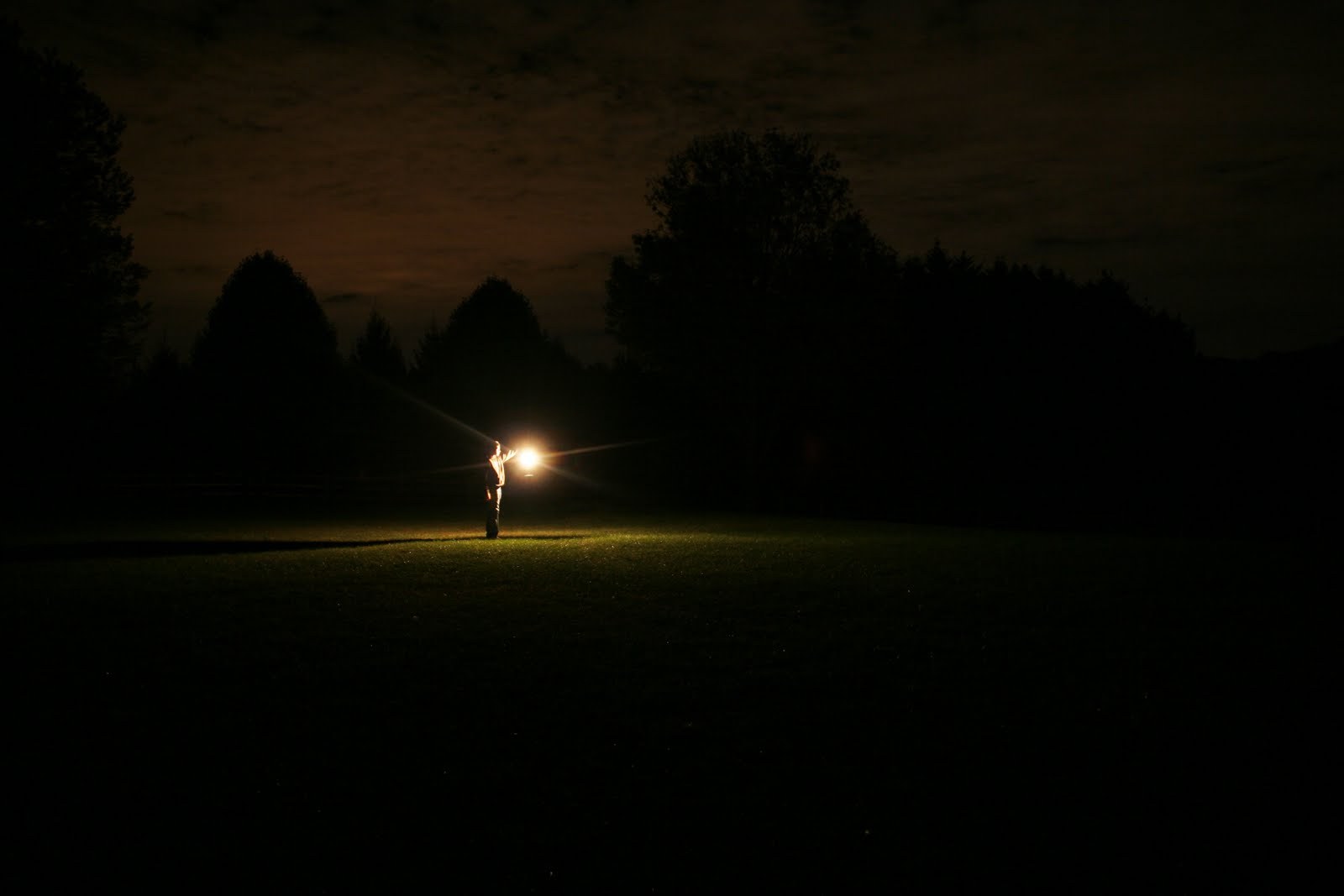
Photo courtesy of handsofintegration.com
Has anyone ever built you up in their minds to be someone you are not?
I had this happen to me recently — not just to me, but to someone I love as well. This certainly isn’t the first time this has happened to me, but it was the first time I was alongside someone else and could see clearly that the person this individual was seeing when he looked at my loved one was not the person I saw and knew at all. It didn’t matter what I said in our defense and I knew better than to try, honestly — he was so lost in his mythology of who we were that my words bounced off unheard. As it so happens, I truly love that person as well. He is unable to see it; in his eyes, I am a monster who despises him, judges him, looks down on him and would take away the things he loves if I could.
This is not who I am at all. I love him. I genuinely worry about him. I am afraid for him in this life while trusting God implicitly with him in the next. But there is no convincing him of that at this time at least.
I’m sure many of you have had similar experiences with a loved one — a child, a sibling, a parent, a friend.
And I wonder, how often do all of us do this when we look at, or consider, God? How often do we see a monster instead of the unconditionally loving person cradling us? How often are we so lost in our own mythologies when it comes to God that all his attempts to reach us by standing always not just before us, but lovingly sharing the very space we occupy, fail because we don’t see it? How often do his loving words to and thoughts toward us bounce off us unheard as we continue through life, feeling alone and vulnerable, in an unseeing haze?
This is some of what trinitarian theologian Baxter Kruger refers to as “making agreements with darkness.”
Photo of a broken beaver dam courtesy of Carol for Peace.
Over the last several years the Holy Spirit has been revealing himself to me in profoundly personal ways, awakening me, loving me, revealing to me who I am in Jesus, and encouraging my heart. Thank you, Holy Spirit, I will have more please. Brothers and sisters we are in a war. We have an enemy, cowardly as he is. He knows he has been defeated in Jesus, and he knows that we don’t know much of Jesus’ victory. The enemy deceives us, and then hides his deception, so that we don’t know that we have made agreements with him and his darkness. As we get hints of his schemes we are attacked with accusations and assaults. The picture that the Holy Spirit has given to me is of a beaver dam, with hundreds of limbs and twigs interwoven on top of large logs at the bottom. This beaver dam is formed by the agreements we have made with darkness throughout our lives. (Simply ask the Holy Spirit to reveal to you the agreements that you have made, and then break them in the name of Jesus). This beaver dam holds back the river of living water, the great, overflowing fountain of the trinitarian life of Father, Son and Holy Spirit, that is already at the core of our beings because of Jesus’ union with us. ~ C. Baxter Kruger, Baxter’s Ongoing Thoughts (blog), Oct 7, 2013.

No wonder it is so hard for us to break free of the agreements we have all unwittingly made with darkness — these agreements are far more than a shackle, but, as Baxter describes so well, an intricate, twisted, strong, nearly watertight mass!
The great news is that just as it takes only the tiniest ray of light to begin to dispel any darkness, so does our just cracking our eyelids open to the light begin to break up the dam of darkness and trigger the lifelong process of releasing the stranglehold it has had on us within.
The Holy Spirit whispers to my heart that Triune God doesn’t despise us or anyone. That while he certainly knows right from wrong and holds us accountable to it for our own good and for the good of those around us, he doesn’t judge us in a harsh, punitive way when we fail — he wants us to learn and to grow — to be better people because he has given us all that potential and capacity for good. That he celebrates the tiniest baby step. That he doesn’t look down on us as worthless or insufficient — but sees inestimable worth in every human being, and with him in us as he is in all, we are all sufficient for the moment. That life is a journey of growth. That he doesn’t seek to take away the things we love or withhold from us the things we desire. Like you, I don’t know why life has to be the way it is sometimes — but I trust the process since it is his process. All will work together for good in the end even if it sure doesn’t feel like it in the moment.
I can’t force my loved one to see me for who I am. God chooses not to force us to see him as who he is either. But what joy we miss out on when we refuse to open our eyes.
An interesting note about beaver dams is that they are often referred to as the “earth’s kidneys” since, once broken even a little so that water issues forth, they cleanse that water of debris and impurities. The dams that we create act in the same way once broken even a little — they tend to collect the earthly debris and baggage that come downstream. So even they serve a purpose.
Let’s all take Baxter’s advice and ask the Holy Spirit to show us where we have made agreements with darkness, and to break them in Jesus’ name. Let’s take Jesus’ lead and disagree wholeheartedly, with every breath, with the dark.
~ by Jeannine Buntrock
Uncertain
 Perhaps it is always the way, but it seems that so much is happening in the world at the moment that is dark and horrifying: planes dropping from the sky, a horrible Mid East conflict leaving civilians and innocent children dead on both sides, the possibility of a pandemic.
This being the era of Facebook, the opinions of hundreds of “friends” are available around the clock. As people take sides and debate each other, it can feel that humanity is drowning in its opinionatedness and dogmatism on these and countless other topics.
But what do we, any of us, really know?
In the article Why human vision is a mathematical impossibility, I read recently that even colour does not truly exist. Plants are not green; the sky is not blue.
Colour doesn’t exist in the world. Nothing is coloured. It’s impossible to see the world as it really is. A mathematical impossibility. This problem isn’t just the problem of colour vision, it’s the problem of vision, it’s the problem of the brain. The problem of uncertainty. ~ Dr Beau Lotto, University College London neuroscientist.
The problem of uncertainty.
…we only see a tiny, tiny fragment of the universe. The electromagnetic spectrum is huge. Radio waves can have wavelengths measured in kilometres; gamma rays, at the other end, have wavelengths measured in picometres, trillionths of a metre, smaller than the diameter of an atom. The light we see, the entire familiar rainbow, is only that between 390 and 700 nanometers – billionths of a meter. It is a sliver of a sliver, a fraction of a dot. ~Tom Chivers, Telegraph science writer.
We only see a sliver of a sliver, a fraction of a dot, of even our own world, let alone the universe.
Other researchers have shown that the conscious mind is merely the tip of the iceberg of our experience. The unconscious mind is far larger and though it seems to us to sleep, it is far from dormant.
The “problem of uncertainty” is a universal, overwhelming aspect of the human condition, though you might not know it to look at people’s Facebook rants! But the truth is, to be human is to be uncertain. It’s uncomfortable, and I don’t think anyone can be blamed for trying to anchor to something that feels solid as a way of making it through this life. The trouble happens when we demand that what feels solid to us be solid to others — and tear at what they are standing on when it doesn’t.
Nowhere is this more true than when it comes to religion.
Religion demands certainty, but if we are honest with ourselves, we will see that there is none to be had. Just as perceiving colour is our brain’s way of resolving that which is uncertain and making it useful, so is religion.
Is God just humanity’s way of making sense out of the senseless, but nothing more?
I don’t honestly think so. The more I see that I don’t know and I don’t see, the more I dream about what could be based on the little I see with my eyes.
For my part I know nothing with any certainty, but the sight of the stars makes me dream. ~ Vincent Van Gogh.
When we stop pretending to know and understand things that we don’t and can’t, it frees us to marvel at the perfection of what is and to dream about its implications. Today’s technology allows us to see both more deeply and further away — both much faster and more slowly — than possible with the human eye alone and this creates only more awe and a clear sense that these things are far from random or coincidental.
I believe we can never dream too big or hope for too much in relation to the God making himself known to all through the natural world and through each other. Nature and humanity are bursting with messages of hope if we’ll just open our eyes to them. All that we see that is miraculous and boggles our minds is just the beginning of what is there that we can’t see: a universe not dark and empty, but teeming with life and love and energy and goodness that someday I dream we all will see.
It’s alright to be uncertain. It’s good to embrace uncertainty, because admitting what we don’t know opens us up. It makes us more able to catch glimpses of what lies beyond our human vision. It makes us humble, and so kinder and gentler with those around us.
Isn’t this what life is all about?
~ by Jeannine Buntrock
The painting above is of Vincent Van Gogh’s famous Starry Night.
My “aha” moments
 Theologian Peter Enns is currently featuring a series of guest posts by fellow theologians describing their “aha” moments when it came to looking at Christianity or the Bible in a different way. It got me thinking about mine.
My first came at age 20 when the denomination I had attended all my life was rocked by a series of changes. I saw for the first time that it was not my observance of a Saturday Sabbath and sequence of annual Old Testament Holy Days that was important, but my relationship with Jesus, who loved me. This was critical and a great deal of relief and joy entered my life at that time – but I still believed that his acceptance of me was tied to my performance. The Sabbath and Holy Days may not have been important any more, but other things were – I needed to serve him.
My next was one I was not to fully realise until years later, but as I spent a year teaching English in Sri Lanka to Buddhist, Hindu and Muslim students, I discovered people not of darkness, but of gentleness and supreme joy despite often significant poverty. I felt not the slightest need or desire to change them – they were already lit from within. If anyone was changed that year, it was I. Many questions were sparked for me at that time, but having no idea what to do with them at the time, I buried them and got on with the business of marriage and children.
My next and most monumental of all was as I discovered Trinitarian Theology via Baxter Kruger, Steve McVey and others. These gentlemen were incredibly instrumental in helping open my eyes to the fact that while I had indeed internalized the reality that Jesus loved me, I believed that there were still strings and conditions attached. And I was still seeing the dark, angry, vengeful Father behind his back.
Only he wasn’t there.
He didn’t exist.
Who did exist was a Father who loved me in ways beyond my wildest dreams with no strings attached.
This rocked my world. I had an immediate recognition that these things were true. As a parent to young children myself, it finally all made sense. There was nothing my children could do that would make me turn my back on them for even a minute, let alone eternity. I did not feel right about inflicting pain on my child for making a mistake, even a willful one, for the purpose of teaching him a lesson. I would allow myself to be flattened by a bus or walk miles on burning shards of glass in a heartbeat for my child even if at the end of it all, she slapped me in the face and told me she had no mother.
It brought me to my knees when I saw for the first time that what I felt for my children – the very energy that drove me night and day – was like a candle in comparison to the forest fire of love the Father bore unconditionally for me and for every person ever born.
My Sri Lankan friends of other religions, I sincerely feel, included.
And so my beliefs have continued to grow and evolve – I receive new “aha” moments that give me goosebumps on a regular basis, but I don’t believe there will be any more of the earth-shaking variety. (Though who knows??!) I am secure in the unalterable love of Father, Son and Spirit – and though like all people I still have a few serious questions (mostly the “how can this tragedy be allowed to happen?” variety), at this point I sincerely believe that nothing good is impossible with God. There is no limit to his patience, understanding, and ability to heal and restore hurting, shattered souls that have done much wrong. We may never see the outcome of it this side of eternity, but on the other side, I believe we will.
It is said that in Heaven there will be no more tears or sadness. With the majority of humankind writhing in hell or willed out of existence, as much evangelical Christianity suggests, I do not see how this could be. The idea that we could grow to forget those we had loved but had not “made it” is a supreme sadness in itself. And so I hope, and I expect, to see us all there, restored.
None of this has come without pain and loss at each stage, mostly in the form of withdrawn friendships, and loss of community. I have shed some tears over it indeed – but, having been where they are and believed what they do, I understand, more than they know. That pain has eased. I have also gained wonderful friends and a community of people who are also sharing the beauty of what they are coming to see. It’s incredibly exciting and I feel far from alone.
It’s a journey I feel quite sure will last a lifetime. The best is yet to come!
~ by Jeannine Buntrock
Let it Go
 If you have a little girl in your life, you’re probably aware that the movie “Frozen” swept the nation late last year. Based loosely on the fairytale The Snow Queen, the movie’s hit song “Let It Go” has been loved by any young girl I know. But, as the character Elsa’s rousing declaration of independence and rebellion after years of repression, the song has also been loved by many of my own girlfriends, myself included.
The wind is howling like this swirling storm inside.
Couldn’t keep it in, Heaven knows I tried.
“Don’t let them in, don’t let them see.
Be the good girl you always have to be.
Conceal, don’t feel, don’t let them know.”
Well, now they know!Let it go, let it go!
Can’t hold it back any more.
Let it go, let it go!
Turn away and slam the door.
I don’t care what they’re going to say.
Let the storm rage on.
The cold never bothered me anyway.
It’s important to note here that Elsa has just spent the past several years of her life locked away alone in a room in a castle, instructed by her well-meaning parents to “conceal, don’t feel, don’t let them know” that she possesses special powers — magical “ice powers” that create things from ice and snow — powers that others would see as wholly dangerous. Orphaned and now outed, she has run away to a very remote location where she is finally free to be herself, but believes she does not run the risk of hurting anyone with her powers.
It’s funny how some distance,
Makes everything seem small.
And the fears that once controlled me, can’t get to me at all
It’s time to see what I can do,
To test the limits and break through.
No right, no wrong, no rules for me.
I’m free!
Not surprisingly, those last two lines especially have offended the conservative Christian community. A quick Google search turns up blog post after blog post decrying the message behind the song as being selfish, “anti-Christian” and dangerous for young girls. (Many Disney theme songs, including the famous “no worries” song “Hakuna Matata” from The Lion King, have received similar treatment.)
But is “Let It Go” truly anti-Christian, and if so, why does it resonate with so many women?
What I hear in the song, and what drives me to tears almost every time I hear it, is a call to eschew the pursuit of perfection. Christianity’s message to me until I encountered Trinitarian theology was variations of “conceal, don’t feel, don’t let them know.” It was also a confusing mix of, you’ll never be perfect or even good, but there will be “hell” to pay if you don’t act like it!
Secular society sends a similar message to young girls and women as well.
This is why I believe “Let It Go” is on the lips and in the hearts of so many women today. Like Elsa, we’ve been repressed. We’ve been made to feel afraid of ourselves — our thoughts, our desires, our doubts and questions. We’ve been told our hearts are desperately wicked and that even at our best we are filth in God’s eyes.
Trinitarian theology allowed me to recognise those for the tragic lies they are and to begin to gratefully and joyfully let it all go. When I began to see that God was not the angry, exacting deity I had imagined, that I was priceless, precious and beautiful to him and that there was nothing I could do to jeopardise that, I was able to let go of my fruitless pursuit of perfection. My life completely changed.
I’d love to say that this means I never pick up my old burdens, but I do pick them up again often without thinking. But before too long, I am reminded that they are not my burdens and that I can indeed let them go.
What a relief to accept that you will never get your act together. Then it is no longer an act. You can begin to live as you really are.”—Karen Maezen Miller, Paradise in Plain Sight: Lessons from a Zen Garden.
As a result, there was indeed a period of time in my life where I felt, to degrees, “No right, no wrong, no rules for me — I’m free!!” I still feel that way in the sense that I know now that God is big enough to handle it every time a human breaks one of the “rules” of love and hurts himself or another. It’s not what he wants and it makes him so sad when it happens because we are hurt, but it doesn’t make anyone less acceptable and less lovable to him. Triune God has the perspective that we do not – he knows who we have been, what has made us who we are, and who we are becoming.
The good in you will last forever; the bad in you will not. That’s how my Dad and I rule the world. When evil distorts you, we just forgive and let it disappear into the past. When the beauty in you shines through, we save it for the eternal treasure it is — the eternal YOU. It’s like when you pull in a net full of fish, and then you sit down to sort out the good fish from the bad. All the good is saved. ~ my friend, Jesus Benyosef, on Facebook.
He sees and knows the eternal YOU.
Our human life is simply not about qualifying. We really can let it go: our pasts, our mistakes, our guilt, our shame, our striving, our pretending. Hearts will begin to heal when we do. Healed hearts grow — hearts perpetually broken down cannot.
Imagine a world populated by people who knew they were loved unconditionally. Imagine the depths of love that would finally begin to be plumbed. It is when Elsa learns to let go of the fears that made her strive for perfection and to stop trying so hard to hold everything in that she sees she is able to control her ice powers, and to use them for good and for beauty. She doesn’t stay in her remote ice castle.
Love will thaw a frozen heart. ~ Frozen (2013)
Love has come. We need only joyfully participate in it — not in an attempt to measure up, but because, like flowers opening to the sun, we can’t help it!
~ by Jeannine Buntrock
Wings
Filed under: By Jeannine Buntrock, Love, Relationships | Tags: Jesus, Love, Relationships
 Comments (1)
  One of my favourite television series, “Fringe,” revolves around the tension between twin parallel universes. In it, you meet two versions of the central characters, as different in some ways as they are similar in others. Some are heroes in one universe and perpetrate evil acts in the other. The central events of their lives are different in each universe, and it has shaped who they have become.
The show has often made me think of who I would have been had the keys events in my life been different ones. My life could have been quite different — in ways we consider good and bad that I will never know. I could have ended up quite different from the person I am today, yet underneath it all, I still would have been me.
I believe that it is this “me” that Jesus sees when he looks at me. The “me” I am despite all that life has done, with or without my conscious consent, to show more or less of who I am inside that is beautiful to him.
Often, the command to love one another seems an unreachable ideal. I don’t have to go any further than my Facebook newsfeed to find people I know behaving in unlovable ways. Every day there is news of pedophiles, murderers, or those who have absconded with people’s retirement accounts. It’s hard to feel love for the person in the grocery store checkout lane making crass jokes or screaming at her children, let alone for someone who has done something to grievously injure another.
Here in this universe, I generally see only one dimension of who a person is. But Triune God is not limited to this dimension as I am. So while we struggle to love, Father, Son and Spirit do not.
I have always been fascinated by the concept of time — the fact that it is something to which we are bound here on earth as humans but that does not in any way bind God. I can only conjecture as to what the implications may be — certainly, I can’t come close to reality.
But I believe that when Jesus sees a person, he sees the whole person — the one-time sweet, innocent baby/child with endless potential and enormous hopes and dreams, all the ways the individual has been hurt or limited by the seemingly random circumstances of life, and also, perhaps especially, the person they are becoming nonetheless. He sees them past, present and future. I believe that he knows full well the amazing person that they become ultimately even if it is nearly invisible to the rest of us here on earth.
Since no one has died even in old age perfect, I don’t believe that this chance to become who we were meant to become ends with the cessation of our physical lives. As a soul exits the constructs of time, there is a great deal that can happen to heal and transform us in what we would view as a millisecond. Again, we can’t begin to know how it all works, but I believe that the godly people we are all on the way to becoming are fully evident to Triune God today — because, not being bound by time, they have experienced the culmination of our growth, healing and transformation. They are experiencing us that way.
While we crawl around as caterpillars, they know us as butterflies.
If we look closely, with eyes of compassion and grace as he does, we can catch glimpses of the wings on the people around us. Don’t forget to look for your own too!
~ by Jeannine Buntrock
A 1 Corinthians 13 God
Filed under: By Jeannine Buntrock, Love, Relationships | Tags: Jesus, Love
Leave a comment  I blew it with my little girl a couple of days ago. Our day was busy and stressed in general — so it wasn’t until the next morning that, having reflected on what had transpired the day before, I dropped to my knees in front of her to apologise and reconnect. I told her I was so sorry for losing my temper and patience the day before — that that was not the kind of mother I wanted to be. And my tall little girl smiled and exhaled, beaming pure grace down on me.
I know what kind of mother I am supposed to be. By supposed, I mean the mother I long to be in order to express the bottomless love I feel for my children. The mother I was born and am intended to be.
Patient, kind, not proud, not dishonouring others, not self-seeking, not easily angered, keeping no record of their wrongs, always protecting them, always trusting them, always hoping, always persevering, and never failing them (I Cor 13 4-8 in short).
That’s a tall order for a human and I know that try as I may — and I do — I’ll still fail a lot. But that’s ok — it’s not about striving for perfection. It’s good for my children to see me fail, but to apologise and to make things right again when I do because it sets an example for what they themselves must also do to remain in relationship with those around them when they also make mistakes. It also shows them that they are priceless and that they deserve to be valued. But they need me to be a I Cor 13 kind of parent, as much as humanly possible, in order to fully bloom, and in order to grow as 1 Cor 13 people themselves. They need me to be big enough to withstand and absorb their littleness and all that that means.
The incredible news for humanity is that, since God is no hypocrite, telling us how to love but then living above that law himself, he himself is a I Cor 13 parent — as much mother as he is father. And he is more than big enough to withstand and absorb our littleness.
What this means is that there is nothing you have to do, say or think in order to win his love and acceptance. There is nothing that you can do, say or think in order to lose his love and acceptance. He really is that big.
The reason my daughter beamed at me when I expressed to her what I did was because, at 6, she knows that this is the kind of mother I am supposed to be too. She knew much younger than that and has likely always known. We don’t have to teach children what a loving parent looks like — they recognise them immediately, I believe, because perfect love resides within them, in the Person of Jesus, just as in all people. And so though they may not have the words to say so, they recognise the opposite of loving actions as well.
I am sure that this is the reason the children are said to have flocked to Jesus. They would have recognised him as a I Cor 13 person because those are the people that children are drawn to. Sadly, as adults, we can forget, believing the lies too long that God’s love is conditional or that God is somehow half love and half stern, irrevocable justice and control.
All I know is that when I am harsh with my children even when provoked, I always regret it swiftly and dearly. When I am able to choose kindness, patience, trust and forgiveness, my soul swells and vibrates with the rightness of it. But when I react with impatience, control, anger and punishment, or shame my child, my soul shrinks and shudders at what I have done and demands that, for the sake of relationship, I make things right again.
This happens, I believe, because perfect love resides within me, as in all people, in the Person of Jesus. And so we know it when we see it.
I am so grateful that, like his Father, he is tirelessly patient and kind with us, that he sees the best in all of us, that he will never fail or disappoint us, and that he keeps no record of our wrongs. The love that I feel from him, I want my children to feel from me (and him). That kind of unconditional love transforms and illuminates everything.
~ by Jeannine Buntrock