Archive for the ‘By Jeannine Buntrock’ Category
Okay

This is not my daughter, but this is us NOT fearing the dentist, or life! Photo Credit: Trisa Dental Solutions.
I’ll never forget the time I first noticed a dark spot on my youngest daughter’s tooth – the one that didn’t brush away. She wasn’t quite two years old at the time, and oh, how I panicked inside. I’d had friends deal with tooth decay in their very young children, and I knew their stories – ones that often involved anesthesia. I fretted about it for days until I was able to secure an appointment. Sure enough, it was tooth decay. And I would have another six weeks to suffer through before we could secure another appointment to treat it.
In our case, it was not serious enough to warrant anesthesia, so that was an enormous relief. But the thought of my tiny daughter having to face a dental procedure filled me with nothing but horror.
I was terrified.
The six weeks came and went, and aside from the odd temporarily lost child scenario, it was the most traumatic experience of my life to date. My toddler, who until then had known only gentleness and security, had to be wrapped tightly in order to be immobilised, and she screamed in fright through the entire procedure. They were the kind of screams that scar a mother’s soul, and I would have lain strapped to that chair and taken any amount of torture to make it stop for her. But I could only helplessly rub her little feet and try to console her. When it was mercifully over, she slept in my arms almost all day.
But she recovered. A day later, and you’d never have known it had happened.
She’s just turned three and I have learned that she will now need a little more dental work. And now I have another six weeks to suffer through as we wait.
I told my mother about it last night. The words were hard to say, because I still don’t understand how this can be happening. (I really have tried all along to do all the “right” things.) And my mother said quietly, “She’ll be okay.”
They were simple words, but are there any more powerful? They put tears into my eyes instantly. Sometimes you just need someone who has earned your trust over the years to tell you that it’s not a big deal in the grand scheme of life, and that it’s going to be okay. Sometimes those words make everything okay.
It’s not that it’s going to be easy – it is going to be hard. But my daughter is going to be okay, and so am I.
The Bible, in Old Testament and New, is full of exhortations to “fear not.” It’s also entirely human to worry and be fearful. We face so many situations where it would take nerves of absolute steel – and perhaps some denial – to not worry. When you love someone deeply, it’s impossible not to ever worry about them, especially when they face challenging times or pain. There are situations that threaten our own survival. When you see things falling apart politically or socially, or people exploited and abused when you are for the most part powerless to help them, it’s natural to feel discontent and to worry about what it all means for life as we know it.
Obviously our Father knows this. I think what he wants for us is not to lose our lives to our worry. I think he especially wants us to fear not ultimately, because we are not alone in this life, and this life is not all there is for us. We have never been abandoned: he really is with us, and with every human. When Jesus took on human flesh, he willingly bonded himself and the Father and the Holy Spirit to humanity for always.
There is so much fear in our country and world currently. It’s nothing new really – it seems to have been this way throughout history more often than not.
But fear and evil never have and never will get the final word.
“Don’t be bluffed into silence by the threats of bullies. There’s nothing they can do to your soul, your core being. Save your fear for God, who holds your entire life—body and soul—in his hands.” Matthew 10:28, The Message translation.
The amazing news – absolutely shocking news according to our broken modes of justice – is that the God who indeed holds us, body and soul, in his hands, does not demand our fear as he could. Rather, he wills nothing but good for us – requiring nothing from us in return. It is his nature, and even our worst acts are not able to change it. Jesus came so we could leave behind our blindness and for the first time see the true face of God – his kindness, his benevolence, his swiftness to forgive every time, his refusal to judge and condemn, his faithfulness.
The bullies that threaten us are not just people who would hurt us, but cancer, tornadoes, economic turmoil, aging, corruption in all its forms – and so on. Some of these things may hurt us or take the lives of those we love, but their power is not eternal.
His is. We can’t see it yet, but he has already made everything okay. He has fixed every broken thing and healed every hurt. No person has escaped his loving eye or been denied his care.
I don’t know about you, but I long for a world where I no longer have to worry.
It’s coming.
In the end, it’s all going to be okay.
~ by Jeannine Buntrock
Soften
 A few months ago, I began taking monthly painting classes. In all my 40 years, I’d never learned to paint, so I was half-terrified going in to our local wine-and-canvas operation. I’ll never forget having to make that first brushstroke across the perfect, white canvas. I was paralysed for a few moments – only the fear of being left behind altogether put an end to my inertia.
So paint I did, and I surprised myself with the results. I went again, and again, and a couple of weeks ago, I took my fifth class. Though it was my most challenging so far, for the first time ever in my painting journey, I felt myself let go and relax as I approached my painting. I softened. Perhaps it was because I had learned by then that no brush stroke was truly fatal, or that creating something new required taking risks. Perhaps it was because by then I had observed that my painting did not have to be exactly like my instructor’s to be beautiful. I’m not sure.
But something magical happened as I softened. A warmth flowed through me (and no, it wasn’t the wine as I had declined that night to drink anything). I lost my dread of my first brushstroke. I stopped trying so hard to get it exactly right, trusting that in the end, it would come together just right. I lost my need to compare my work with that of others around me.
In so doing, my enjoyment of the whole process increased exponentially. And I realised, life should be like this.
So when I was challenged to select my intention for 2016, I knew immediately what it would be.
Soften.
I want to approach my life this year as I did that painting – without tension, without striving for perfection, without comparison, with freedom and with joy.
Someone told me recently that our thinking changes from decade to decade. We think differently in our 30s than we did in our 20s, in our 40s than in our 30s, in our 50s than in our 40s and so on. She also observed that the 30s are the decade we all endeavour to “do life” better than our parents did. We select and cling to a philosophy or set of principles, sure that it is the one right philosophy that will produce the superior results we so desperately want to see – in ourselves, our children, our spouses.
Guilty. A year into my 40s, I am beginning to see how pointless that was.
But the beautiful thing is, it wasn’t pointless. I couldn’t have skipped that stage if I’d tried. I needed to live my 30s to grow into who I am in my 40s. A decade from now, no doubt I will be saying the same thing about this decade.
I am sure it is this way by design.
God comes to you disguised as your life. ~ Paula D’Arcy.
Fr. Richard Rohr calls it the Second Half of Life. Dr Wayne Dyer called it The Shift. We all have the opportunity to proceed into that stage of life where we are no longer driven by our egos, and no longer assess our own self-worth by comparing ourselves with others. The stage of life where, as Fr. Richard Rohr puts it, having created our bowl, we become concerned with what, spiritually speaking, is going to fill it.
God seems to be about the refinement of souls. Clearly, he could perfect us all at the flick of a finger, but he seems to be after something more authentic in us than that.
By softening, we welcome an inevitable process and we show compassion and understanding for those who inhabit the stages of life we once did. And we can take joy in knowing that we are at a certain stage for a reason – that we have grown from a previous stage and that we will grow and deepen as individuals again.
~ by Jeannine Buntrock
Ordinary, but powerful, folk
 It’s been quite a week. I don’t know about you, but when dramatic world events cause social media to explode with strident opinions and arguments, I feel a strong pull to retreat and to be quiet.
I don’t know what the answers are to the world’s problems that have been highlighted this week (and every week in truth). It’s enormously complicated. and when we view it from our perspective as we all do, we are just seeing one narrow slice of reality. What I do know is that the answers do not lie in us bashing each other across the heads with our opinions.
In part one of the recent trilogy of movies based on J.R.R. Tolkien’s classic, The Hobbit, wise wizard Gandalf declares:
Saruman believes it is only great power that can hold evil in check. But that is not what I have found. I’ve found it is the small things, everyday deeds of ordinary folk that keeps the darkness at bay. Simple acts of kindness and love.
(Unlike Gandalf, Saruman had chosen the way of darkness and corruption, and found his nature tragically twisted because of it.)
As Gandalf saw, when we wonder how to respond to the incredible suffering and yes, the evil, in our world, simple everyday acts of kindness and love will always be the answer. It’s a painful truth that if all we “ordinary folk” behaved this way to those we encounter, the darkness would be kept at bay for the most part.
Brian Zahnd, lead pastor of Word of Life church, notes:
“The demonic seduction of accusation, empire, and propaganda (dragon, beast, and false prophet) always lead humanity to another bloody battlefield. Armageddon always looms. Yet hope abides. Armageddon is always a possibility, but never an inevitability. If we reject the ways of the beast and follow the way of the Lamb, Jesus will lead us away from the doom of Armageddon into the shalom of the New Jerusalem. Though the fires of destruction are always burning outside the walls, the Spirit and the Bride are always calling us into the city of the Lamb…and her gates will never be shut.”
When so many see humanity on the brink of of extinction due to endless conflict, it is such a relief to step back and see that in Jesus we possess the keys to turn things around. I don’t know if I will see it in my physical lifetime — it seems unlikely indeed. But impossible? Never. Regardless of the outcome for our world, in my own life, I can follow the Lamb, and live knowing that my eyes have not seen his peaceful victory over the powers of darkness, but in the dimension I cannot see, it has already happened. So I can live my life today in hope and faith instead of fear, and with an open heart toward all those I encounter.
In the hope that with God’s quiet leading humanity can somehow turn it all around, I am doing my best to raise my children to have open hearts toward all people — of all religions, cultures and lifestyles. They’ll have their own lives to lead and conclusions to draw, but children tend to adopt or be heavily influenced by the attitudes of their parents, and so what I model for them is crucial. People make much ado of developing their strongest friendships with people of “like mind,” and while there is nothing wrong with doing so to a degree, excluding someone from your inner circle on that basis is also one the most limiting things we can do as humans. With God’s grace, my children will not grow up learning from me to fight and argue with and exclude those with whom they disagree, but seeing instead that there is much they have to learn from people of all walks of life. I am very much hoping that they will learn that it is possible to respectfully hold the beliefs of another individual in their minds without necessarily accepting them as true (because sometimes they will be true; sometimes they won’t).
It’s only a start, but a good one. I feel already over-extended most of the time. The world needs so much to heal it, and I am one already worn out person who gives most of what is in me to the little ones in my care as it is. I will never regret having given it to them through this season of my life. I know many of you can relate to feeling that way, whether you have children or not. But if we “ordinary folk” make a practice of small, unconditional acts of kindness and love toward all those we encounter — things that we are all capable of because of God within us — things that God has modeled for us by extending those very things to us and to all — who knows where it could lead? Whether or not anything we would consider great will be asked of us, these small things are contagious. It is not overly idealistic to say that true healing of the world is possible and could indeed happen not in violence and fiery battles, but instead in peace. It will come through God ultimately, but as we answer the call to participate in his plan for humanity by expressing love for our fellow man and all of creation, we become an integral part of the solution.
Because of God in us, we — all people — are ordinary, but powerful folk.
~ by Jeannine Buntrock
In Defense of Order
 I listened to a truly wonderful interview of Franciscan friar/Catholic priest and author, Richard Rohr recently. In it, he noted that as people develop spiritually, they move through three phases: Order, Disorder, and Synthesis.
Order is all about law, tradition, structure, certitude, order, clarity, authority, safety, and specialness. Disorder is where all of these things are challenged, but where people also begin to develop healthy self-criticism, and to acknowledge their own “dark sides.” It’s a liberating stage – but also one clouded in doubt and confusion as that which was once so clear and certain is no longer so. When people remain in the first phase and do not move into the second, Rohr notes that they remain tribal in their thinking, believing they are the “only,” and become narcissistic.
It is then the combination of the first two phases: healthy self-criticism added to the certainty of one’s specialness that allows one to move into the final phase, Synthesis.
Here you move into the language of mystery and paradox. This is the second half of life. You are strong enough now to hold together contradictions, even in yourself, even in others. And you can do so with compassion, forgiveness, patience, and tolerance. But we don’t move toward the second half until we’ve gone through the other two states. The best sequence, therefore, is order-disorder-synthesis. ~ Richard Rohr.
What was particularly fascinating to me was Rohr’s assertion that it is very hard for people to progress to Synthesis when they never spent time in Order, but began in Disorder.
I myself spent plenty of time in Order as I grew up in a church that believed it was the “only” true church. But my entire time as a parent has coincided with my time in Disorder, with ever increasing forays lately, I hope, into Synthesis.
So a small bomb went off in my thinking when I read this because I saw that despite my own current position, my children themselves must begin in Order if they are to develop rich, deep, lifelong spiritual lives. I will do them no favours if because of me, they bypass Order and begin instead in Disorder. (Yet with many in my generation, this is what we are unwittingly doing with our children.)
I do not believe that this has to mean that their time in Order is characterised by all that characterised mine. But were I to believe that all that I experienced in Order was pointless, I’d be wrong. Despite all the sadness, disappointment and disillusionment I have experienced in my life as we all do, I will never stop believing in a loving God who never leaves me. This is likely because of my time in Order when the lasting building blocks of faith were being built, many and even most of them at an unconscious level.
With my children now, if I couch every Bible story in qualification, and am not able to share with them anything that is rock solid and believable at face value, I may well rob them of the certainties that they will need as the foundations to their own spiritual journeys.
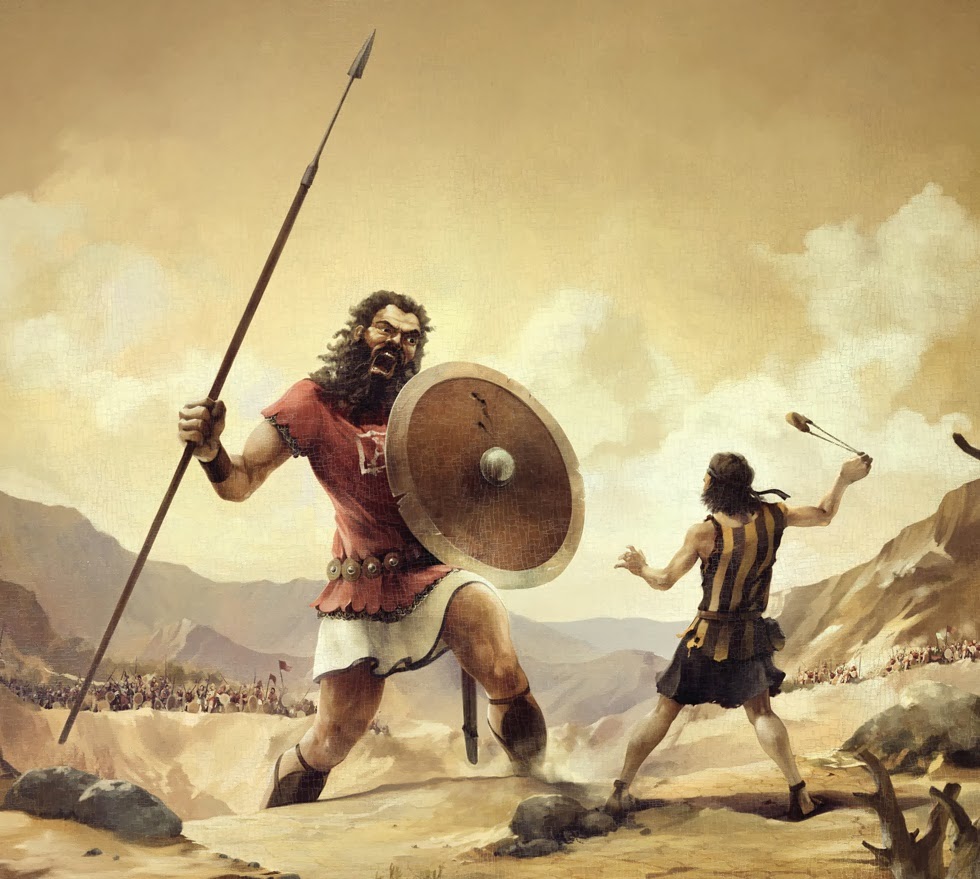
And when I am too concerned with trying to explain away cloudy, uncomfortable aspects of certain stories, I run the risk of killing the magic, so to speak. My children need to look up to the larger-than-life heroes of the Bible, just as they need to look up to the heroes of legends, myths and great literature. When those individuals take on life in our minds and hearts, we are all made better for it.
Their flaws will become apparent to my children all too soon – and the knowledge of it will coincide with their knowledge of their own flaws. But maybe, just maybe, the belief that they too could be heroic even while flawed will live on somehow. It’s a critical belief to take into adulthood.
Modern day heroism in the battles we fight daily is not just a dream, but the promise of God living in all of us and revealing to us the truth of who we really are in him.
Heroes. Good people. Sacrificial. Willing to lose our lives for one another. Brave.
Many of these battles are played out on a daily basis. They may not seem significant to us, but to the development of our character and the refinement of our souls, they are every bit as significant as any battle of good against evil, light against darkness. Because of God in us, we can be people of the light. Faithful friends and spouses. Devoted parents and children. Honest. Hospitable. We can try always to choose kindness. We can try always to choose to extend grace. We can try always to forgive.
God has designed us to grow this way through these stages for a reason. When it comes to my children, it’s up to me to just step back, trust the process and to embrace my children wholeheartedly where they are. God has set this example for us throughout eternity, by embracing all people fully wherever we are.
He always will. And that’s a solid rock we can all stand on.
~ by Jeannine Buntrock
Bring light
 There’s nothing quite like spending a couple of years on the heels of a toddler to peel back the facade of society when it comes to kindness. Toddlers are the ultimate rule-breakers – it’s just how they seem to have been created to learn about the world. As a parent, it’s a wild ride as we tag along, ready to scoop them up in cases of real danger, but letting them learn for the most part that which they need to learn from experience.
As a third time parent, I am concluding that the world is not an entirely friendly place to young children or their parents. There are so many things to break (I’ve had one toddler of my mine remove all the keys from my laptop and another pull over and therefore destroy our flat screen TV), and so much peace to interrupt (a man trying to read his Kindle in the children’s section of the Library yesterday got up visibly upset that my 2-yr old, despite my gentle encouragement, wasn’t quite able to obey the “quiet” rule and was chattering happily as she looked at a book). Going to museums, arboretums, restaurants, movies (and with older children, one cannot just avoid those places entirely)…all are nerve-wracking with a 2-year old who does not understand that a roped off area is not a place to play or that running away from Mom in a crowd or a new place is not the greatest game ever invented.
I’m not surprised to see the look of tension and anxiety on the faces of most parents of toddlers I encounter in similar situations. I sincerely hope that when I am well past this stage myself, I remember what it’s like to be in their shoes, and I remember to be kind. Because it is the kindness of individuals in these situations that has made all the difference as I have walked this toddler path for the third time now.
Toddlers aside, it seems that kindness is becoming a lost commodity in our society. Nowhere is this more evident than on social media where egos clash and people are more concerned with being right than being kind. On the topic of religion and its application particularly, I am sure I am not alone in having seen a tremendous amount of ugliness on all sides.
In his famous sermon, “Sinners in the Hands of Angry God,” 18th Century preacher Jonathan Edwards said, “The God that holds you over the pit of hell, much as one holds a spider, or some loathsome insect over the fire, abhors you, and is dreadfully provoked: his wrath toward you burns like fire; he looks upon you as worthy of nothing else, but to be cast in the fire; he is of purer eyes than to bear to have you in his sight; you are ten thousand times more abominable in his eyes, than the most hateful venomous serpent is in ours.”
With this idea of God still alive and well, is it any surprise that people have treated each other the way they have, and continue to do so? Too often Christians relegate those with whom they disagree to the ranks of Edwards’ “loathsome insects” about to be devoured by fire.
The great news, however, is that you are not a loathsome insect in the eyes of God, and neither is your neighbour, whatever his beliefs may be, or his life may look like.
No one has the kind of patience and understanding for my toddler as I do, as her mother who knows and loves her, and no one has that for us in the way that God does. But be assured that he does have that for you, and for your neighbour. He knows and he understands each of us because he has never left us and never will. All he really asks as we begin to grasp his unconditional, unfailing love for us is that we begin to reflect some of it into the lives of our neighbours. We really do have the power to bring light or darkness into each other’s lives. Bring light!
~ by Jeannine Buntrock
Life in light of Loss

Another of C.S. Lewis’ envisionings: the doorway to Aslan’s country, in his final Chronicle of Narnia, The Last Battle.
In The Silver Chair, C.S. Lewis’ sixth Chronicle of Narnia, King Caspian (whom readers have followed and loved since he was a boy) dies a very old man.
Then Aslan stopped, and the children looked into the stream. And there, on the golden gravel of the bed of the stream, lay King Caspian, dead, with the water flowing over him like liquid glass. His long white beard swayed in it like water-weed. And all three stood and wept. Even the Lion wept: great Lion-tears, each tear more precious than the Earth would be if it was a single solid diamond.
“Son of Adam,” said Aslan, “go into that thicket and pluck the thorn that you will find there, and bring it to me.”
Eustace obeyed. The thorn was a foot long and sharp as a rapier.
“Drive it into my paw, Son of Adam,” said Aslan, holding up his right fore-paw and spreading out the great pad towards Eustace.
“Must I?” said Eustace.
“Yes,” said Aslan.
Then Eustace set his teeth and drove the thorn into the Lion’s pad. And there came out a great drop of blood, redder than all redness that you have ever seen or imagined.
And it splashed into the stream over the dead body of the King. At the same moment the doleful music stopped. And the dead King began to be changed. His white beard turned to grey, and from grey to yellow, and got shorter and vanished altogether; and his sunken cheeks grew round and fresh, and the wrinkles were smoothed, and his eyes opened, and his eyes and lips both laughed, and suddenly he leaped up and stood before them – a very young man, or a boy. And he rushed to Aslan and flung his arms as far as they would go round the huge neck; and he gave Aslan the strong kisses of a King, and Aslan gave him the wild kisses of a Lion.
At last Caspian turned to the others. He gave a great laugh of astonished joy.
It’s an stunningly beautiful scene, and one that engenders a great deal of hope for all of us who have lost loved ones and will in the future. We lost my grandmother at 85 years old this month, and in thinking about her, I have replayed this scene in my mind many times. I do not believe that she met her end, but a new beginning.
The loss of a close relative can’t help but raise a number of existential questions. But as it’s been one of those months — one of those summers actually, as I have a 2-year old to love and keep safe around the clock — rather than attempt to tackle any of those questions, I am going to continue to share with you a series of quotes that have comforted me, resonated with me, and encouraged me on my way as I have considered suffering and loss recently.
On how we are crucified with Christ.
“When we attach, when we fall in love, we risk pain and we will always suffer for it. The cross is not the price that Jesus *had* to pay to talk God into loving us. It is simply where love will lead us. Jesus names the agenda. If we love, if we give ourselves to feel the pain of the world, it will crucify us. (This understanding of the crucifixion is much better than thinking of Jesus as paying some debt to an alienated God, who needs to be talked into loving us.)” — Richard Rohr, Franciscan friar, priest and author, Everything Belongs.
On not fearing a false god.
“A god who is vengeful and vindictive toward those who “offend his honor” is a small, petty and insecure deity indeed. This petty, easily offended, minor league god has nothing to do with the Creator whom Jesus called Father. The petty thunderbolt hurling god is, in fact, a projection of human fear, insecurity, and rage. That and nothing more. Don’t fear that god.” — Brian Zahnd, senior pastor and founder of Word of Life church in St Joseph, Missouri.
On how to live my life today.
“So, as one who often walks this life while asleep and is most of the time caught up in the fury of my own ego, and entangled within all my insecurities, with my insatiable thirst to be noticed and affirmed by all, I say let’s just fade away, and just be. Let us live right here, right now, and let all these passions for attainment cease to be such a loud buzz in our ears. Let’s wake up, and rub this sleep from our eyes, and let us walk through this life fully awake.” Don Griffin, Facing the Darkness blog.
On sharing the fate of God for the life of the world: bearing the mystery of human death and resurrection.
“The following of Jesus is not a “salvation scheme” or a means of creating social order (which appears to be what most folks want religion for), as much as it is a vocation to share the fate of God for the life of the world. Jesus did not come to create a spiritual elite or an exclusionary system for people who “like” religion, but he invited people to “follow” him in bearing the mystery of human death and resurrection (an almost nonreligious task, but one that can be done only “through, with, and in” God).” — Richard Rohr, Everything Belongs.
Blessings on your journey. May you be comforted and have great hope.
— by Jeannine Buntrock
Lessons from a Litter

Our youngest with Willow.
One year ago, my husband showed up with a couple of rabbits for our children to enjoy raising. I honestly wasn’t too sure about it. The rabbits were big enough that they weren’t exactly cuddly, and I didn’t find them endearing in the manner of a dog or cat.
Winter arrived in Minnesota a few months later, and this was when our first litter of babies arrived. There were just three babies and none of them made it more than minutes. Our rabbits were outdoors in a hutch, and while they had grown thick winter coats, the babies were born without a strand of fur. I was really unsure about the rabbits at that point — not extremely happy with my husband for bringing such a sad experience into our lives. A second litter followed one month later, and we were able to keep three babies alive. One weakened and died, but we ended up with two that were doing very well by two weeks of age.
One sunny afternoon, we had taken them out of the hutch for the first time and were letting them hop around inside a large cage in the yard. They were able to squeeze through the bars and escape, and my three children delightedly scooped them up and returned them to the cage each time. While we were distracted with one escaping, the other escaped, and my 2-yr old picked it up. All three of us dove for her, and in her excitement and desire to imitate our own actions, she threw the baby bunny into the cage. (Toddlers, in their exuberance, tend to do everything times ten.) It struck its head against the metal side and we could see immediately that something was wrong. It couldn’t hop properly any more and I worried that it had broken its foot. But it was even worse than that. It turned over on its side, exhaled deeply and stopped moving. I scooped it up immediately and within two minutes, that sweet baby bunny had died in my hands.
It was honestly the saddest thing that had happened to me in a very long time — and to my children ever. My 9- and 7- yr olds were crying in disbelief, and my 2-yr old did not understand what had happened at all. I’ll never forget my 7-yr old daughter walking around with lifeless Coco, truly mourning its short life. It was her bunny of the two, and she had poured as much love into it in its two weeks of life as too many people are fortunate to receive from others in a lifetime. She prayed aloud that he would somehow wake up.
Mommy, will Coco go to Heaven? Of course, Darling (and inwardly: well, C.S. Lewis believed that pets go to Heaven! I’ve read since that C.S. Lewis wrote that animals who are beloved and thereby infused with meaning by their human masters are likely to experience the afterlife in much the same way as humans, who are beloved and have been infused with meaning by our Master.) My 9-yr old son, who’d acted like a nervous father as the litter was being born, could not believe that, after all the losses to cold the litter had already sustained, this could have happened. And I sobbed into my own pillow that night. Why, God, why? In my maturity, I could handle it (barely) — but my children?? To see life end so abruptly was more than we could bear.
Just prior to that litter being born, we had given the father bunny away — so you can imagine our surprise when four weeks later, we noticed the mother bunny building a nest. She tore fur from her underbelly — the signs were unmistakable. I ran to Google and learned that indeed, a female rabbit can carry two litters of different gestational ages.

Introducing Hazel, Snowdrop, Pipkin, Willow, Rowan, Clover, Blackberry, Thistle and Dandelion.
And the next day, we had nine new babies. This time, the weather in Minnesota had warmed considerably, and while we anticipated some losses. all nine survived and are 9 weeks old today. They are all different colours — black, grey, brown, gold, white with spots or stripes of various shades. My children named them after the characters in the classic novel Watership Down and even my 2-yr old and all my kids’ friends in our neighbourhood know them all by name.
And oh, we love them. We have had a glorious few months taking care of them. I love to watch the confidence and care my children have all developed with them. I’ve loved watching them chase them around our backyard when my 2-yr old has tipped over the cage for the umpteenth time that day to create just this effect. I’ve laughed as Dandelion, the runt of the litter, is the hardest to catch every time — absolutely the fastest. As much work as bunnies and toddlers are, if I could freeze them, every one, at this age forever, I would.
But they are swiftly reaching the age where we must find good homes for them and we are actively engaging in that process lest we end up with a fully fledged bunny farm in our back yard. We have about three weeks with them left.
As caught up with raising babies/children as I have been over the past decade, I have often shaken my head at the attachment that people have shown to their pets and animals. Of course, I remember what it was like as a child, when our family cat had disappeared. One we never were able to find; another showed up safe and sound after 10 days out in a Minnesota deep freeze. I remember how devastated I was at that kind of loss/potential loss. I really thought that the wondrous weight of caring for children had muted that at least for the time being in me.
But our litter of bunnies has shown me that this not so, and some other things too.
1. The love I feel is an expression of the love of Triune God. I am 100% in agreement with Baxter Kruger when he says that any time we experience an outpouring of love or deep care and concern for another person or living thing, it is the love of Triune God we are experiencing and in which we are participating. If this is true, and I believe it is, then God cares for these seemingly insignificant woodland creatures just as my husband, children and I do. (Endlessly more than we do.) They are not insignificant to him.
2. All life is sacred. My experience with our family of bunnies gives me assurance that the human race, as screwed up as it can be, is going to be ok — because if the love we bear these animals truly is an expression of God’s love, then not one breath of life is dispensable or insignificant to Triune God.
Are not two sparrows sold for a copper coin? And not one of them falls to the ground apart from your Father’s will. But the very hairs of your head are all numbered. Do not fear therefore; you are of more value than many sparrows. (Matthew 10:29-31)
What this says to me is not that the life of an animal or any living thing is cheap — but that if God cares THAT much for every creature on the earth, how much more does he care for you and me? It ought to blow our minds. He really is unreasonably crazy about us in the same way a parent is about his or her young child.
All life — human, animal, plant — is sacred. I have read that our children will only take care of our environment if they learn to recognise local plant and wildlife by name. It’s the same with people. If I were to get to know my neighbour and my “enemy” — the person I don’t like for a number of reasons I can claim, but in reality because of my own fear and insecurity — love would follow. Note that I said above that initially I did not feel that bunnies were very cuddly. As I’ve grown to love them, I’ve changed my mind about that. It’s exactly the same with people to whom we are not initially drawn as well. While we keep our distance from each other, we will continue to fear each other and continue to do the awful things to each other that humanity has done for generations. It must stop.

My 7-yr old with her Coco, in happy days.
3. With perspective, loss, as hard as it is to bear, makes life more beautiful. The death of Coco and our losses, as hard as they were, made us appreciate our living bunnies all the more. We were ever so gentle with our surprise litter of bunnies because we had learned the hard way how fragile they were. I believe that, as painful as living can be sometimes, life would not be as beautiful without loss. We wouldn’t appreciate our world and the people in it as much. Perhaps our experiences of loss in this life will make our experience in the next all the sweeter, having felt the cruel sting of loss and then having regained all that we had lost and much, much more.
4. Nothing is ever truly lost, and even in this life, miracles still happen. I firmly believe that with God, nothing in this life is ever truly lost. My daughter prayed for Coco to live and he didn’t. But against all odds, seemingly, she gained an entire litter of bunnies instead. We won’t ever forget Coco, but his loss was not the end of the story.
The great news is that God is with us all, whether we acknowledge it or not. The losses we sustain in life, and we will, will never be the end of the story.
~ by Jeannine Buntrock
The problem with prayer

Photo Credit: The Issachar Initiative.
Literal fireworks went off in my mind and heart when my eyes were opened to the reality of our unearned inclusion in the life, love and dance of the Trinity. While I formerly believed that I had to do good things or believe in a certain way in order to earn God’s blessings and favour, I now saw that he gave those things to me purely because I was his child. There was nothing I need do to win his love and nothing I could do to lose it.
The repercussions of this realisation are still being felt in my life today. It has brought hope and brightness to my life, and dispelled a great deal of my worry and doubt. But one thing I have struggled with is how and even whether to pray.
Looking back, I can see that I once prayed in much the same way one rubs a magic lamp. I needed a good outcome, but it was largely out of my control. So here was God. If I begged him enough, praised him enough, and especially if I enlisted others to do that with me, I might get what I wanted (if my recent track record was clean enough).
Of course, there were so many cases when this wasn’t the case — I had made mistakes, sometimes big ones, so my track record wasn’t “clean” — yet blessings poured into my life. And in those dark moments of the soul when I knew I had really screwed up, he felt closest of all to me.
Perhaps this is why when I learned that God is not the kind of God I had grown up believing in — the kind who rewards only the faithful, punishes the wicked with gusto, and turns his back on us when we disobey — I saw it as truth immediately. I had been blessed when I had not obeyed and good things came to me even when I didn’t pray for them. When I was suffering under the weight of the consequences of my poor choices, even then I had sensed nothing but compassion and shared suffering. He suffered with me.
Obviously this is not a treatise on why it’s ok to do things that are harmful to oneself and others. With all my heart, I believe that the guidelines set out by the Bible, understood in their proper context, and others transmitted by the Spirit to us in other ways are our Creator’s attempt to shield and protect us from preventable harm. But it’s a far cry from believing that life is a test and that we are being graded by a harsh school master.
But so, if I do not need to pray in order to secure favourable outcomes, why and where and how to pray at all??
The why is easy. We are in a relationship. He is always communicating with us. We can confide everything in him and he is always listening. He wants intimacy with us.
The where, for me, has not been so easy. Understanding that God is in us and that we are in him, means that he is not distant. Our Father who art in Heaven. That had always indicated distance to me — far, far away, out of our world. I’ve come to see that this isn’t true. There is no far, far away. He inhabits our world and our world is encompassed, surrounded and held within, by him. He also inhabits me and I am encompassed, surrounded and held within, by him.
So how do I direct my prayers?!! Up into space? No. Into my own heart? Yes and no — I am not God and while I believe that I hear from him from within often, other times it is just my own thoughts I am hearing too.
I read recently that beneath our thought life is our prayer life — and that the spirit is always praying. (I apologise – I have wracked my brain trying to remember where I read it, but cannot.) Imagine if you will, three layers: conscious thought (the tip of the ice berg), beneath that unconscious thought, and beneath that, prayers.
This was immensely encouraging to me because I realised that prayer really need not be an effort. Our spirits are always praying. And it’s not ever one-way. As our spirits communicate constantly with God, he communicates constantly with us. If our unconscious thought life is a mystery to us, no wonder our prayer life is too.
I have to admit, sometimes I miss my fictitious magic lamp and “genie.” There was some sense of control in believing that I could influence his response by doing and saying the right things. Now when I approach a potential crisis in my life, I can be a little unsettled knowing that I have no real control. I can’t manipulate God into acting on my behalf. I’m not more special to him than someone else is based on my behaviour. We are all infinitely special to him. I am not favoured above others any more than one child in a family should be favoured above her siblings. Sometimes my prayers and those of others are answered and sometimes they are not and there is generally no way to understand why. This is life though. As much as I wish it wasn’t, suffering seems to be a necessary part of it. (That is a topic for another post!)
But I know I am not alone in having experienced the sunburst moments where a prayer is answered — perhaps even one you didn’t consciously utter. Those are the mountain-top experiences, and they make life worth living. But we all trudge through many valleys to get there (only to find that we have been lifted there on eagle’s wings in the end). And for the sake of the development of our souls, they seem not to be places of permanent rest.
So the only answer I am able to offer, as it so often is, is to relax. Knowing where to direct our prayers isn’t important. Knowing that he is near and not distant is what is important. Knowing that he cradles you in the palm of his hand no matter what you’ve done is what is important.
As always, the benefits are reaped by us. Prayer is our lifeline to the Anchor that we all desperately need in life, but it is not dependent on us to maintain it. We often panic or despair and let go, but he never does.
The great news is that it really can be effortless — prayer is happening whether we know it or not. Our conscious prayers are just the icing on the cake! All we must do is to open our eyes to the beauty that surrounds us and to the myriad signs that there is One who cares for us. Gratitude cannot help but follow, and gratitude is the best kind of prayer of all.
~ by Jeannine Buntrock
You don’t have to try so hard
 I was driving recently when this song came on the radio. It was uncharacteristically quiet in the car, so I was able to tune in to the lyrics for the first time. As I was thinking about how to explain them to my 7-yr old daughter, who I could also tell was listening, she beat me to the punch, saying, Mom, this song is about being yourself.
Wait a second,
Why should you care, what they think of you,
When you’re all alone, by yourself, do you like you?
Do you like you?
As usual, she was right. On the heels of my pleasure that she recognised this truth, that she should be herself, came the worry that she might not always do so. I know I haven’t always recognised it, even when, looking back, I see that I should have — and all too often I still don’t. There are many ways I have felt pressured over the years to make myself into the image of someone who is not me.
Society, though an extremely strong causative factor, has not been the only one. Christianity, or my former understanding of it, was once another. I once believed that the admonitions to “die to self” meant that I was to strive to cut everything out of myself that was me, until all that remained was Jesus.
But oh, how heartbroken I would be were my daughter to try to cut anything out of herself to be what she thought I, or anyone else, wanted her to be.
When you think about it, if life were an exercise in removing as much of ourselves as possible in order for Jesus to shine through, what would have been the point of any of it? Why make a plan to include humanity in the love and dance of the Trinity only to exclude us from the dance because we, in our humanity, were insufficient.
Indeed, we in our humanity alone are insufficient. But the GOOD NEWS is that we have not been alone in our humanity since Jesus entered our world as an infant, becoming permanently united with his humanity and with the humanity of every person who had ever lived and who ever would.
We are not just hosts for him to inhabit, or soldiers for his will. Triune God desires a love relationship with each one of us. With so many people in the world, it’s hard to imagine that we are each that important to God. He is that limitless though.
You don’t have to try so hard,
You don’t have to give it all away,
You just have to get up, get up, get up, get up,
You don’t have to change a single thing.
By opening our eyes to who we are in Jesus, we will change — but we’ll change in the same way a flower changes when it opens and blooms. Dying to self doesn’t mean the death of our desires, dreams and talents, but the death of our false-selves. Our false-selves are the parts of us that have grown from fear: fear that we are not enough, fear that we are evil or dirty, fear that we will never measure up, fear that we are all alone in this world, fear that drives us to separate ourselves from others so we might be noticed. Who we are in Jesus does not include those false selves because in his eyes, and joined with us permanently as he is, we are enough — we are not evil or dirty — it has never been about measuring up — he will never leave us alone in this world or any other — and he really does have the capacity to love every individual who has ever lived as if he or she were the only individual who has ever lived.
I believe that we are designed to be people of the utmost kindness and gentleness — to both others and ourselves. Change in that direction is always a good thing, and rather than stripping away from us that which we are, it reveals who we are at heart: a beloved, beautiful union of divine and human.
Take your make-up off
Let your hair down
Take a breath
Look into the mirror, at yourself
Don’t you like you?
‘Cause I like you.
Song lyrics: Try by Colbie Caillat.
~ by Jeannine Buntrock
Five Things to Remember Before You Judge Me
Filed under: By Jeannine Buntrock, Love, Relationships | Tags: Christian Living, Relationships, Trinity
 Comments (1)
Photo credit: The RadioNews Blog.
In both the secular and religious media, it seems that a new group is targeted for public outrage nearly every week. Policemen. Rioters and looters. Gays and lesbians. Muslims. Conservative Christians. Pastors. Liberals. Conservatives. Anti-vaxxers. Immigrants. Abortionists. Politicians.
The list is pretty endless, but the result is always the same: people pouring out indignation, derision and judgement upon a group of individuals they rarely know or understand.
In several cases, I have stood just on the outside of more than one of these groups and, because a loved one resided inside, had a window into their experience. And recently, I found myself wholly part of such a targeted group myself.
If you will, allow me briefly to give voice to those whose voices are too often unheard. Here are five things I believe they would say to us.
1) I am human.
Whatever you think of me and what I do, and however much I pretend not to care, I have feelings, just as you do. It always hurts to hear harsh words spoken about me or about people like me.
2) I have a story.
There are reasons why I am who I am and do what I do. If you haven’t gotten to know me, you don’t know my story. If you sat down with me and heard my story, everything could begin to change. You might not change your mind about me completely, and that’s ok. On the other hand, you might. Regardless, we would begin to see each other as the human beings we both are.
3) I am generally misrepresented and misunderstood.
Most of what I read and hear said about me doesn’t properly represent me at all. I deserve the opportunity to tell my story before my motives, my integrity, my very nature are discussed, criticised, ridiculed. When you don’t give me that opportunity, it’s not really me you are deriding, but a caricature of me. Not a real person or group of individuals at all.
4) Even when you think they are justified, your harsh words carry a destructive energy that will end up hurting you the most.
In the end, it doesn’t feel good to anyone to gorge on the blood of another. And it’s only a matter of time until the person lying in the street, symbolically speaking, is you. When that happens, it’s most likely to be those of us who know what it’s like to be in similar shoes who will stoop to raise you up again, and stand between you and those bearing stones.
5) I care about living my life in a way that is right.
We might disagree as to what is, exactly, right and wrong, but I am trying to live right, just as you are. Doing the right thing does matter to me, though I’ll never get it right all the time. (Nor will you or anyone else.) Because our stories are different, right and wrong is not always drawn in black and white. But if we know each other’s stories, we will become transformed in each other’s eyes as we begin to view each other through eyes of love instead of fear.
Brothers and sisters, I submit to you that what we need most in this world is love. It is what we are made of and made for. Because we are caught up eternally in the exquisite dance and open arms of the Trinity, the love that surrounds us and permeates us is limitless: we have only to tap into it.
It’s not wrong to be concerned with what you believe is right. Some things absolutely need to change if our children have a hope of a bright future in this life. But if we put love first — if we learn each other’s stories and truly connect as human beings — hearts will open and bloom. More genuine rightness in our world is bound eventually to follow as people travel the pathway of love and inclusion instead of the pathway of fear and exclusion.
~ by Jeannine Buntrock