Archive for the ‘Loving us’ Tag
“God’s Heart Revealed By Jesus!”
Filed under: Bible, By The Late Pastor Peter Dickinson, Christian Living, Christianity, Church, Discipleship, Evangelism, Faith, GCI Windsor Mill, Maryland, God, God Father Son and Spirit, God the Trinity, God's love, good news, Gospel, Grace Communion Baltimore, Grace Communion International, identity in Christ, Inclusion, Jesus Christ, Love, Ministry, New Life Fellowship Of Baltimore Maryland, New Life Fellowship Of Windsor Mill, MD., On Mission with Christ, Participation with Christ, Participation with Jesus, Perichoresis, Prayer, relationship with God, Relationships, Resurrection, Sermons, The Church, The Dance and Dream of the Trinity, The Father, Son and Holy Spirit, The Gospel Project, The Holy Spirit, The Plan of Adoption, Timothy Brassell, Trinity, Uncategorized, union, Union In Christ, Union with Christ, Witness, Witnessing to God, Witnessing to Jesus, Worship, Worshiping God, Worshipping Jesus | Tags: Adoption, Basic Christian Doctrine, Being In God's Family, Christian Faith, Christian Living, Christianity, Church, Faith, GCI Baltimore, God's Faith, God's Grace, God's Heart, God's love, Gospel, Grace Communion International, Having The Peace Of God, How God Reveals Himself, Humanity Revealed, Humanity Revealed In Jesus, Jesus, Knowing The Father's Love, Lamb of God, Life's meaning and Significance, Love, Loving us, New Life Fellowship Baltimore MD, New Life Fellowship Of Baltimore Maryland, Relationships, Revealing Your Life's Purpose, Revelation 4, Revelation 5, Sharing God More Accurately, Sharing In God's JOy, Sharing In God's Laughter, Sharing In The Divine Nature, The Basic Christian Belief, The God Who Is Love, the reason for your existence, Timothy Brassell of New Life Fellowship, Trinitarian Theology, Trinity, Understanding God, Understanding Human Beings, Understanding Life's Calling, Who Is God?, Who Is Jesus?
 Comments (4)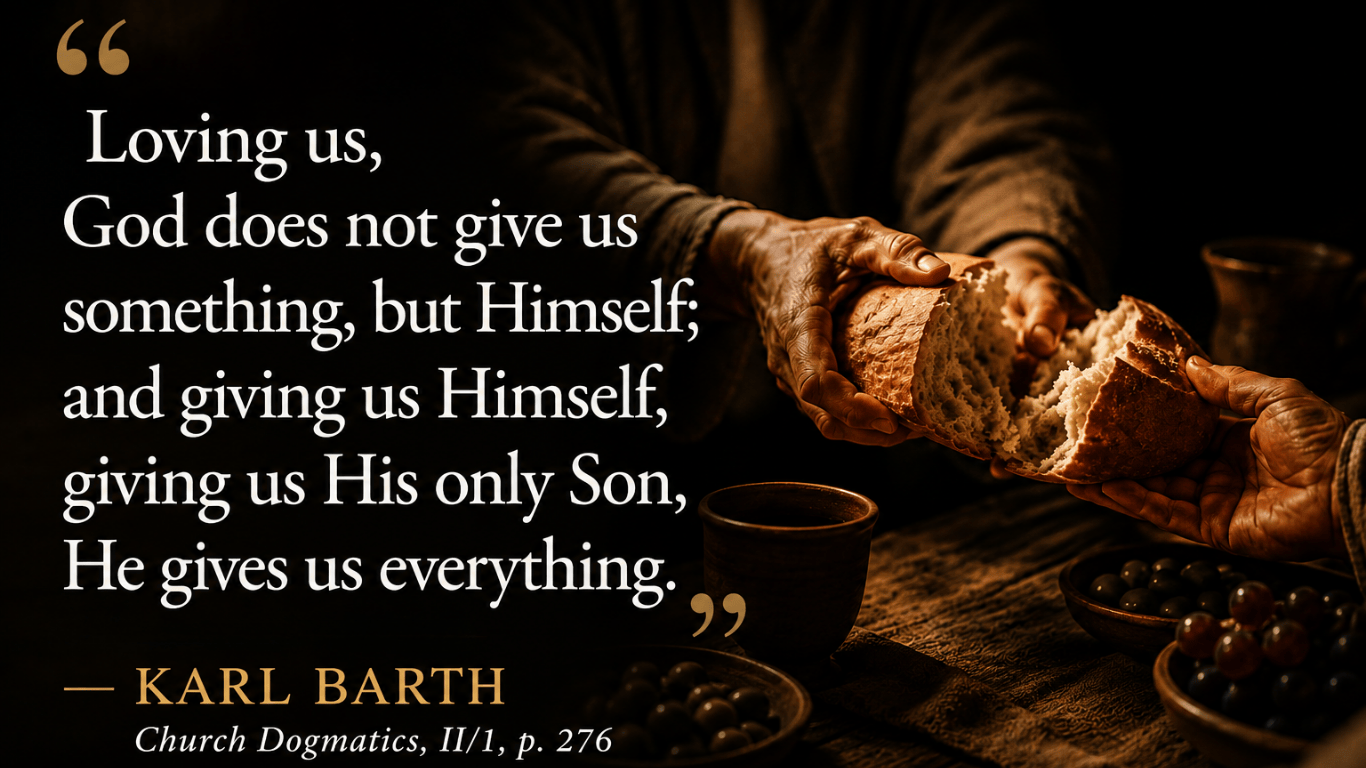
Full Audio Message:
Watch On Youtube:
Scripture: Revelation 4 and Revelation 5
Summary
What is God really like, and how can we know His heart toward us?
In this powerful Gospel message, Pastor Peter Dickinson takes us into Revelation 4 and 5 and invites us to look beyond the mysterious images and symbols that so often capture our attention in the Book of Revelation. For years, much of the focus surrounding Revelation has been on trying to understand its symbols, identify what they represent, or determine what they might tell us about the future. But Pastor Peter redirects our attention to something much more important: Revelation is fundamentally about the revealing of God—the Father, the Son, and the Spirit. At the center of the book is not simply a mystery to decode, but the God who desires to make Himself known.
Theologian Karl Barth gives us a beautiful way of understanding why this matters. God is not solitary in His being, but eternally Father, Son, and Holy Spirit: “In Himself He does not will to exist for Himself, to exist alone. On the contrary, He is Father, Son and Holy Spirit and therefore alive in His unique being with and for and in another. . . . He does not exist in solitude but in fellowship.” — Karl Barth, Church Dogmatics, II/1, p. 275
The God revealed to us in Jesus Christ is the Triune God who is eternally Father, Son, and Holy Spirit. And it is this God who freely turns toward us and draws us into fellowship with Himself.
That brings us to one of the most important questions Jesus ever asked His disciples: “Who do you say I am?” To know Jesus is not merely to know facts about Him; it is to encounter the One in whom God has made Himself known. Jesus speaks of His unique relationship with the Father, telling us that no one knows the Son except the Father, and no one knows the Father except the Son and those to whom the Son reveals Him. Later, when Philip asks Jesus to show them the Father, Jesus responds, “Anyone who has seen me has seen the Father.” If we want to know what God is really like, we look to Jesus.
This becomes especially powerful as Pastor Peter takes us from Revelation 4 into Revelation 5. In Revelation 4, John is given a breathtaking vision of the throne of God. Heaven resounds with the words, “Holy, holy, holy is the Lord God Almighty, who was, and is, and is to come.” We see God’s majesty, holiness, sovereignty, creative power and glory. All creation owes its existence to Him, and heaven worships the One by whose will all things were created and have their being.
But Revelation 5 takes us deeper. John sees a scroll that no one is worthy to open, and he weeps. Then he is told that the Lion of the tribe of Judah has triumphed. Yet when John looks, he sees something astonishing: a Lamb, standing as though He had been slain. Heaven erupts in worship, proclaiming, “Worthy is the Lamb who was slain.” Pastor Peter then asks the crucial question: Why is the Lamb worthy because He was slain, and what does the slain Lamb reveal to us about God? His answer takes us directly to the heart of the Gospel: “It is by the slaying of the Lamb the very heart of God is revealed.”
The Lamb does more than show us what Jesus is like. The Lamb reveals the Father. We cannot separate what Jesus does from who God is, because Jesus is the incarnate Son who is one with His Father. The cross does not reveal a loving Jesus rescuing humanity from a reluctant or unwilling Father. Jesus tells us, “I am in the Father and the Father is in me.” Pastor Peter emphasizes that the heart we see in the Son is the heart of the Father. What the Father is like, Jesus reveals; the life and love we encounter in Jesus are the life and love of God Himself made known to us.
This is why the Incarnation matters so deeply. Jesus is not merely a messenger bringing us information about a distant God. He is the eternal Son of the Father who has become truly human. God has not remained outside our condition, calling to us from a safe distance. Drawing from Thomas F. Torrance, Pastor Peter stresses that in Jesus Christ, the Son enters the depths of our lost humanity, taking our sin, violence, suffering and death upon Himself in order to overcome everything that separates us from God. Even in the depths of our betrayal and brokenness, Jesus is God reaching into our humanity to heal and save.
The cross therefore becomes what Pastor Peter describes as “a window into the innermost heart of God.” At the very place where humanity rejects God, God does not reject humanity. In the incarnate Son, He enters our darkness and gives Himself to us in saving love. Jesus is not concealing the Father behind Himself; He is opening the Father’s heart to us. The Lamb who was slain shows us just how far God’s love moves toward humanity.
Here Barth’s words capture something at the very heart of Pastor Peter’s message: “Loving us, God does not give us something, but Himself; and giving us Himself, giving us His only Son, He gives us everything.” — Karl Barth, Church Dogmatics, II/1, p. 276
That is the astonishing Good News revealed in Jesus Christ. In giving us His Son, God has given us Himself. The cross is not the place where Jesus convinces the Father to love us; it is the place where the love of God for humanity is revealed in all its depth. The Father sends His beloved Son because God already loves us.
First John brings this into beautiful focus: “God is love.” This love does not begin with us reaching toward God. It begins in God Himself. The Father sends His one and only Son into the world so that we might live through Him, and John testifies that “the Father has sent his Son to be the Savior of the world.” The Gospel begins with God’s initiative toward us. The Father sending, the Son giving Himself, and humanity being drawn into the life and love that have their source in God.
Revelation 4 and Revelation 5, then, are not giving us two competing pictures of God, one of a powerful God seated upon a throne and another of a loving and suffering Jesus. The slain Lamb stands at the center of the throne. The holiness, majesty and power revealed in Revelation 4 lead us into the self-giving love revealed in Revelation 5. In Jesus Christ, we discover that God’s power and God’s love belong together. The One who created all things is the One who gives Himself for His creation.
And this revelation is Trinitarian from beginning to end. The Father sends the Son. The incarnate Son reveals the Father. The slain Lamb opens the heart of God to us. And through the Holy Spirit, we are brought into a living knowledge of Jesus and therefore into the knowledge of the Father. Near the conclusion of the message, Pastor Peter speaks of Jesus, through the Spirit, walking with us, leading us through Scripture and opening our eyes to see the very heart of God. We are not merely given information about the Father, Son, and Spirit; we are invited into relationship with the God who has made Himself known to us.
This is why knowing Jesus matters so deeply. Christian faith is not ultimately about trying to discover a hidden God somewhere behind Jesus. God has made Himself known. When we wonder what God is like, we look to Jesus. When suffering causes us to question God’s heart, we look to Jesus. When our failures make us afraid of how God sees us, we look to Jesus. And when the brokenness of the world makes us wonder whether God is really at work, we look again to Jesus—the incarnate Son, the Lamb who was slain and yet stands victorious at the center of the throne. As Pastor Peter says near the conclusion of his message, “To know Jesus is to know God’s heart.”
Reflective Moment
John is told that the Lion has triumphed, but when he looks, he sees the Lamb who was slain. That image invites us to reconsider what we believe about the power and heart of God. In Jesus, we discover that God’s victory is revealed through self-giving love. The Lamb at the center of the throne is the same Jesus who entered our humanity, gave Himself for us, and reveals the Father.
When the world around us seems defined by power, fear, suffering, and uncertainty, Revelation points our eyes back to the Lamb who stands victorious.
Are we learning to see God—and the world around us—through the Lamb? There is much more in Pastor Peter Dickinson’s message than can be captured here. We encourage you to watch the full sermon, and allow Revelation 4 and 5 to draw your attention beyond the symbols and questions about the future to the One standing at the center of it all. Discover again the Father who sends His Son in love, the Son who enters our humanity and reveals the Father’s heart, and the Holy Spirit who opens our eyes to know and participate in the life and love of God.