Archive for the ‘By Jonathan Stepp’ Category
More than We can Ask or Imagine
Filed under: By Jonathan Stepp, Christian Living, Perichoresis, Prayer, Trinity, Worship | Tags: Daily Office, Morning Prayer, The Book of Common Prayer
 Comments (5)
  My favorite concluding sentence for morning prayer has become the one based on Ephesians 3:20-21. It says:
Glory to God whose power, working in us, can do infinitely more than we can ask or imagine: Glory to him from generation to generation in the Church, and in Christ Jesus for ever and ever. Amen. (The Book of Common Prayer, pg. 102.)
When I first started using the daily offices some years ago, I shied away from this concluding sentence because of that phrase in the middle “more than we can ask or imagine.” When I read that part I sometimes thought, “Father, you often seem to do less than I can imagine, why should I believe that you can do more?” After all, we have all had many experiences with unanswered prayer or prayers that were answered with a firm “no”.
A few months back I began to meditate on those words and two thoughts occurred to me that transformed my perspective on this sentence and made it my favorite:
1. God can do infinitely more than I can ask. This was a simple matter of repentance for me. I had to admit that I had often wished, hoped, or schemed for things in life and neglected to simply ask. As St. James said, “you do not have because you do not ask.” In as much as I had not asked God for certain blessings in life, I had to admit that it is certainly true that God can do “infinitely more than we can ask.” Perhaps I had missed out on the Father’s work through Jesus because I had not asked the Spirit to open my eyes to see, believe, and participate.
2. There is a difference between imagination and fantasy. The sentence does not say that God can do “infinitely more than we can fantasize” it says that he can do more than we can “imagine.” To imagine, in this context, would be to visualize how Jesus is at work in my life within the reality of who I am and who he created me to be. Fantasy, in this context, would be to visualize Jesus making me into someone else and bringing to pass events that are outside the realm of the reality of who I am. I can imagine myself helping others through my writing – and the power of God working in me can do infinitely more in that regard than I can imagine. I can fantasize that I will be a pro-golfer and make millions – and in that regard God has no interest in making me into someone I am not. As St. James said, “you ask and do not receive because you ask wrongly, in order to spend what you get on your pleasures.”
This sentence is now my favorite way to conclude my morning prayer because it calls me to a way of prayer in which I ask within my imagination baptized in the Holy Spirit and it calls to me to trust that God can do infinitely more than I can imagine when I ask.
~ Jonathan Stepp
Pinocchio and the Resurrection
Filed under: By Jonathan Stepp, Gospel, Perichoresis, The Plan of Adoption, Trinity | Tags: Easter, Jesus, Resurrection, Salvation
Comments (5)  This post is an edited version of an article that first appeared in the March, 2009, edition of The Adopted Life.
Jesus’ resurrection is often explained in terms of his Divinity. The reasoning tends to go something like this: Since the Son of God can’t stay dead, when Jesus rose it proved that he really was the Son of God. That’s true, in as far as it goes. However, as with so much of the gospel, the complete picture is lost by neglecting Jesus’ humanity when trying to work out what is happening. Jesus himself is the good news that we call “the gospel”. He is the gospel because he is fully God and fully human. That means that he is the union of Divinity and humanity, the union of the Trinity with the human race. And that is good news for us! When we look at Jesus we see that we are with God and God is with us; there is no separation.
Therefore, whatever we look at about Jesus’ life – including the resurrection – we need to see how his humanity explains the event as much as his Divinity explains it. The resurrection is way more than Jesus just proving that he is God the Son by getting up after a hard day’s work and heading home.
To think more fully about the resurrection we might do well to start by thinking about the Father’s purpose for humanity. Scripture tells us that the Father created us so that he could adopt us as his children in Jesus (Eph. 1:5). The Catechism of the Episcopal Church expresses it this way: “The divine Son became human, so that in him human beings might be adopted as children of God.” (The Book of Common Prayer, pg. 850.) The Father did not create us so that he would have some people to save from sin. He created us so that we could share in the joy, love, and peace of the life he has always had with the Son in their Spirit.
This purpose and plan raises a dilemma: how can creatures become children of their creator? That was Pinocchio’s dilemma, if you recall. He was a puppet, but he and Geppetto wanted him to be a real boy and be Geppetto’s son. Like created puppets that want to be real boys, we have to ask how we mere creatures can love, live, and even dance together in the Divine dance of the Trinity. Of ourselves and on our own it is impossible. The only way we will ever be able to really be children of the Father is if the only Son of the Father – the second person of the Trinity – shares with us the Father/Child relationship that he has always had with the Father. We cannot ever, by our effort, make ourselves into children, but the Father can give us that relationship by giving us his Son and pouring out their Spirit on us.
This is the primary purpose for which the Son of God became flesh and made his permanent dwelling with us: to accomplish the plan of adoption by sharing with us his relationship with the Father in the Spirit. His secondary purpose in coming was to deal with our fallen, sinful nature and put that nature to death. The Father’s plan of adoption would have been frustrated by our sin because our sin would have forever blinded us to the adoption accomplished by the Son becoming one of us. So, the Son comes into our humanity to make us children of the Father and to heal the blindness of our sin so that we might see, believe, and enjoy this relationship we’ve been given.
This dilemma of creatures becoming children also has a second aspect besides sin: it is the nature of our bodies. Pinocchio also struggled with this dilemma, being made of wood as he was. He could hardly be Geppetto’s son if he continued to have a wooden head.
Our bodies are corruptible and mortal but true children of the Father must be incorruptible and immortal. We can hardly be children of the immortal Father if we are mortal. How can mortal creatures become immortal children? The only immortal Son – the second person of the Trinity – must share with our corruptible human nature his incorruptible immortality. And this is exactly what he did in his resurrection as the man Jesus. When the Son of God rose in the immortal, incorruptible body of his resurrection (Luke 24:39), he transformed the nature and destiny of the human body and resurrected our human nature in his resurrection.By doing this he makes it possible for us to live forever, not as corruptible creatures, but as incorruptible children. In Jesus the Father is thus bringing many children to glory (Heb. 2:10).
So, Jesus’ resurrection serves at least three purposes (and probably more if we take time to think about it). In order of relevance to the fulfillment of the Father’s plan of adoption, I would say those three purposes are:
1. To raise humanity up as an immortal body in which we may be full children of the Father.
2. To transform our fallen, sinful humanity into glorified humanity which is capable of relating to the Father without the blindness of sin.
3. To prove that Jesus really is the Son of God and Son of Man.
May this Easter season be a celebration in your life of all the goodness that comes from our Father in the immortality of his Son Jesus Christ!
~ Jonathan Stepp
Eureka!
Filed under: By Jonathan Stepp, Gospel, Perichoresis, Trinity, Worship |
Comments (4) 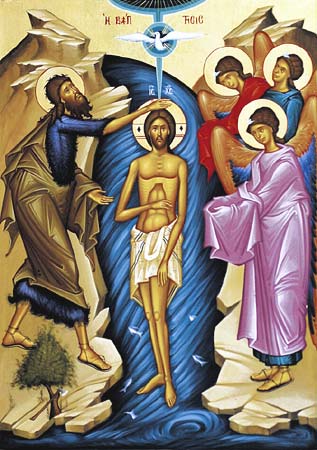 This article first appeared in the January, 2009 edition of The Adopted Life.
One night a few years back I was working late in my home office, intently typing away in the dark, bathed in the glow of a computer screen. Suddenly, I had that strange sensation of being watched. I turned around in my swivel chair and there was my 5 year-old daughter.
Now, Emily is a very pretty girl, with her mom’s brown hair and fair skin and my blue eyes. But in the dark of night, in the glow of a computer screen, arriving unexpectedly, her fair skin seemed supernaturally pale and her fine brown hair seemed zombie-like.
Surprised to see her, for one nano-second, she seemed to me to be some ghost-child from beyond the grave sent to harvest my soul and destroy the world. For one thousandth of a second I was terrified, and in that brief moment of surprise I screamed. (I wish I could say I let out a manly yell, but I have to admit it was more scream than anything).
Emily did what any 5 year-old would do under such circumstances – she screamed back in terror. And when she screamed it startled my already fear-addled brain and I screamed again! At this point she began to cry, since it was all very confusing, and I began to laugh since my one second of terror had now passed and I knew what was really happening to us.
For a brief moment I had believed a lie. I believed that my precious, beautiful daughter was a zombie spawn of hell come to kill me. And then that moment passed and the light dawned on me, and I was revealed to be an idiot who can be scared by anything. As the Greeks would say, I had an epiphany – and I thought “Eureka!” (literally, “I have found it!”) “this is no ghost, it’s Emily!”
I think that a million years from now human history will look to us something like that one second of terror that Emily and I experienced. One day we’ll look back and realize we were all scared for no reason.
Epiphany (this Sunday, January 6) is such a moment in the celebration of the Christian year. It is a moment when the light dawns and a revelation takes place. Gentile Wise Men come to worship the King of the Jews, and as he is baptized the Holy Spirit descends and the Father says “This is my beloved Son.”
And these epiphanies reveal to us that our fears in the night, and the lies we have believed in the dark, have all been dispelled and proven false by the coming of the Light of the World. Someday we may even be able to look back on it all and laugh.
Eureka! We have seen The Light
~ Jonathan Stepp
Come, Lord Jesus
Filed under: By Jonathan Stepp, Christian Living, Evangelism, Gospel, Ministry, Perichoresis, Trinity |
Comments (2)  A friend visited me in Nashville a few years back and after spending some time downtown he said, “You guys have a real homelessness problem here!” My reply was simple: “Actually, we have a mental healthcare problem here.”
I think it’s the same almost everywhere in America. It’s not so much that people won’t work or that there’s not enough cheap housing. The problem is that people are psychotic, neurotic, clinically depressed, schizophrenic, and have no idea how to manage the pain, rage, and sadness in which they’re drowning. Over the years they’ve learned coping mechanisms: lying, stealing, sex, alcohol and drugs to try to dull the pain and escape the insanity. Of course those things only work for a little while and when they stop working the result is estrangement from family, friends, and church, then eviction, and then homelessness.
I find that most people want to help with problems such as poverty and homelessness. People dig into their own pockets, and churches dig into their bank accounts, to help. As a society we fund numerous government programs for housing, food stamps, unemployment benefits, and a host of other ministries. Can you imagine how bad the situation would be if we as a society didn’t use wide-ranging programs to try and help? Just visit a nation without the resources and/or political will to take care of its poorest people. What you see there are children begging on the street and vast shanty-towns of desperately poor people living in cardboard shacks. American cities could easily look just like that if it weren’t for private and government programs that try to help
Here’s my point in all this: we all have our role to play in participating in Jesus’ redemption and restoration of this mess. Some of us earn big bucks so we can contribute money through taxes and donations. Some of us have been gifted to heal mental health problems. Some of us keep order in the midst of the chaos by serving in the police force. Some of us mold young minds in schools to try and break the cycle. Some of us show love to the unloved by hugging them and praying for them at church.
And we can all participate in working to revolutionize the very nature of humanity’s perception of reality. The world needs a better God-knowledge (theology) than the one it has inherited from previous generations. The world needs a knowledge of God rooted in the Trinity, in Jesus, and in humanity’s adoption into the Trinity through the flesh and blood of Jesus. This is the heart of evangelism: all of us playing our part to help make sure that in the next generation there will be even more people who know who Jesus really is and who humanity really is in him. And then there will be even more in the generation after that, and even more in the generation after that, and so on, for centuries to come, until the knowledge of the Lord fills the earth as the waters cover the sea.
I know some of you are saying “Well, that won’t happen until Christ returns.”
Can you imagine if St. Paul and the other apostles had adopted that attitude 2,000 years ago? I can hear them now: “Oh, Christ will be back in a few years, so no need to preach the good news about him or try to change the world one person at a time.” In spite of all the problems we face, the world is still a better place today than it was in the days of the apostles, and it is a better place because they set out from Jerusalem with the good news of Jesus and a dream to change the world. I don’t know when Christ will return. But I do know that the good news of humanity’s adoption in Christ is the solution to the problems we are facing. It was the solution two millennia ago, it’s the solution today, and it will be the solution even when Christ comes in glory.
So my prayer is the same as that of the first Christians: Come, Lord Jesus. May the knowledge of who you are, and who humanity is in you, come now in the lives of all those who are suffering today. May it come in the lives of my children and grand-children and great grand-children. And yes, Lord, come again in glory so that we may all know the life of the world to come. Amen.
~ Jonathan Stepp
We Are All in This Together
Filed under: By Jonathan Stepp, Christian Living, Gospel, Perichoresis, Relationships, Trinity |
Comments (3)  Four years ago this month we had an energy crisis in Nashville, TN, that showed how we are all in this together and that life works better when we live in harmony with the Triune Life of God.
On a Friday morning a rumor spread that all the gas stations in town would soon be out of fuel. The result was a panic and a rush on the pumps that resulted in 85% of the stations in town running out of gas. Most of the experts said that if people had only filled up if they really needed to (instead of topping off), and taken only what they needed for the next few days, there would have been plenty of fuel to go around. Instead we witnessed some people filling up when they only needed a little bit, plus filling cans with any extra they could carry, while those who were truly out of gas ran out as they were waiting in line. Lines at the few stations with fuel backed up for as much as two hours. In one place I counted almost 100 cars in line for gas.
The gospel tells us that Jesus is humanity’s adoption into the life he shares with the Father and the Spirit (Eph. 1:5). In Jesus there is now one new humanity composed of all people, without regard to race or religion (Eph. 2:14-15). In Jesus we are included in the Divine, Trinitarian life that is a social life of mutually sharing all things. (The Church Fathers called it “perichoresis”.) Our lives work much better when we are in harmony with this Divine reality of mutual sharing. We witnessed the truth of this reality in Nashville in a backwards way that weekend. Instead of living like the Trinity in whom we exist – by being careful to care more for others than ourselves – we ended up making the whole situation much worse by our selfishness.
I see an analogy in Nashville’s experience and the debates that American society is engaged in about our future and what kind of society we aspire to be. America is a nation of rugged individualism – and there is a great strength in that. But there is an eternal wisdom in knowing that we are all in this together. There is Divine strength in making decisions about our society – our families, our corporations, our government, and our churches – based on the reality to which the Holy Spirit is calling us: the reality that we are all in this together, the Father, the Son, the Spirit, and the whole human race. Our society will be stronger the more we believe this truth and start treating each other accordingly.
~ Jonathan Stepp
Why Pray?
Filed under: By Jonathan Stepp, Christian Living, Ministry, Perichoresis, Prayer, Trinity, Worship |
Comments (9) 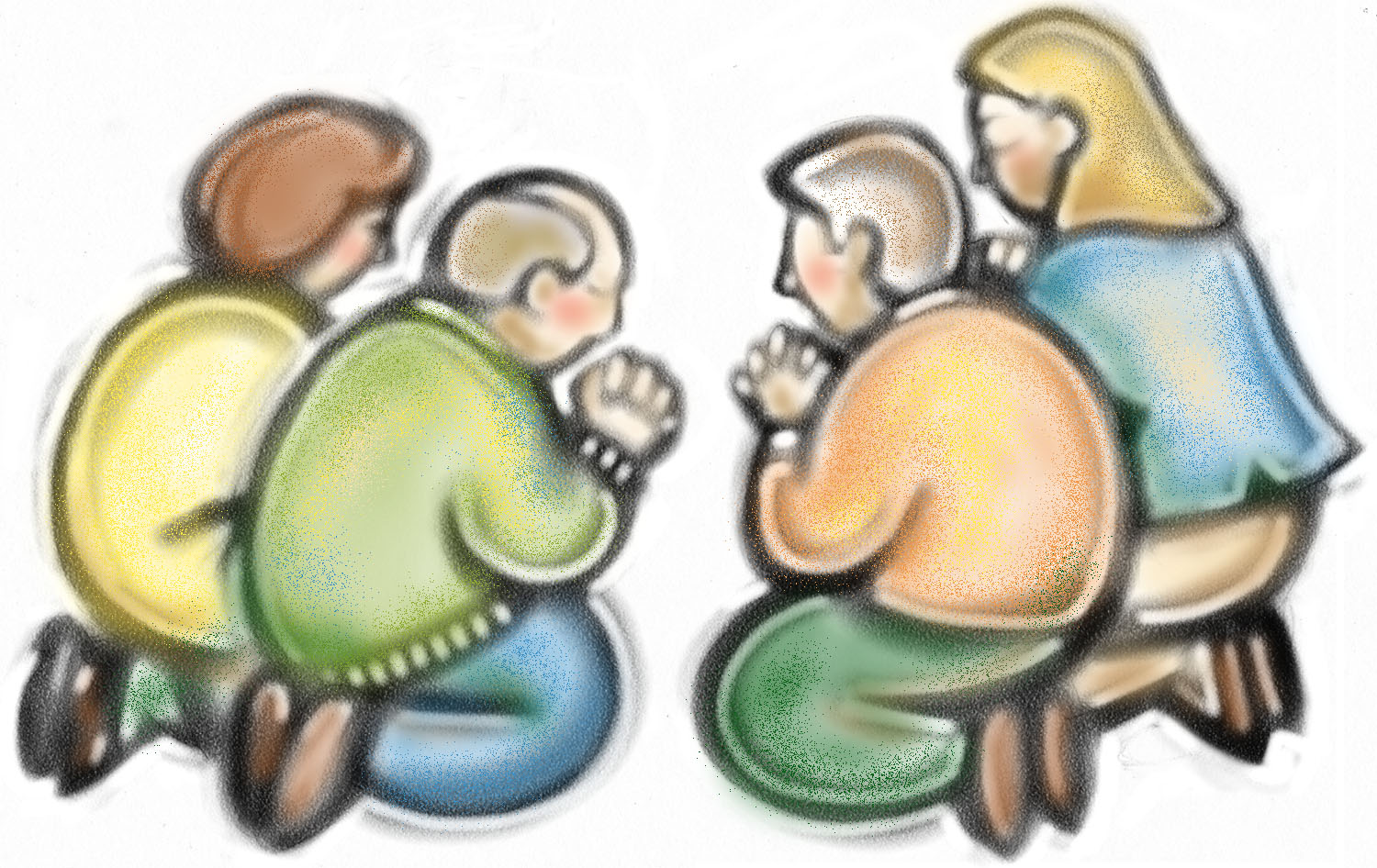 This article first appeared in The Adopted Life issue of August 4, 2009.
One of the great conundrums of the Christian life revolves around God’s omniscience and the practice of prayer. If God knows everything and already knows what is best for all of us, then why bother praying? I believe that, like many problems we wrestle with, this issue is clarified by a better understanding of who Jesus is as the union of the Trinity and humanity.
First of all, it is not accidental that I have framed the question in terms of “God’s omniscience” instead of in terms of “the Father, Son, and Spirit’s omniscience.” A major component of the problem we have in understanding prayer stems from our Unitarian thinking about God. When we visualize God as a single, solitary, all-knowing being in another dimension, then we naturally reduce prayer to our attempts to communicate our thoughts to this distant being. The omniscience of this imaginary being becomes an obstacle to that attempted communication by making that attempted communication seem like an exercise in futility.
In contrast, when we base our understanding of prayer on a Trinitarian image of God, then we begin to see the vital, foundational role that relationship plays in all existence. God the Father, Son, and Holy Spirit is not an isolated all-seeing eye watching over the creation. God the Trinity is a loving relationship. As a loving relationship the Trinity does nothing outside of relationship. The Divine existence is inherently relational and therefore everything the Triune God does, he does in and through relationship.
At the heart of loving relationship is communication. The Father, Son, and Spirit have been communicating – i.e. “praying” – to each other for all eternity. Since the Father, Son, and Spirit are omniscient, prayer in the Triune Life is not primarily about communicating previously unknown information. Instead it is about participating joyfully and completely in relationship. The Father, Son, and Spirit pray (i.e. talk) to each other because they love each other and want to be in relational conversation with each other, not because their own limitations require them to communicate.
Communication (i.e. talking/prayer) is part of who God is in his Triune nature. The gospel is the good news that Jesus has included humanity in this loving relationship of communication. Because the Triune God does not exist, and does not act, apart from relationship, he has acted in Jesus to create a relationship between the Son of God and the human race. Since the Son of God is in loving relational communication with the Father and the Spirit and is now – through his humanity – in loving, relational communication with the human race, it means that humanity is now included in the eternal conversation that has been going on within the life of the Triune God.
This is why we pray “in Jesus’ name.” This phrase at the end of our prayers is not just a ritualistic way to stop talking in the same way that we might say “Roger, over and out” when talking to someone on a walkie-talkie. Rather, the phrase “in Jesus’ name” is a way for us to express the faith of Jesus that he is sharing with us. Jesus has faith that the Father wants to hear from him and that they are having a loving conversation that has been going on for all eternity. Jesus also has faith that we are now a part of that conversation. Therefore, our life of prayer is a life that belongs first and foremost to Jesus and that he is sharing with us in our humanity. It is in and through Jesus’ divinity, humanity, and prayer life (i.e. his “name”) that we are praying.
This is also why Jesus prays in the gospels. As the Son in human nature, Jesus is continuing to live in the relational conversation he has with his Father in the Spirit. The disciples were witnesses of this relationship and when they saw it they realized that up until then they had never understood what prayer really is and so they made their request: “Teach us to pray!”
So then, why do we pray? For the same reasons that Jesus prays and the persons of the Trinity have been in prayer with and to each other for all eternity:
- Because we are in a loving relationship of communication. Because of Jesus, humanity is now part of the Divine conversation, and prayer is how Jesus lifts up and translates our thoughts and feelings into that conversation.
- Because the Triune God does nothing apart from relationship. Yes, the Father already knows our needs and Jesus already knows what his plans are for us and how the Spirit will work in our lives. But the Father, Son, and Spirit have freely chosen in Jesus to always be God with humanity, not God apart from humanity. That means that the Triune God’s decisions, actions, and blessings (including healing, miracles, and guidance) will always include the prayerful participation of The Human Being, Jesus, and countless other human beings. When we pray for ourselves, our family, our friends, and our world, we are participating in the loving, relational communication of the Divine Life of the Trinity and we are becoming a part of what our loving Father is doing in the world and the lives of the people we love.
Prayer, then, is an integral element of Trinity’s life. Therefore it is an integral element of what it means to be a human being made in the image of The Human Being, Jesus, and therefore made in the image of the Triune God.
So, when we say in worship “Let us pray,” it is really the voice of the Triune God speaking and inviting us to speak with him.
~ Jonathan Stepp
The Victory of Christ
Filed under: By Jonathan Stepp, Church, Evangelism, Gospel, Perichoresis, Trinity |
Comments (4)  Here’s another rerun from the archives, first published at Neo-Reformation four years ago this summer:
Why do so many believers fear death? Christians were once known as the people who had no fear of death. Here’s how Athanasius of Alexandria described the situation in his time, the 4th century:
All the disciples of Christ despise death; they take the offensive against it and, instead of fearing it, by the sign of the cross and by faith in Christ trample on it as on something dead. Before the divine sojourn of the Savior, even the holiest of men were afraid of death, and mourned the dead as those who perish. But now that the Savior has raised His body, death is no longer terrible, but all those who believe in Christ tread it underfoot as nothing, and prefer to die rather than to deny their faith in Christ, knowing full well that when they die they do not perish, but live indeed, and become incorruptible through the resurrection. On the Incarnation 5.27
The early Christians’ view of their own deaths was different than that of many modern Christians and they also had a different view of Jesus’ death. I’ve begun to wonder if their view of Jesus’ death might explain – in part – the difference in their view of death in general.
One of the most common explanations of Jesus’ atoning death in our modern Christian theology is that he died to satisfy the wrath of the Father. The Father was angry about our sin and needed to execute someone for it so he he executed Jesus instead of us.
The early Christians tended to more often explain Jesus’ death as a victory – sometimes called in Latin Christus Victor (the victory of Christ). They explained Jesus’ death as the Son of God entering into the very heart of human falleness to defeat the enemies that would try to steal us from the Father and hold us captive: sin, death, and the devil.
In a theology where Jesus’ death is an act to satisfy the Father’s wrath the resurrection and ascension are little more than Jesus getting up and going home after finishing his work. But in the theology of Christ’s victory, we died when Christ died (2 Cor. 5:14) and the resurrection of Christ is humanity’s resurrection (1 Cor. 15:22) and his ascension is our ascension to the right of the Father (Eph. 2:6).
I can see in my life, and in the lives of others, that if you believe death will lead you into the presence of a Father who kills those who sin against him then death becomes a fearful thing. After all, how can I know for sure where I stand with him?
On the other hand, if you believe that – in Christ – you have already died, already risen, and already been accepted at the Father’s right hand then death becomes nothing but a doorway to go home and be with our Dad forever.
~ Jonathan Stepp
Practical Theology
Filed under: By Jonathan Stepp, Christian Living, Church, Evangelism, Gospel, Ministry, Perichoresis, Trinity |
Comments (4) 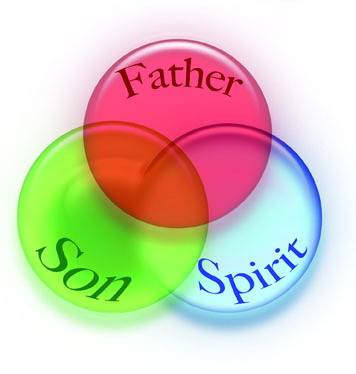 Here’s a classic post I first wrote four years ago. Hope you enjoy the summer rerun!
A few months back a friend of mine sent me several questions about the way I understand the gospel.
Briefly: I understand the gospel to be the good news that the Father, Son and Spirit created humanity in order to adopt us into their shared life of love, joy, and freedom (Eph. 1:3-5) and that they accomplished this plan of adoption through the Son’s incarnation as the man Jesus Christ (Heb. 2:10-18). The good news is that all of humanity is included in the joy of the Triune Life because Jesus is the union between the Trinity and humanity (Rom. 5:18, Col. 1:20).
Here was one of my friends questions: What are the practical implications of Trinitarian theology? Does it affect how we live and preach the gospel?
My answer was simple: It changes everything.
I no longer look at my kids and think “how can I help them see they are lost sinners and accept Christ so they won’t go to hell?” I look at them and think “how can I help them see they are children of the Father and everything in their life is a participation in the Triune dance the Father shares with the Son and the Spirit?”
I no longer look at my congregations and think “how can I get them busy building the kingdom and saving the lost?” I look at them and think “how can I help them embrace the truth of how they have always been included in the life of the Father, Son and Spirit and always will be no matter what happens?”
I no longer look at un-churched people and think “how can I get them to accept Christ and come to church?” I look at them and think “how can I break through their blindness to help them begin to see how they were saved in Christ before they were ever born and how every good thing they’ve ever experienced is because the Father is sharing his life with them through the Son in the Spirit?”
I no longer look at myself and think “what do I need to do to be in God’s will and do what’s right?” I look at myself and think “hooray! My Dad in heaven loves me and I’m in him through Jesus and he’s in me through Jesus and I don’t ever have to worry about anything ever again!!!”
What we are talking about here is not just “a theology” it is the gospel declared by Jesus, preached by the apostles, and handed down by the Fathers. It is the end of religion, programs, and the whole human treadmill of trying to “get right” with God and “build” something for him. It is freedom to the captives and good news to the poor.
None of our old wineskins of singing, praying, preaching, or doing church will ever be adequate to hold this new wine.
It changes everything.
~ Jonathan Stepp
Fairness
Filed under: By Jonathan Stepp, Christian Living, Gospel, Love, Perichoresis, Relationships, Trinity |
Leave a comment “That’s not fair!” How often did you say that as a kid? There is something innate in all of us that longs for fairness. But what is fairness?
Treating everyone in the same way seems to be a good, simple definition and works well in childhood. But when you start raising your own kids it gets more complicated. A couple of years ago we bought Emily an iPod Nano for her birthday. A few months later we bought Lewis a Nintendo DSi for his birthday. Emily complained that it didn’t seem fair for Lewis to have a DSi and her to not have one, so I offered to take back her iPod and give her a DSi instead. That offer helped her see that fairness is about equality, not necessarily sameness. She decided to keep the iPod.
Something similar happens in the spiritual tension between law and grace. The law says that fairness means treating everyone in the same way. Anyone who speeds gets a ticket. It doesn’t matter why you were speeding or how much you were speeding, the law says that even one mile per hour over the speed limit, for any reason, is an infraction for which you should be ticketed. But grace is not a policeman enforcing a law. Grace is a Father raising children and the definition of Fatherly fairness is not “treating everyone the same.” The definition of Fatherly fairness is “treating everyone in the way that will best help them grow up in Christ to be who they were created to be.”
By the grace of Jesus Christ the Father does not treat us with fairness as defined by the law. He treats us each with the individual love, discipline, and care that we each need to grow as we should. That is more than fair. That is grace – and it is love.
~ Jonathan Stepp
Sermon: Faithful
Filed under: By Jonathan Stepp, Christian Living, Church, Gospel, Ministry, Perichoresis, Relationships, Sermons, Trinity |
Leave a comment Faithful by Jonathan Stepp
Jonathan’s last sermon as Pastor of Good News Fellowship.