Sermon: Speak, Lord, For Your Servant is Listening, Part A
Filed under: By Tim Brassell, Christian Living, Church, Gospel, Relationships, Trinity |
 Leave a Comment
 Speak Lord, For Your Servant Is Listening, Part A by Tim Brassell
This message is a proclamation of God’s Good News set in the Old Testament Book of Samuel. It also includes a brief but powerful sex education class rooted in our life with each other in the Trinity.
Can One Really Fall From Grace?
Filed under: By Tim Brassell, Christian Living, Gospel, Ministry, Perichoresis, Trinity |
Comments (12)  Recently, I read an article about a pastor who, because of his indiscretions, stepped down from his pulpit, at least temporarily. The headline read “[Pastor’s name] Falls From Grace”. Of course, implied in this headline is the idea that if a pastor can fall from Grace then anyone and everyone can fall from grace IF we sin too!
The humiliation and circumstances surrounding the pastor and sometimes ourselves certainly seems to indicate that we have fallen from grace, but have we? Is it true? Did the pastor fall from grace? Can you REALLY fall from grace?
According to the Revelation of God in Jesus Christ (the Word of God), and in another word, no! No, in one instance, because grace simply wouldn’t be grace if you had to do anything worthy of it, or earn it or deserve it! I am sure you’ve heard that before, and it is true. But there is an even greater and more firm confirmation revealed in the Gospel!
You see, grace, just like the words “gospel” or “Good News” is not primarily a concept or a word, but a Person – specifically the Person of Jesus Christ! (Titus 1:3, 2:11) In His very Person, and in His being God Incarnate (literally, “in flesh”) as man, Jesus is forever, HIMSELF, the favor and salvation of all humanity. In other words, Jesus is not just God the Father, Son and Spirit’s plan for Adopting mankind into His relationship (Eph 1:3-5), He is also, at one and the same time, mankind’s and the world’s perpetual Salvation. (John 3:16)
The importance of seeing things this way is in seeing that God’s saving us is not an afterthought. It’s not like we fell from God’s grace when we sinned and then He scrambled furiously deciding he would send Jesus to save us with the proviso that we decide to get and do things right! Hitting more at home, it’s not like you fall from the Father’s grace when you (or the pastor!) sin, and God scrambles, promising to save you in Jesus if you get and do things right!
Under that kind of “plan of salvation” no one would be saved by grace, they would be saved by works, or faith, or something other than or in addition to Jesus Himself. (Eph 2:4) That would certainly not make Jesus THE Savior of the world (John 4:42) but only a partial one. And a partial Savior is simply not something the Gospel or scriptures speak about. (Eph 1:18-23)
No! God’s favor toward us in Jesus is a FORETHOUGHT! At one and the same time, and in one and the same Jesus, God decided not only to include us in His Life (adoption) but also to uphold us in Jesus from before the foundation of the world (salvation). Astoundingly, at the same time we were created in Christ Jesus from before the foundation of the world, all of humanity, and every part of our humanity, was also saved in Him!
 For us, for YOU, God the Father, Son and Spirit had only one plan – Creation & Redemption in the One Man Jesus! In the truest sense, not only can you or anyone not fall from Grace, because of Who Jesus is and who all people are in Him, you can only fall into grace and more grace! HaHa! (Romans 5:18-21)
Finally, I would like to add that, in the light of the pastor I referred to at the beginning of this article, I do believe it is possible to fall because of preaching grace AND to fall because you haven’t preached grace! Grace is quite the scandal in the minds of a works-oriented culture and can sometimes lead to a pastor being ousted from his or her congregation. Jesus told a parable about this very scandal and it still is one! (Matt 20:1-16) People who think they have earned more than others can hate God the Father for being gracious and sharing Jesus with and for us all.
On the other hand, if a preacher preaches everything but the true Gospel of God’s grace they will often fall from their position as pastor too. This is what I think happened to the pastor I am referring to. This happens because people tend to judge you the way you judge them. If you only preach law or morality as the Gospel then, when you inevitably break the law and get caught, people judge you by what you preached – law and morality – and condemn you accordingly! However, if you preach God’s Gospel of grace, people will tend to judge you in the same way and not condemn you, accordingly…….at least a few of them will judge you graciously! HaHa! (Matt 7:1-2)
Regardless, there is no condemnation to any of us who are in Jesus Christ (all of Humanity! Rom. 8:1) and regardless of how pleasurable or painful we might have to experience it depending on our hard-headedness, there is only grace and more grace to fall into! Be encouraged!
~ Timothy J. Brassell
Sermon: Everything Has Been Baptized in Jesus’ Baptism
Filed under: By Tim Brassell, Christian Living, Church, Evangelism, Gospel, Perichoresis, Trinity |
Leave a Comment Everything has Been Baptized in Jesus’ Baptism by Tim Brassell
This Message shares the Good News of God the Father, Son and Spirit by giving clarity and insight on what Jesus’ Baptism means for Everyone and Everything, and therefore, what our distinct participation in baptism REALLY is a sign of. It especially explores the issue of why Jesus was baptized.
You and Me
Filed under: By Jonathan Stepp, Christian Living, Gospel, Perichoresis, Trinity |
Comments (18)  The gospel isn’t just about you. And the gospel isn’t just about me. It’s about you and me, together, included in the life of the Father, Son, and Holy Spirit.
We live in a world that likes to divide people up: insiders and outsiders, good and evil, friend and enemy. Against the fallen system of this world Jesus speaks of one, new, undivided humanity (Eph. 2:15) in which everyone is reconciled (Col. 1:20) and everyone is included in Jesus’ redeeming work (Rom 5:18).
Jesus speaks a very strong word to us about this new humanity that exists in him. He says we should love our enemies (Matt. 5:44) give to those who ask for our help (Matt. 5:42) and take care of those who are strangers among us (Heb. 13:2). When we understand that the gospel of Jesus Christ is about all of us – you and me together – we can no longer participate in this world’s system of division, exclusion, and hatefulness.
Here in the United States we are entering into a year of political debate as we prepare to elect new leaders. As you listen to our politicians over the coming year I challenge you to pay attention to who is talking about life as we know it to be in Jesus. Who is talking about inclusion? Who is talking about helping those in need and caring for the strangers among us? Who is calling our society to be a place of unity, inclusion, and care for others? Those are the politicians we should be supporting because they are the ones who are speaking out of the truth of who we all are in Christ.
We should support them because life itself, lived out in human society in the light of the gospel of Christ, is not just about you and what’s good for you. And it’s not just about me and what’s good for me. Life is about you and me, together, included in the life of the Father, Son, and Holy Spirit.
~ Jonathan Stepp
Sermon: We Believe in the Body of Christ, Part 11B
Filed under: By Tim Brassell, Christian Living, Church, Evangelism, Perichoresis, Trinity |
Leave a Comment We Believe in the Body of Christ, Part 11B by Tim Brassell
In this second part of the final message in the Series “Contending for the Apostolic, Christ-centered, Trinitarian Faith!” Pastor Tim proclaims how the Life of the Church is practically transformed as Christ lives in and through His Body and out toward the larger world also included in His embrace!
Hard-Wired for Connection and Community
Filed under: By Nan Kuhlman, Christian Living, Love, Relationships | Tags: community, connection, I Am, interconnection of all living things, Tom Shadyac
Comments (8)
My hope is that I AM is a window into Truth, a glimpse into the miracle, the mystery and magic of who we really are, and of the basic nature of the connection and unity of all things~ Tom Shadyac

The documentary I Am (http://www.iamthedoc.com/) is the brainchild of director Tom Shadyac, whose film credits include hits like Ace Ventura, Bruce Almighty, and Liar, Liar. Shadyac decided to make this documentary after a serious biking accident made him reevaluate his priorities and share publicly what he had been thinking about for years. Once he had recovered, he set out with a camera crew to interview the great thinkers and scientists of our time, asking them what is wrong with our world and what we can do about it.
Interestingly enough, Shadyac found out instead what was right with the world. One thing he discovered was that science has proven every human being is hard-wired for a compassionate response to the troubles of others, and that there is a measurable magnetic field given off by every human heart which can have a physiological effect on other living beings around us.
This “hard-wiring” comes in the form of the vagus nerve, which gives us the physiological response (the tearing of the eyes, the tension in the stomach) when we see others suffering. One unexpected proponent of this was Charles Darwin, who said in his book The Descent of Man, “Sympathy is our strongest instinct.” We are equipped, at the most basic level, to empathize with others.
At one point in the documentary, Shadyac was in a scientific lab where electrodes had been connected to a Petri dish filled with yogurt containing live bacteria cultures. Whenever Shadyac was shown a gruesome photo or asked a stress-filled question, the electrical charge in the yogurt increased, showing the bacteria’s response to his stress. Researchers at the Institute of Noetic Sciences verified that this response reveals how every living thing is connected.
This interconnection of all living things should come as no surprise. After all, the Triune God permeates all of creation:
In the beginning was the Word, and the Word was with God, and the Word was God. He was with God in the beginning. Through him all things were made; without him nothing was made that has been made. In him was life, and that life was the light of men (John 1:1-4, NIV).
Shadyac’s documentary I Am provides more confirmation that the life that pulses through each one of us, through all living things, has its origin in the Father, Son, and Holy Spirit. Because “…in him we live and move and have our being” (Acts 17:28), we are all part of a greater whole and hard-wired for connection and community. Once we finally embrace this, we will never feel separated, never alone.
~by Nan Kuhlman
Sermon: Your Servant is Listening
Filed under: By Jonathan Stepp, Christian Living, Perichoresis, Prayer, Sermons, Trinity |
Leave a Comment Your Servant is Listening by Jonathan Stepp
Two stories of Epiphany help us understand how to listen for the Father to speak to us in Jesus and through the Holy Spirit.
Sermon: We Believe in the Body of Christ, Part 11A
Filed under: By Tim Brassell, Church, Gospel, Perichoresis, Sermons, Trinity |
Leave a Comment We Believe in the Body of Christ, Part 11A by Tim Brassell
In this first part of the final message in the Series “Contending for the Apostolic, Christ-centered, Trinitarian Faith!” Pastor Tim proclaims how the Life of the Church is practically transformed as Christ lives in and through His Body and out toward the larger world also included in His embrace!
Trinitarian Church Governance
Filed under: By Jonathan Stepp, Christian Living, Church, Perichoresis, Trinity |
Comments (10) 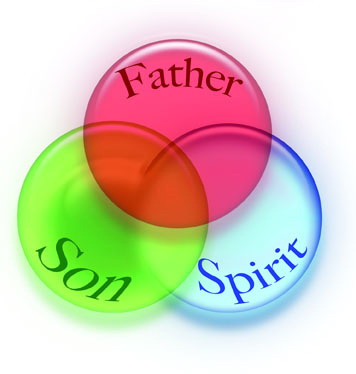 In my post earlier this week, and the connected essay, I explained my ecclesiological reasons for deciding to enter the Episcopal Church. I also believe that there are foundational theological issues at stake in church governance and that these issues are rooted in God’s Trinitarian existence.
I would suggest that whatever form of church governance we choose – episcopal, congregational, or otherwise – there are certain principles of the Triune life that apply to the way we do church. Among these principles are:
Inclusion. The Father, Son, and Spirit are one God because they are fully included in each other’s life. We call this perichoresis, the mutually indwelling and inclusive life of the Father in the Son, the Son in the Father, and the Spirit in the Father and the Son.
Based on this Trinitarian principle of inclusion, church governance should include everyone in the church. For example: however your congregation is structured with pastors, elders, councils, etc., everyone in the congregation should be allowed to participate in making decisions on big issues such as how to do ministry and the way money is spent. Likewise, even in an hierarchical denomination, everyone should participate in denominational decision making. For example, the churches and their pastors should have formal methods of input and consent as to who their district, regional, national, and international leaders will be. They should be kept informed of how the money they donate to the denomination is being used, including the salaries of their leaders. The Episcopal Church, for example, is hierarchical but representatives of the clergy and laity are included in its denominational life through diocesan and national conventions.
Mutual accountability. God’s inclusive life as Father, Son, and Spirit means that the Father never does anything apart from the Son, or the Son apart from the Father, or the Spirit apart from each of them.
So, for example, congregations need to be held accountable to one another – either through a bishop, a presbytery, or an association. No congregation should be acting on its own, without connection or accountability to the larger Body of Christ. It is also important that bishops, prebyteries, and associations be accountable to the congregations whom they serve. This is one reason I prefer the Episcopal Church over other episcopally organized denominations. An Episcopal bishop is not only accountable to other bishops but also to the clergy and laity of the diocese.
Transparency. A life of inclusive mutual accountability naturally leads to transparency. T.F. Torrance is famous for saying that there is no God hiding behind the back of Jesus. In Jesus we have been given a transparent, full revelation of what God the Father, Son, and Spirit is really like.
In church I think this means that we don’t keep any more secrets than are absolutely necessary. For example, as a pastor I need to keep people’s confession and counseling issues secret, but my salary should be an open book to the people who pay it. Issues of leadership, ministry, or finances – whether within the congregation or the denomination – should be anticipated, talked about openly, and planned for through open discussion. Big issues like these shouldn’t be kept secret among a small group of insiders until circumstances force a public acknowledgment of them.
Even though I prefer episcopal church governance, for the reasons outlined in my essay, I think these principles of inclusion, mutual accountability, and transparency apply to any church organization of any structure or size. In fact, I would suggest that it is impossible for a church to be healthy and successful in its mission unless these basic principles of the Triune life of God are embraced, formally enshrined into the structure of the church, and consistently revisited over time as the church grows, changes, and faces new challenges.
~ Jonathan Stepp
Sermon: We Believe in the Body of Christ, Part 10B
Filed under: By Tim Brassell, Church, Gospel, Perichoresis, Sermons, Trinity |
Leave a Comment We Believe in the Body of Christ, Part 10B by Tim Brassell
This message continues to reflect on the difference between the Church and the World even though Everyone is already Included in the Love and Life of God the Father, Son and Spirit, through Jesus and by Grace. Particularly, the Truth of the Body of Christ as a Person is clarified and contrasted against tendencies we have in the Church toward consumerism, religiosity and success thinking; things that lie behind the incongruency and deadness of our personal and collective lives.